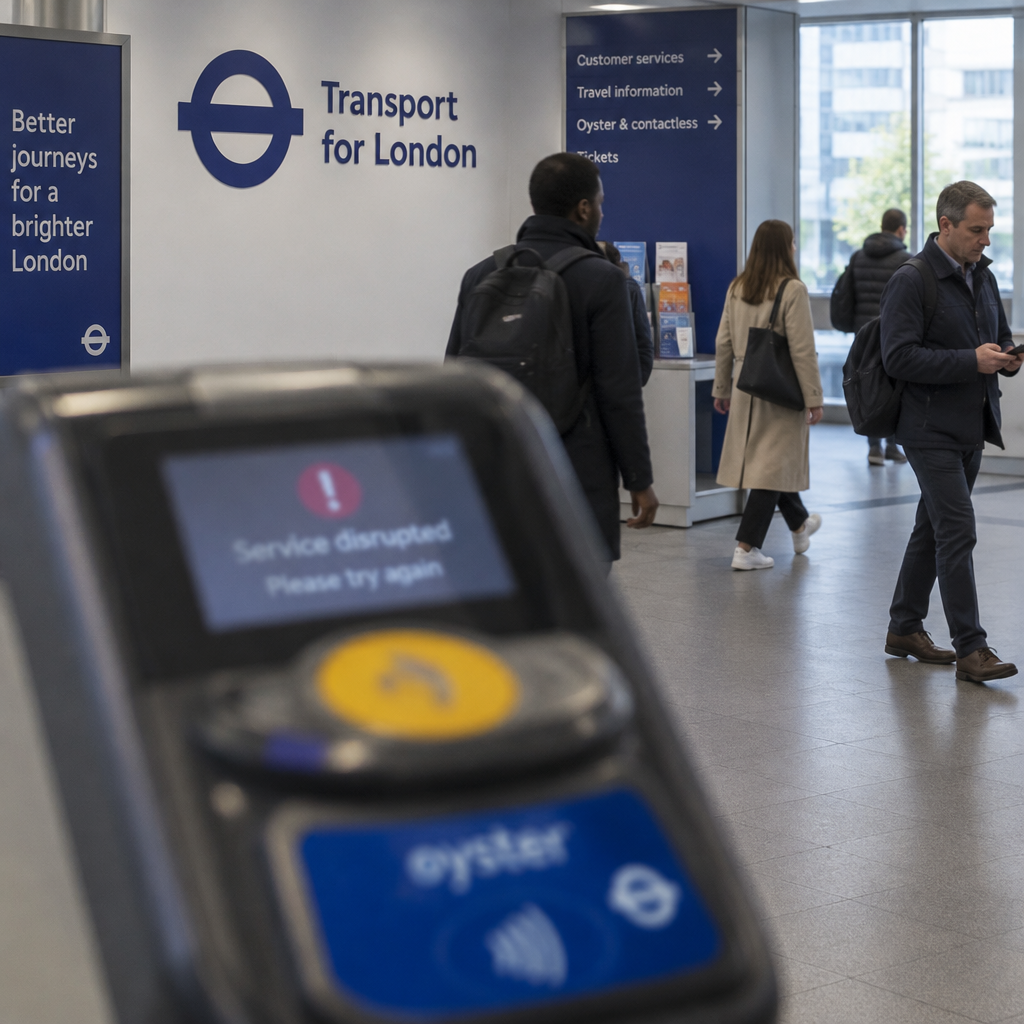
"We immediately took the TfL photocard website down while this was being investigated," said Shashi Verma, TfL's director of technology strategy and revenue.
TfL’s immediate response and timeline
Transport for London (TfL) disclosed that it first became aware of suspicious activity on November 16, when Oyster photocard customers began receiving emails from TfL asking them to create accounts they already held. TfL confirmed those emails came from its own systems, but said they were generated as a result of a compromise.
The operator says it "immediately" took the TfL photocard website offline while investigating, and that it has since contained the incident and contacted customers it believes may be affected. There is no public timetable for restoring the site; "We hope to restore the affected website services as quickly as possible," Verma added.
What TfL says was exposed — and what was not
TfL reported that the accounts of around 265,000 Oyster photocard customers may have been compromised. At the same time, the transport body was explicit about several categories of data it believes were not accessed: TfL says no passwords, bank or payment card details, or customer journey information were compromised. It also believes the names and dates of birth of children holding Zip Oyster cards were unaffected.
Despite that assertion, TfL will ask all photocard customers to change their passwords and their security questions and answers. The operator also advised customers who reuse passwords across sites to change those credentials elsewhere as a precaution. TfL added it has yet to find any evidence the compromised data has been used, and that it has notified the Information Commissioner's Office (ICO).

Audit-ready is a season. It shouldn't be.
Evidence in spreadsheets, controls drifting between audits, frameworks multiplying on flat headcount. Nubivance runs continuous compliance on Rapid7 Cyber GRC - SOC 2, HIPAA, ISO 27001, PCI, CMMC.
End the scrambleWho may be affected: Zip cards, students, veterans and older Londoners
Among the accounts that TfL says may have been compromised are holders of Zip Oyster cards — products issued to children as young as five — as well as students, apprentices, care leavers, veterans, and Londoners aged 60 and over. TfL’s guidance to those groups is to expect contact from the operator and to follow instructions to reset account credentials once prompted.
Operational impact for customers and services
TfL stressed that existing physical photocards will continue to operate at ticket barriers. However, with the photocard website offline, anyone needing to renew a photocard or to check their journey history must contact TfL’s customer services team until the web service returns. TfL has not given a date for restoration of those online services.
What this means for TfL customers, technologists, and the ICO
- TfL customers: Expect direct contact from TfL if you are among the roughly 265,000 accounts flagged; prepare to change passwords and security answers and to use customer services for renewals or history checks while the site is down.
- Technologists and security teams: TfL says it has contained the incident but has not disclosed the intrusion vector. Security teams will be watching for indicators of compromise and for any follow-on phishing or account-takeover attempts that could leverage data exposed in this incident.
- The Information Commissioner's Office (ICO): TfL has notified the ICO. The regulator previously reviewed a September 2024 breach that affected more than 7 million customers and decided not to take enforcement action after judging TfL’s response proportionate; the transport operator and the ICO now have a fresh incident on which the regulator may decide to act or to probe further.
This event arrives in the shadow of a larger 2024 incident. In March, TfL told The Register it had notified more than 7 million customers after a September 2024 cyberattack that accessed names, email addresses and home addresses, and that around 5,000 customers were prioritised because their bank account details may have been accessed. Two teenagers were subsequently charged in connection with that 2024 attack, which authorities linked to the Scattered Spider cybercrime crew. TfL said there is nothing at present to suggest the two incidents are related.
TfL's public account stresses containment and customer notification, while simultaneously leaving key technical details undisclosed: it has not explained how the attackers gained access, and it reports no evidence yet that the data has been used. For affected customers, the immediate calculus is simple — reset credentials when instructed, watch for suspicious contact, and use TfL customer services for any urgent photocard business while the web portal remains offline.