Tag: phishing
756 articles

Google Workspace: Exclusive Guide to Best Security
Want to secure Google Workspace without turning your startup into a locked-down fortress? This guide helps first security hires prioritize real risks, fix permissive defaults, and keep teams productive while shutting the door on attackers.

Iran’s MuddyWater: Stunning, damaging 100+ network breach
A single hijacked government mailbox became MuddyWater’s battering ram, letting Tehran-linked operators quietly harvest credentials and pivot into 100+ networks across the Middle East and North Africa. It’s a stark reminder that low-cost social engineering and trusted infrastructure can give attackers exponential reach without a single zero-day.

MuddyWater Stunning Breach Hits 100+ Government Networks
The MuddyWater campaign turned a single compromised mailbox and an attacker-controlled VPN into a battering ram, phishing its way into 100+ government networks across the Middle East and North Africa and proving that access and trust beat flashy exploits every time.

WestJet Alerts Americans: Exclusive Serious Data Breach
WestJet data breach: the airline says a June intrusion may have exposed passport numbers, loyalty IDs and travel details for about 1.2 million U.S. customers—here’s why that raises your scam risk and what to do next.

5M Records Exposed Exclusive: Alarming Auto Insurance Leak
5M Records Exposed: a password-free database left names, policy numbers, VINs and claims data for more than five million auto insurance customers readable by anyone with a browser. That simple lapse turns everyday details into easy fodder for phishing, fake claims and identity theft — and shows how a tiny mistake can create big, long-lasting risk.

WestJet Exclusive Alert: Critical Data Breach Notified
WestJet Exclusive Alert: A June cyber intrusion may have exposed travel and loyalty-account data for roughly 1.2 million customers—including U.S. residents—so check your accounts now. WestJet says it’s working with forensic experts and law enforcement, but this notice is your cue to watch for phishing, reset passwords, and protect your identity.

Bolster Security: Exclusive, Effortless Must-Have Steps
Cut the easy wins first: tighten identity and access controls—phishing-resistant MFA, least-privilege and just-in-time access, plus regular credential cleanup—to stop the most common intrusions. These low-friction fixes deliver outsized protection fast, turning security intentions into measurable wins.

WestJet Notifies Americans of Exclusive Data Breach Risk
WestJet told U.S. customers that a criminal intrusion discovered in June may have exposed personal and loyalty-account information—potentially affecting hundreds of thousands to over a million travelers—and has raised tough questions about who safeguards the sensitive travel data airlines collect. More than an operational headache, the breach highlights how legacy systems and third‑party connections can turn travel records into prime targets for phishing and identity fraud.
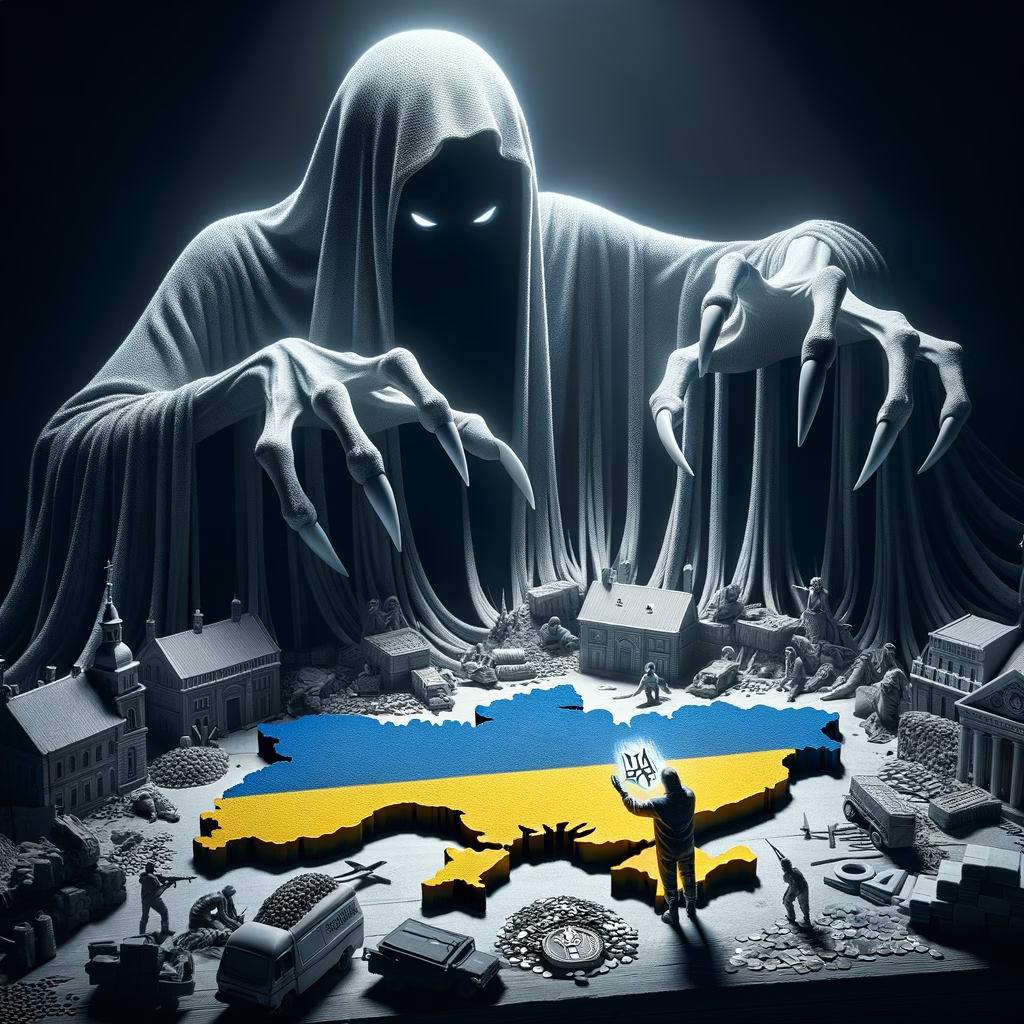
PhantomCaptcha Campaign: Exclusive Danger to Ukraine Relief
PhantomCaptcha hijacks trusted-looking emails to trick aid workers into opening weaponized attachments that install credential stealers and remote access tools, risking disruption of Ukraine relief operations. Learn its tradecraft—plausible senders, urgent subjects, and innocuous file types—so a single click doesn’t hand attackers the keys.

Singapore Officials Targeted in Stunning Damaging Scam
A stunning Singapore officials scam has exposed shocking vulnerabilities—discover how the damaging scheme unfolded and what it means for public trust.

Email Bombs Reveal Stunning, Dangerous Zendesk Flaw
Imagine your inbox suddenly flooded with threatening messages from your bank, favorite store and utility — thats the reality of the recent email bombs attack, which abused Zendesk’s outbound mail to make malicious messages look legitimate. The episode exposes how convenient customer-service tools can be weaponized when email authentication is misconfigured, letting dangerous mail slip into primary inboxes.

Jingle Thief Exclusive: Alarming Gift Card Theft
Think gift cards are harmless holiday fun? Jingle Thief uses simple phishing and cloud misconfigurations to siphon stored value from retailers, turning promos into cash for criminals — shoppers and merchants need to wake up and tighten defenses.

SIM farm Stunning Takedown: Risky Fraud Network
Europol’s Operation SIMCARTEL dismantled a massive SIM farm tied to about 49 million fake accounts, arresting suspects and exposing how cheaply scammers can weaponize phone numbers to automate fraud. The takedown is a wake‑up call to ditch SMS as sole protection and push for stronger, phishing‑resistant authentication across services.

payment data breach: Stunning Alarming Risk Exposed
About 180,000 people had names and payment details left exposed — putting them at heightened risk of fraud and identity theft; here’s what to do now to protect yourself and why companies must tighten their defenses.

pet records Exposed: Exclusive Risky Security Warning
More than 85,000 pet and owner records were left exposed, turning beloved pets’ details into a roadmap for scammers and raising real risks like spam, identity theft and fraudulent claims—here’s what went wrong and what you can do now to protect yourself.

Cybersecurity Awareness Month: Must-Have Best Practices
This Cybersecurity Awareness Month, swap slogans for simple, high‑impact actions that cut risk fast—because the best defense is disciplined execution, not the shiniest tool. Start by locking down identity and access (MFA, least privilege), prioritize patching and attack‑surface reduction, and run tabletop exercises so response becomes muscle memory, not a paper plan.

WestJet data breach: Urgent Exclusive Warning
WestJet says a recent cybersecurity incident may have exposed U.S. customers’ travel and payment info — if you’ve flown with them recently, check your accounts, be on the lookout for phishing, and watch for the airline’s updates as the investigation continues.

auto insurance records Exposed: Shocking Risky Leak
Imagine anyone being able to read your policy—because more than 5 million auto insurance records were left publicly accessible online, putting drivers at immediate risk of fraud and identity theft. This glaring misconfiguration shows how easily useful data can become a goldmine for scammers.

bulletproof hosting: Stunning Risks Evade Sanctions
KrebsOnSecurity reveals how Stark Industries — a bulletproof hosting service tied to Kremlin-linked cyberattacks — slipped past EU sanctions by rebranding and shifting assets into shell companies, showing how adaptable abuse networks outpace enforcement. If sanctions are to matter, Europe needs faster cross-border coordination, tougher pressure on registrars and clear rules on who really owns these services.

JavaScript packages Risky: Exclusive Crypto-Theft Alert
Eighteen popular JavaScript packages — downloaded billions of times a week — were briefly compromised after a maintainer fell for a phishing email, with code added to steal crypto keys before it was quickly removed. The scare is a wake-up call: tighten maintainer access, adopt signing and provenance, and treat dependencies like critical third-party software.

calendar invite Shocking Leak: Risky Trust Damage
A misconfigured Outlook calendar invite from Cifas accidentally exposed dozens of fraud-prevention professionals’ email addresses — a simple slip with potentially serious consequences. It’s a wake-up call that default-private settings, group aliases and basic training aren’t optional if we want to protect the people who protect us.

AI-driven social engineering: Must-Have Risk Fix
ISACA’s new survey sounds a wake-up call: only 1 in 10 cybersecurity pros feel “very prepared” as AI-powered social engineering tops the threat list for 2026, so organizations must sharpen playbooks, training, and verification now before attackers exploit the gap.

CAPI Backdoor Exclusive Risky Threat to Russian Firms
Think that invoice is harmless? Seqrite Labs found phishing ZIPs delivering a new .NET CAPI Backdoor that uses Windows crypto to hide C2 activity and is targeting Russian automotive and e‑commerce firms—so double‑check attachments and tighten defenses.

Winos 40 Stunning Risky Asia-Pacific Expansion
Winos 4.0 (ValleyRAT) is widening its reach into Japan and Malaysia using weaponized PDFs that drop links to a follow-on RAT (HoldingHands/Gh0stBins), making multi-stage phishing attacks more potent — now’s the time to lock down PDF handling, enforce URL filtering, and boost behavioral detection before attackers exploit language- and region-specific gaps.