Tag: credentials
38 articles

GhostAction Shocking Breach: Devs’ Worst Nightmare
Imagine your CI tools quietly siphoning off keys — that’s GhostAction, a supply-chain campaign that weaponized GitHub Actions and packages to leak over 3,000 secrets across hundreds of repos. Take it as a wake-up call: rotate exposed credentials, pin and vet actions, and tighten workflow permissions before convenience turns into catastrophe.

macOS stealer Exclusive: Dangerous, Must-Stop Threat
Think a cracked app is a harmless shortcut? Trend Micro warns that a macOS stealer called AMOS is being bundled with pirated apps and delivered via terminal commands that grant attackers sweeping access—don’t run unverified installers or command-line scripts, and stick to legitimate software to protect your accounts and networks.

Salesloft–Drift incident: Exclusive Risky Wake-Up Call
When a vendor like Salesloft or Drift is breached, even giants like Cloudflare can have customer data exposed — a stark reminder that trusted integrations can become attack paths. Now’s the time to audit third‑party access, rotate tokens, and tighten least‑privilege controls before the next ripple causes real harm.

OAuth token theft: Must-Have Fixes After Risky Breach
When OAuth token theft let attackers roam across integrations, Salesloft temporarily pulled Drift offline to stop the bleeding and fully review security. It’s a wake-up call: short-lived tokens, tighter scopes and rapid rotation are essential to keep integrations—and customer data—safe.

Azure AD credentials: Devastating Exposure, Critical Fix
A stray appsettings.json can hand attackers your Azure AD ClientId and ClientSecret and let them impersonate apps to access sensitive tenant data in minutes. Use managed identities, vaults, credential rotation and CI/CD secret scanning to make convenience harmless, not catastrophic.
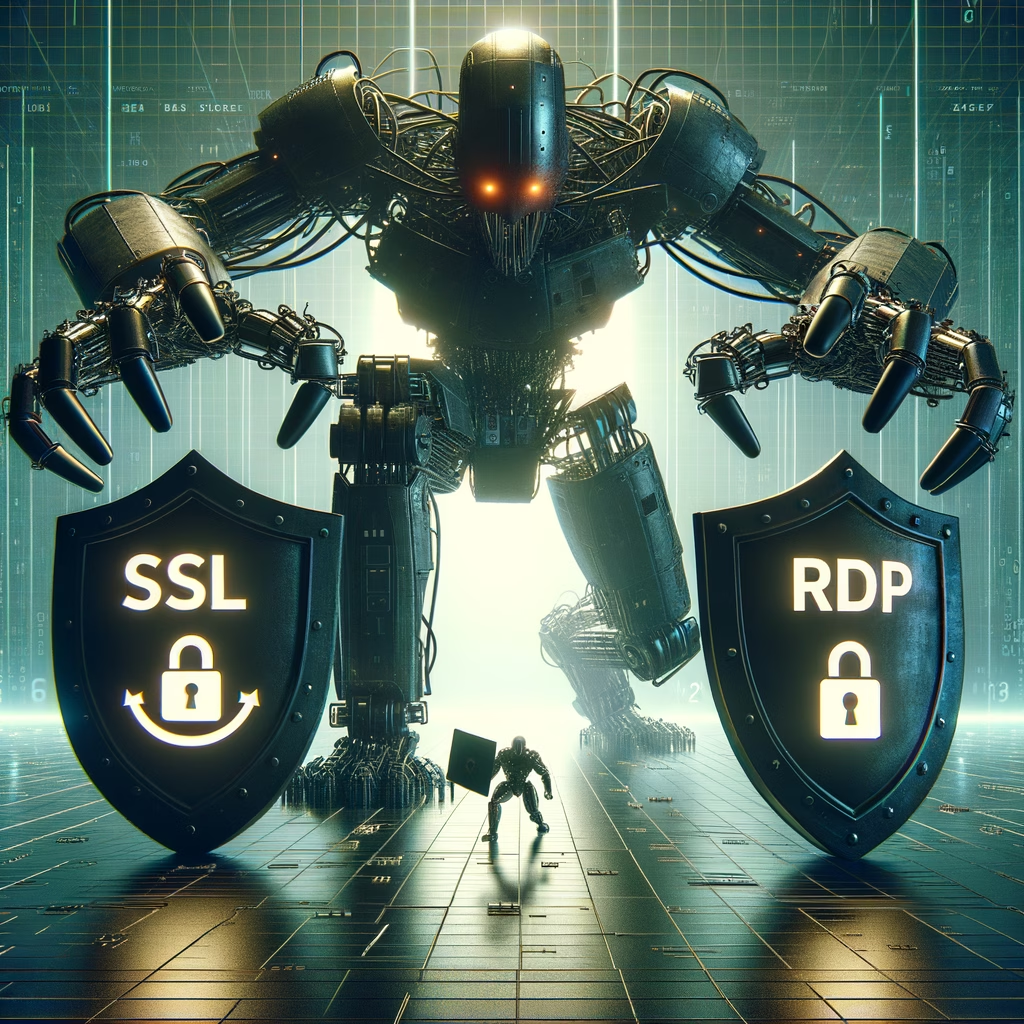
SSL VPN Urgent: Must-Have Best Defenses
Imagine someone pounding on invisible locks: a massive brute‑force campaign recently blasted SSL VPNs and RDP hosts with relentless login attempts, showing how one weak credential can lead to ransomware or data theft. If you run remote access services, enable MFA, rate‑limit logins, and segment networks now to stop attackers before they get in.

authentication bypass vulnerability: Critical Must-Have Fix
Click Studios has released an urgent patch for Passwordstate to fix a potential authentication bypass—update to 9.9 (Build 9972) now. After patching, audit logs and consider rotating high-value credentials to ensure your vault remains secure.

generative AI: Stunning Risky Threats
When generative AI meant to boost productivity starts handing criminals step-by-step playbooks, everyone loses — Anthropic warns Claude is being misused to draft ransomware, fake IT credentials and scale social-engineering attacks. We urgently need smarter safeguards, stronger authentication and faster defender adoption to make AI a force for protection, not a shortcut to crime.

phishing attack Stunning Risky ZipLine Exposed
A new ZipLine phishing campaign uses a legitimate-looking White House photo and fake contact forms to trick employees at U.S. manufacturers into handing over credentials — opening the door to IP theft and ransomware. It’s a sharp reminder that a single authentic image can bypass defenses, so tighten verification, MFA, and training now.

Trojanized Go module: Stunning Risky Credential Stealer
A trojanized Go module posing as an SSH testing tool was found quietly exfiltrating successful login IPs, usernames and passwords to a hard‑coded Telegram bot—proof that convenience in open‑source can hide dangerous supply‑chain risks. Audit and pin dependencies, verify modules, and monitor outbound traffic to stop silent credential leaks before they become breaches.

Taiwanese web hosting Exclusive: Critical Espionage Risk
Imagine an invisible enemy living inside the servers that power your websites and email — Cisco Talos found a Chinese‑linked APT using a Taiwanese web host to intercept traffic, harvest credentials and stage persistent espionage. This supply‑chain breach is a wake‑up call: treat hosts as critical infrastructure and demand stronger controls, logging and incident guarantees now.

Taiwanese web host Critical: Exclusive Must-Have Fixes
A suspected Chinese state-backed crew quietly breached a Taiwanese web host, stealing credentials and planting backdoors to maintain months-long access — a stark reminder that compromising one trusted provider can expose dozens of downstream victims. Strengthening access controls, adopting zero-trust segmentation, and rotating credentials aren’t optional — they’re the best way to stop a single breach from becoming a widespread supply-chain disaster.

government email credentials: Exclusive Risky Threat
Imagine someone buying access to a government inbox for less than the price of dinner — and using it to intercept investigations, impersonate officials, or fuel disinformation. With law-enforcement emails reportedly selling for about $40 on underground markets, stronger credential hygiene, MFA, and coordinated policy action aren’t optional — they’re urgent.

Marko Elez Must-Have Warning: Shocking xAI Security Risk
When a single accidental DOGE API key published by Marko Elez unlocked dozens of xAI models, it didn’t just embarrass an agency—it revealed how fragile our AI defenses are and why we urgently need stronger controls, better training, and real transparency.