Tag: automation
254 articles

agentic AI: Must-Have, Risky Tool for Government
Agentic AI can turbocharge government services—speeding claims, coordinating complex workflows, and scaling scarce expertise—while also raising urgent questions about accountability, bias, and trust. Policymakers must balance innovation with auditable design, human oversight, and clear redress so these powerful tools serve citizens rather than undermine them.

Cursor Visual Studio extension: Stunning Risky Flaw
A newly disclosed autorun flaw in the Cursor Visual Studio extension can let a repo run arbitrary code just by opening it—audit your extensions, open untrusted projects in isolated VMs or containers, and update or disable Cursor until it’s patched.

supply chain attack: Stunning Near-Miss, Risky Lessons
A fast, coordinated open‑source response helped avert what could have been a massive npm supply‑chain breach, but the near miss raises urgent questions for developers, maintainers and policymakers about dependency hygiene, registry controls and long‑term resilience.

Axios user agent Dangerous Surge: Must-Have Defense
A routine Axios user‑agent has been weaponized — ReliaQuest found a 241% surge in phishing that spoofs the header to evade filters and increase clicks. Security teams need to stop trusting user‑agent strings alone and adopt layered defenses before attackers scale this trick further.

Claude Code Risky: Stunning Security Alert
When AI tools like Anthropic’s Claude Code start both reviewing and running code, they can speed up vulnerability discovery—but Checkmarx warns that automated execution also introduces fresh risks like secret leaks, weak isolation, and novel attack surfaces. The takeaway: automation can be a powerful safety boost, but only when paired with strict sandboxes, logging, and skeptical human oversight.

GitHub breach: Must-Have Fixes for Risky Attacks
When Salesloft’s GitHub repo was breached, attackers used exposed artifacts to access customer Salesforce data — and that compromise became the ground zero for a wider campaign affecting Drift. It’s a wake-up call to treat code repositories like sensitive infrastructure: rotate keys, enforce MFA, and scan for leaked secrets before attackers do.

artificial intelligence: Stunning Fix or Risky Failure
Can AI rescue U.S. military recruiting after COVID upended pipelines and eligibility? AI can streamline outreach and speed processing, but it’s no silver bullet—rebuilding trust, policy fixes, and human engagement are still essential.

GhostAction Shocking Breach: Devs’ Worst Nightmare
Imagine your CI tools quietly siphoning off keys — that’s GhostAction, a supply-chain campaign that weaponized GitHub Actions and packages to leak over 3,000 secrets across hundreds of repos. Take it as a wake-up call: rotate exposed credentials, pin and vet actions, and tighten workflow permissions before convenience turns into catastrophe.

AI-powered ransomware: Risky, Stunning Threat
What happens when a harmless research project turns into a blueprint for crime? The first AI-powered ransomware shows how generative models can automate and personalize attacks, forcing researchers, defenders, and policymakers to rethink openness, oversight, and preparedness.

continuous penetration testing: Must-Have Best Practices
Pentesting no longer needs to be a dusty PDF — automation turns slow, episodic reports into continuous, near‑real‑time testing pipelines that let expert humans focus on creative attack paths while machines handle discovery, validation, and ticketing. Done right, this speeds fixes and reduces exposure; done poorly, it creates noise and governance headaches, so balance and integration are essential.
automated Android bug-hunting system: Stunning Risk
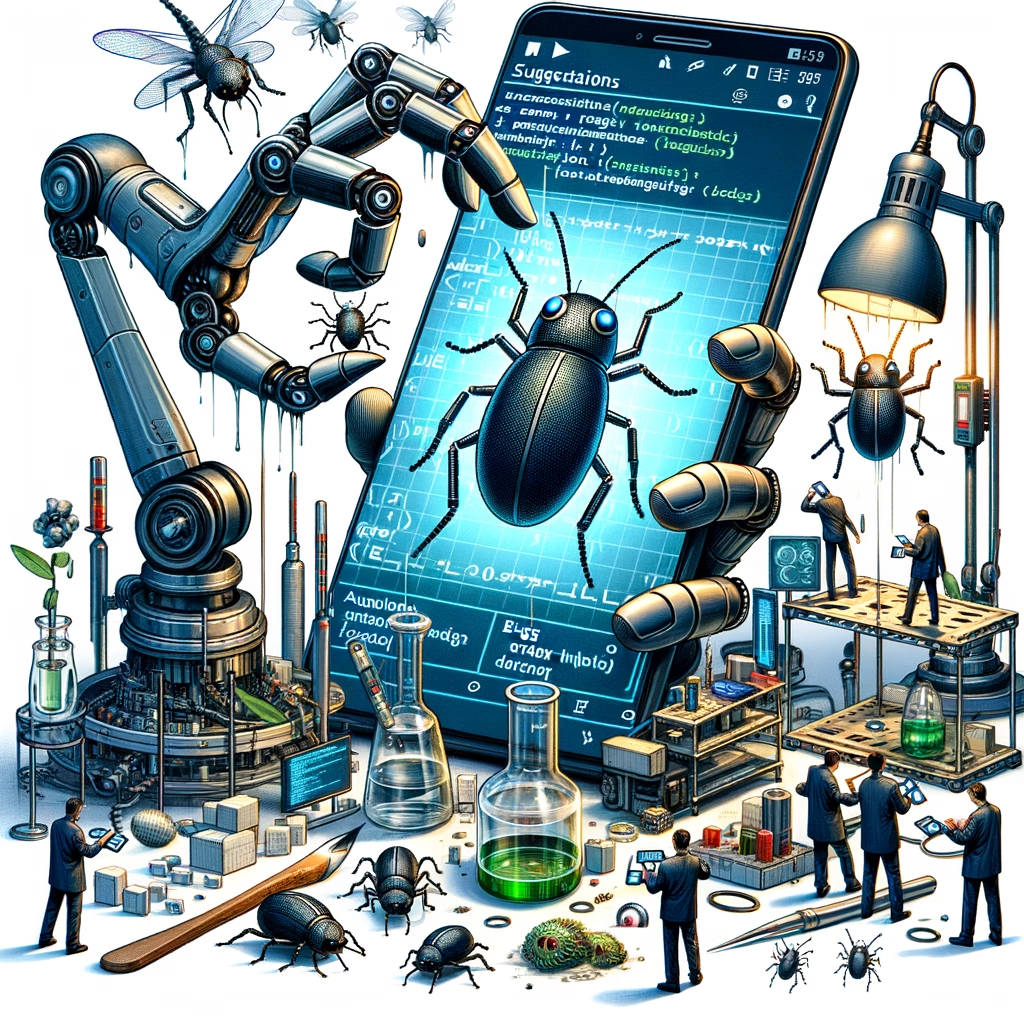
Meet a tireless, AI-powered bug hunter that found 100+ zero-days in real Android apps — a potential game-changer for faster, wider vulnerability discovery. But beware: automation can flood teams with false positives, extra triage work, and tricky disclosure risks.

Hexstrike‑AI Risky Surge: Must‑Have Security Alert
Hexstrike‑AI — built to sharpen defenses — is now being repurposed by criminals to automate and speed up attacks, lowering the skill needed to exploit systems. If defenders don’t match that tempo with faster detection, automated playbooks, and tighter vendor controls, attackers will keep winning the race for the first foothold.

HexStrike AI: Must-Have Tool or Risky Threat?
Security researchers found HexStrike AI — an open‑source red‑teaming tool — being weaponized on underground forums to target newly disclosed Citrix NetScaler flaws within hours, shrinking defenders’ window to act. If you run Citrix ADC, treat disclosures like a ticking clock: patch immediately, apply mitigations, and tighten access.

ransomware operations: Urgent Must-Have Defense Guide
AI-driven extortion has made attacks faster and more personal, but practical steps—MFA and least-privilege access, isolated immutable backups with restore drills, exfiltration detection, and pre-authorized legal and communications playbooks—can blunt the impact today. Act quickly, use AI defensively with human oversight, and engage law enforcement and experienced responders early to prevent escalation.

artificial intelligence and automation: Must-Have Job Boost
AI and automation are moving job matching beyond keyword résumés to surface true skills, work styles and cultural fit—delivering smarter leads and clearer reskilling paths. But to make these gains fair and trustworthy, we need thoughtful design, transparency and strong privacy and governance safeguards.

VBA-based backdoor: Stunning Risky Outlook Threat
Think your inbox is safe? Researchers warn APT28 has deployed a VBA-based Outlook backdoor called NotDoor that hides in macros to harvest emails and stay persistent, so it’s time to tighten macro policies, add telemetry, and treat your mail client as part of the attack surface.

HexStrike AI: Stunning, Risky Weaponization Threat
HexStrike AI — built to speed up red teaming — was reportedly repurposed by attackers to exploit newly disclosed Citrix flaws within days, a wake-up call that AI-driven automation can quickly turn defensive tools into potent offensive weapons and makes faster patching and hardened defenses essential.

hyper-volumetric DDoS attacks: Stunning Critical Threat
Cloudflare says its automated defenses just stopped a record 11.5 Tbps DDoS assault, proving big providers can scrub massive traffic — but the scale is a wake-up call that attackers are growing bolder and organizations must invest in layered, shared defenses to stay ahead.

NSA training workbook: Exclusive Essential Read
A newly declassified 1965 NSA workbook—featuring 147 “Stethoscope” printouts—shows how Cold War cryptanalysts learned to read the anatomy of ciphertext by spotting patterns rather than seeing plaintext. It’s a fascinating reminder that human pattern recognition paired with machine diagnostics shaped past tradecraft and still matters for today’s debates about encryption, AI, and security.

exposed Ollama servers: Risky Must-Have Security Fix
Cisco Talos found 1,100+ publicly exposed Ollama servers, creating easy paths for data theft, malicious model swaps, and other abuse. It’s a wake-up call to fix misconfigurations, enforce authentication, and make secure defaults the norm.

legal-looking text: Stunning Risky Jailbreaks
Pangea’s LegalPwn reveals how hiding adversarial instructions inside legal‑sounding text can trick LLMs into ignoring safety rules — a clever jailbreak that exploits models’ trust in formal language. Defenders must stop treating “legal” formatting as a seal of safety and build context‑aware checks before this becomes a bigger problem.

restaurant robots: Shocking Security Risks Exposed
A researcher known for probing McDonald’s systems found Pudu Robotics left administrative controls wide open, letting attackers redirect delivery bots and issue arbitrary commands. Restaurants, hotels and regulators need to act now to secure these ubiquitous machines before misuse causes safety, privacy or reputational harm.
generative AI Stunning Risky Ban Divides Web
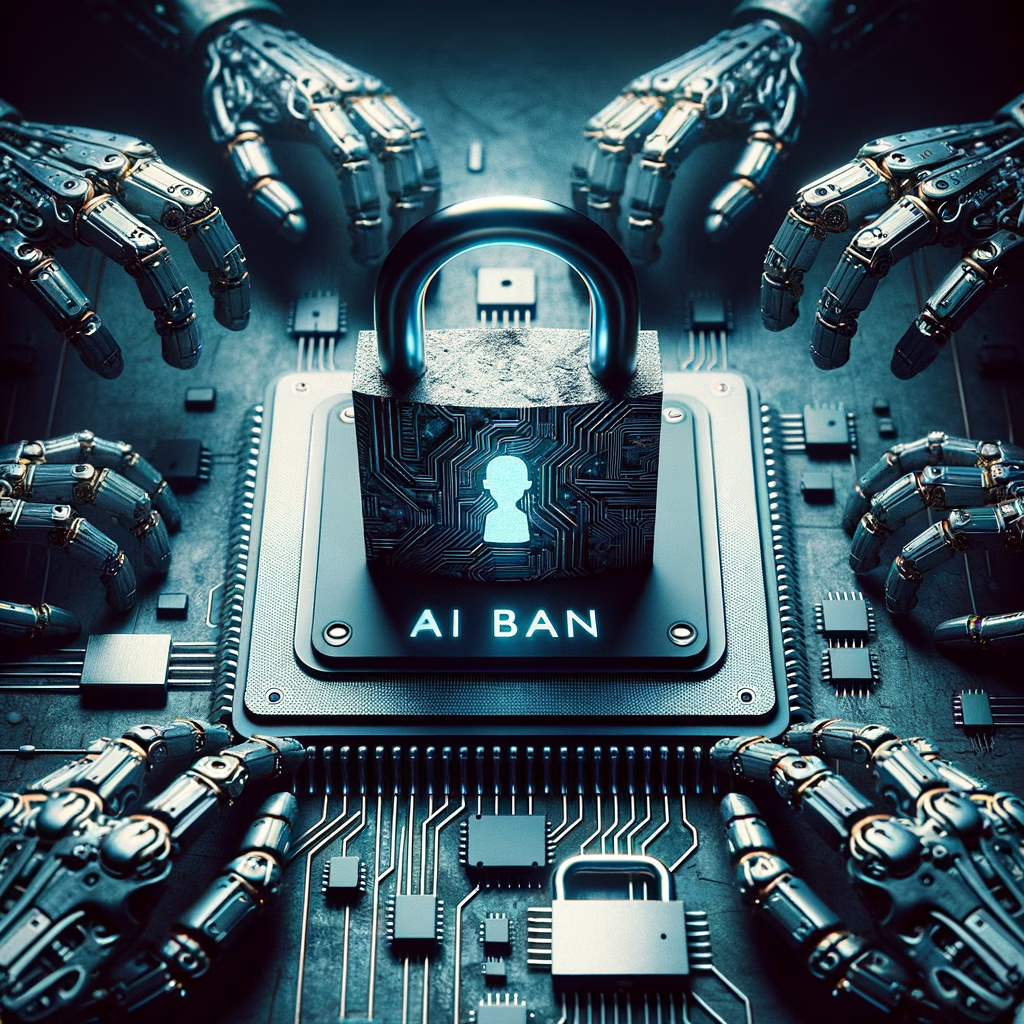
Vivaldi CEO Jon von Tetzchner drew a line in the sand by banning generative AI agents from browsing the web, arguing automation undermines consent, copyright and publishers’ income. The move reignites a crucial debate over who gets to shape the future of the open web.

PayPal direct debits: Stunning Risky Outage Hits Europe
When PayPal’s fraud engines tripped this week, banks across Europe blocked billions in SEPA direct debits, leaving shoppers and merchants with bounced orders, stalled subscriptions and frayed cash flows. The episode is a wake-up call about how fragile automated fraud controls can be—and why faster communication, human review and better coordination between banks and payment platforms are essential.