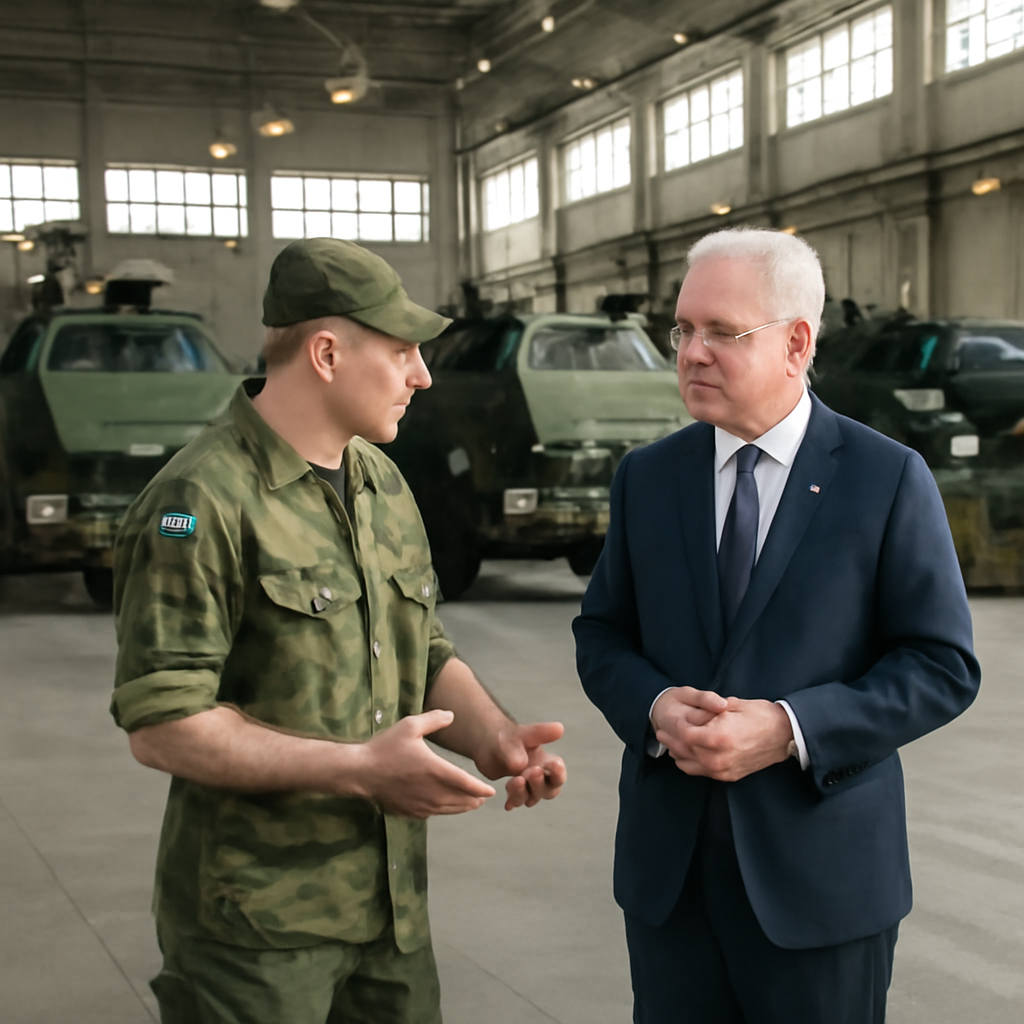
"The long-range precision capability that you get with HIMARS is something we [the Army] don’t have in our toolbox at the moment," Maj. Gen. Johan Pekkari said in a hangar at Ärna Air Base, underscoring why Sweden has moved to buy long-range rocket artillery.
The SEK 7 billion HIMARS purchase: scope and schedule
Sweden announced a SEK 7 billion (USD 732 million) contract to procure Lockheed Martin’s M142 High Mobility Artillery Rocket System (HIMARS). The acquisition comprises "just over" ten launchers plus a "substantial quantity" of ammunition, Defense Minister Pål Jonson told reporters in the hangar. The first deliveries of launchers and ammunition are scheduled for 2027. The minister also noted this is the first contract of a deal the American government approved in March.
Range and effects: HIMARS, PrSM and Sweden’s broader strike mix
Alongside conventional rockets, Jonson highlighted the system’s compatibility with the Precision Strike Missile (PrSM), which the announcement described as having a range "of up to 500 kilometres" and being "capable of striking high-value targets in depth." Maj. Gen. Pekkari added that HIMARS will give the Swedish Army a long-range precision capability it currently lacks at the ground level, complementing the Air Force’s recently operational Taurus missiles carried by Gripen aircraft.

This site is the portfolio.
OSINTSights runs on Cloudflare Workers, D1, R2, and Vectorize, with an AI pipeline on Hetzner ARM. Nubivance designed, built, and operates it. We do the same for clients.
See what we buildSaab and Lockheed Martin: a letter of intent on munitions and GLSDB
Lockheed Martin and Saab signed a letter of intent to explore integrating Saab’s Ground-Launched Small Diameter Bomb (GLSDB) and producing munitions for HIMARS and other systems, including the Patriot air-defense system (PAC-3). Jonson described the effort as a step toward "joint production in Sweden" of rocket-artillery ammunition, but said initial production will start at Saab’s factory in Grayling, Michigan. Görgen Johansson, head of Saab Dynamics, confirmed the company is "setting up a production area right now in Grayling, Michigan" and said the firm is open to doing something in Europe over time.
Finland’s role: maintenance, training and a Tampere sustainment center
Sweden will rely on Finland for maintenance and training as it brings HIMARS into service. Lockheed Martin is establishing what the source described as Europe’s first HIMARS maintenance center in Tampere, Finland — a deliberate choice, Finnish Defense Minister Antti Häkkänen said. "We made a deal with Lockheed Martin that the center will come to Finland, which will support the whole of Europe," Häkkänen told Breaking Defense, adding that Sweden is the first ally to sign on and that he hopes other HIMARS purchasers will use the center for sustainment.
Häkkänen also pointed to interoperability advantages: Finland already operates Lockheed’s tracked MLRS variant, which uses the same munitions family, and the defence pact the two countries signed covers sustainment, spare parts and cooperation on ammunition.
What this means for the Swedish Army, Saab, and Finland’s sustainment effort
- Swedish Army: The acquisition is intended to give the Army a ground-based, deep-strike precision capability for the first time, augmenting air-launched options such as the Taurus missile on Gripen aircraft and filling a capability gap Maj. Gen. Pekkari identified.
- Saab (and Lockheed Martin): The companies are positioning for expanded munitions production, starting in Grayling, Michigan, while keeping open the possibility of future European production. The letter of intent covers GLSDB integration and production for HIMARS and other systems including PAC-3.
- Finland and the Tampere center: Finland will host a regional sustainment hub intended to support Europe’s HIMARS operators. The center is explicitly designed to provide maintenance and spare-parts support and to be available to allies procuring the system.
Officials in the hangar acknowledged recent reporting of potential U.S. delivery delays tied to the war in the Middle East, and to signals some countries have already received about postponements. Estonia had previously signaled delays in HIMARS deliveries, the reporting noted. Jonson said those concerns do not change Sweden’s posture because the Saab–Lockheed Martin industrial arrangement will help "build up security of supply on the industrial side" and provide resilience for countries that operate HIMARS.
Sweden’s contract sets a clear timeline — first deliveries in 2027 — while opening parallel industrial and sustainment tracks: Saab and Lockheed Martin moving to produce munitions (initially in Grayling, Michigan); Finland hosting a European maintenance center in Tampere; and Swedish forces planning integration, training and sustainment with Finnish support. Whether production shifts to Europe and how supply schedules will hold up in the face of reported U.S. export pressures are the immediate practical questions left for the coming months.