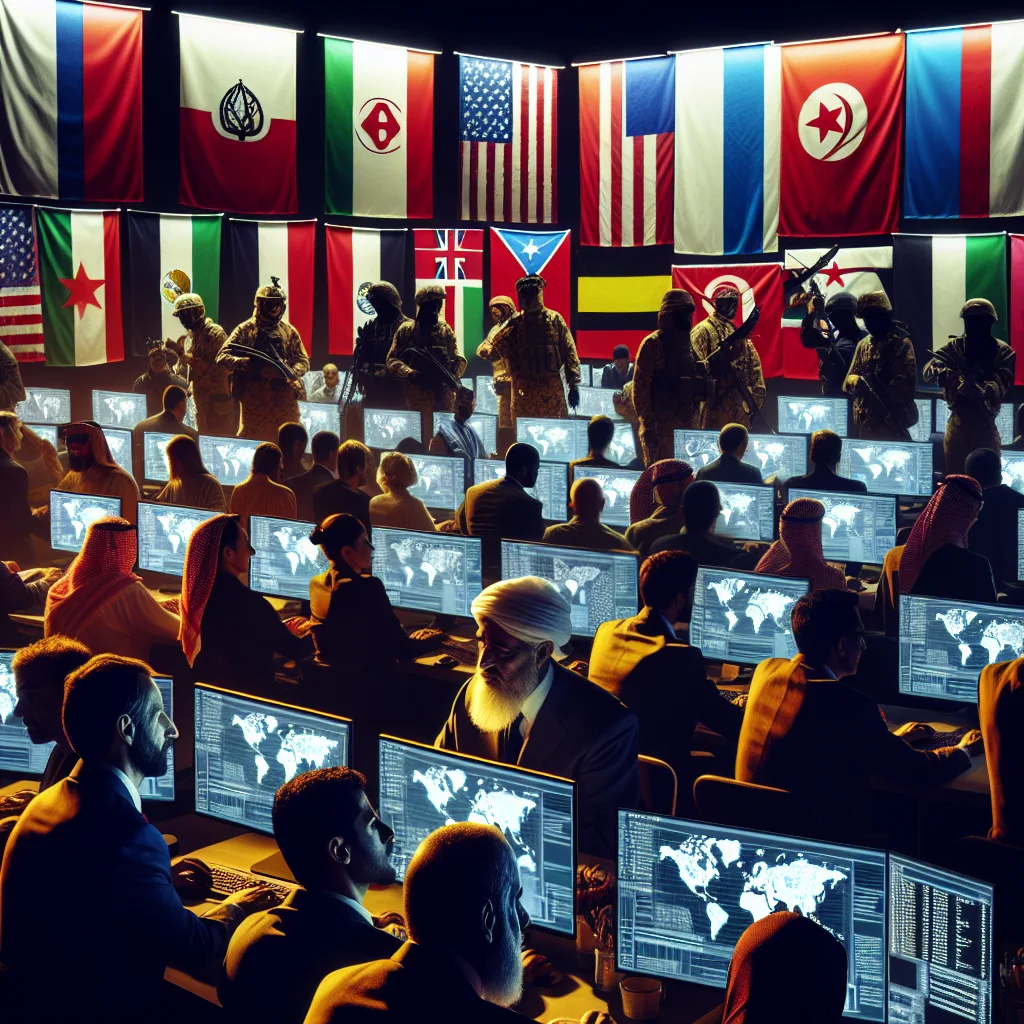
Hacktivists Enter the Fray: The Cyber Dimension of the Israel-Iran Conflict
In the midst of escalating tensions between Israel and Iran, a new front has emerged—not one of missiles or ground troops, but rather a battle fought in the digital ether. As explosions echo across borders, hacktivist groups have ramped up their activities, launching cyber attacks that aim to disrupt, discredit, and demoralize their adversaries. But in an age where information is weaponized with as much ferocity as artillery, one must ask: are these efforts mere bluster or do they hold real strategic value?
The recent conflict has seen both nations engaging in missile exchanges that have already claimed numerous lives and prompted widespread destruction. Yet, amid this chaos, various hacktivist collectives have seized the moment. Their actions are framed as responses to the unfolding humanitarian crisis and political machinations—an effort to aid one side or provoke another. However, the deeper question looms: do these digital offensives represent a significant shift in warfare or simply elaborate psychological operations?
The roots of hacktivism can be traced back to early online activism in the 1990s when groups sought to challenge authority through digital means. Today’s landscape is significantly more complicated. With state-sponsored cyber operations intertwined with independent hacktivist efforts, the line between activism and warfare blurs further with each passing day. As scholars like Dr. P.W. Singer of the New America Foundation note, “The cyber domain has become an integral part of national strategy; it’s not just about disruption but influence.”
Currently, reports indicate a surge in activity from groups such as Anonymous and various Iranian hacktivist factions like Ashiyaneh Cyber Army. Notably, these entities have engaged in coordinated strikes against critical infrastructure ranging from governmental websites to financial institutions. In a matter of days following the onset of hostilities, several high-profile breaches were documented—ranging from defacing websites to leaking sensitive information.
The Israeli Cyber Defense Authority confirmed that it has been on high alert since hostilities began, highlighting that over 50 cyber attacks had been recorded during the first week alone. While many attacks may lack tangible results—often amounting to what experts call “disruption for disruption’s sake”—the potential for wider implications persists.
The relevance of these cyber campaigns extends beyond immediate tactical gains; they shape narratives within and outside affected regions. Each digital defacement and every leaked document serves to bolster morale among allies while demoralizing opponents—a psychological chess game played out on screens around the world. Yet it begs further analysis: how effective are these efforts at achieving meaningful objectives?
Experts caution against overstating the impact of hacktivist actions in military conflict contexts. Brian Krebs, an investigative journalist specialized in cybersecurity, opines that while hacktivists can temporarily disrupt services and sow confusion, their broader strategic implications often fail to materialize into lasting change on the battlefield or political stage.
- The psychological component: Hacktivists aim to boost morale among sympathizers and disenfranchise opponents through potent visuals of victories over digital landscapes.
- Lack of tangible military impact: Though disruptive tactics may hinder governmental operations temporarily, they rarely shift military outcomes decisively.
- PsyOps vs CyberOps: Much like traditional psychological operations (PsyOps), these digital attacks can serve more as propaganda tools than effective military strategies.
The ongoing conflict between Israel and Iran provides fertile ground for examining how modern warfare is evolving through emerging technologies. With international observers keenly monitoring developments on both fronts—traditional military and digital—the implications for national security cannot be overstated.
As we look ahead, several factors warrant attention: will states adopt more aggressive stances towards regulating or countering hacktivism? How might public opinion evolve regarding state-sponsored responses to cyber actions? Furthermore, should escalating hostilities continue unchecked, there exists a distinct possibility that governments may formalize collaborations with hacktivist groups as asymmetric strategies gain traction.
This evolution raises fundamental questions about privacy, ethics in warfare, and civil liberties—issues likely to gain increasing prominence as technology becomes ever more intertwined with daily life.
In this increasingly digitized age of conflict where boundaries blur between physical and virtual battlegrounds, one must ponder: Are we witnessing merely a new chapter in warfare’s history or an evolution into a territory where rules are yet unwritten? The answers lie not solely within military doctrines but also within our collective understanding of power dynamics in a digitally connected world.