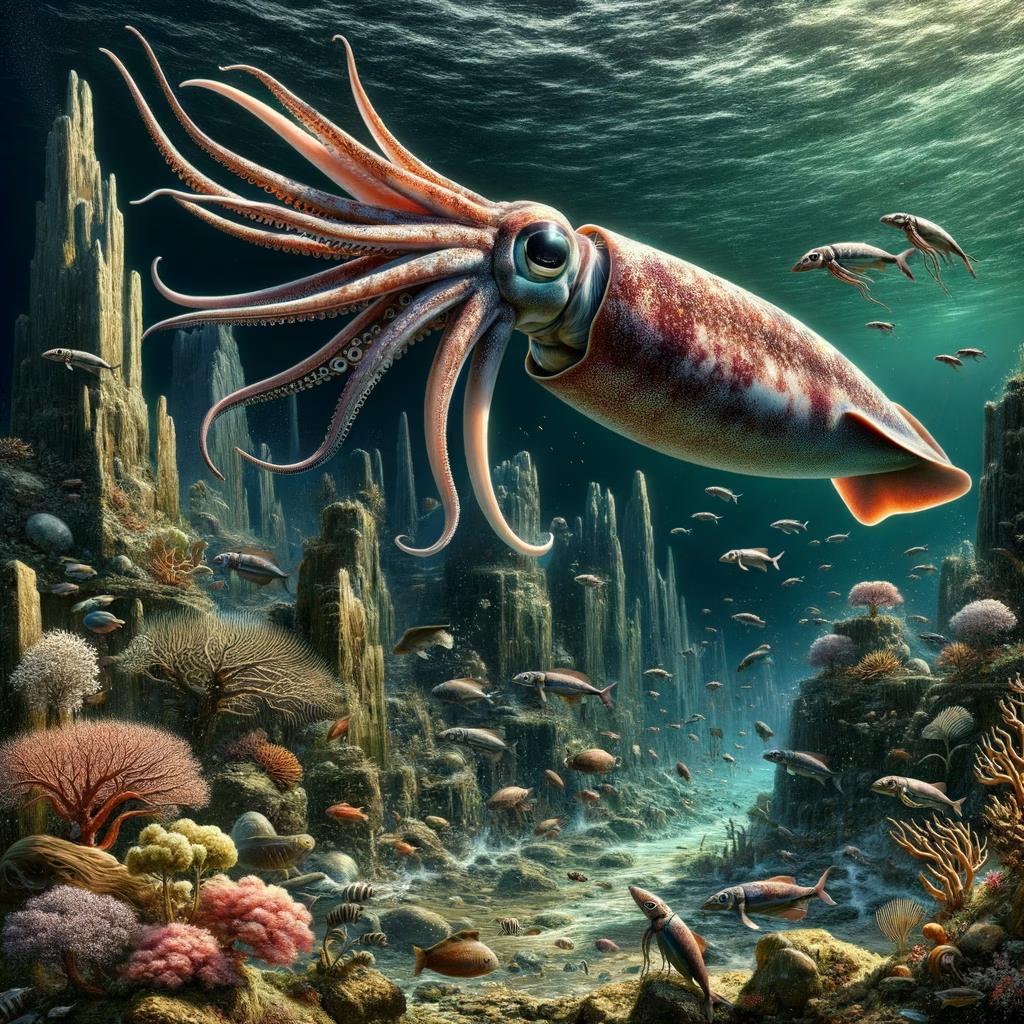
Imagine a world where the ocean’s apex predators were not the mighty dinosaurs or ferocious sharks, but rather, sleek, agile squids. What drove these enigmatic creatures to dominate marine ecosystems during the Late Cretaceous era? Recent research has illuminated this underwater riddle, revealing a complex evolutionary story that has long remained hidden beneath the surface.
For decades, the evolutionary history of squids has perplexed scientists, primarily due to the fragility of their soft-bodied forms. Unlike their contemporaries, squids lack hard shells, making their fossils rare and difficult to find. However, a determined team of paleontologists from Japan took an innovative approach: they focused on fossilized squid beaks, which, unlike their bodies, possess a robust structure conducive to fossilization.
This breakthrough led to the development of an advanced fossil discovery technique, one that allows researchers to create a complete 3D digital model of rocks and their embedded fossils. When applied to Late Cretaceous sediments in Japan, the results were nothing short of astonishing. The team uncovered 1,000 fossilized cephalopod beaks, including 263 identified squid specimens and 40 entirely new species, thereby expanding our understanding of the diversity and ecological significance of squids during this era.
As we delve deeper into the implications of this research, it’s essential to consider why squids achieved such prominence in their oceanic realm. The Late Cretaceous was a time of significant ecological upheaval, marked by fluctuating sea levels and shifting climates. The advent of squids, with their unique adaptations—such as jet propulsion and advanced predatory behaviors—seems well-timed. Their agility allowed them to exploit newly available niches and prey, establishing themselves as dominant hunters in the marine food web.
Moreover, the study’s findings resonate beyond the academic world. For technologists, the digitization technique represents a paradigm shift in paleontological research, paving the way for future discoveries across various geologic contexts. Policymakers might view the implications of this research through a different lens, recognizing the importance of marine biodiversity and the historical context needed to inform contemporary conservation efforts.
However, this narrative is not without its complexities. Critics have raised questions about the long-term ramifications of focusing on certain fossilized specimens over others, suggesting a potential bias that could skew our understanding of evolutionary pathways. As Andrew Parker, a prominent evolutionary biologist, aptly noted, “Every new discovery opens a door, but it can also obscure others.”
In conclusion, the rise of squids in the Late Cretaceous era exemplifies the intricate interplay between evolutionary adaptation and environmental dynamics. As we unearth more about these extraordinary creatures, one must ponder: what other secrets of the ocean lie submerged, waiting for the right technology and curiosity to reveal them? Understanding our planet’s distant past may very well hold the keys to conserving its future.