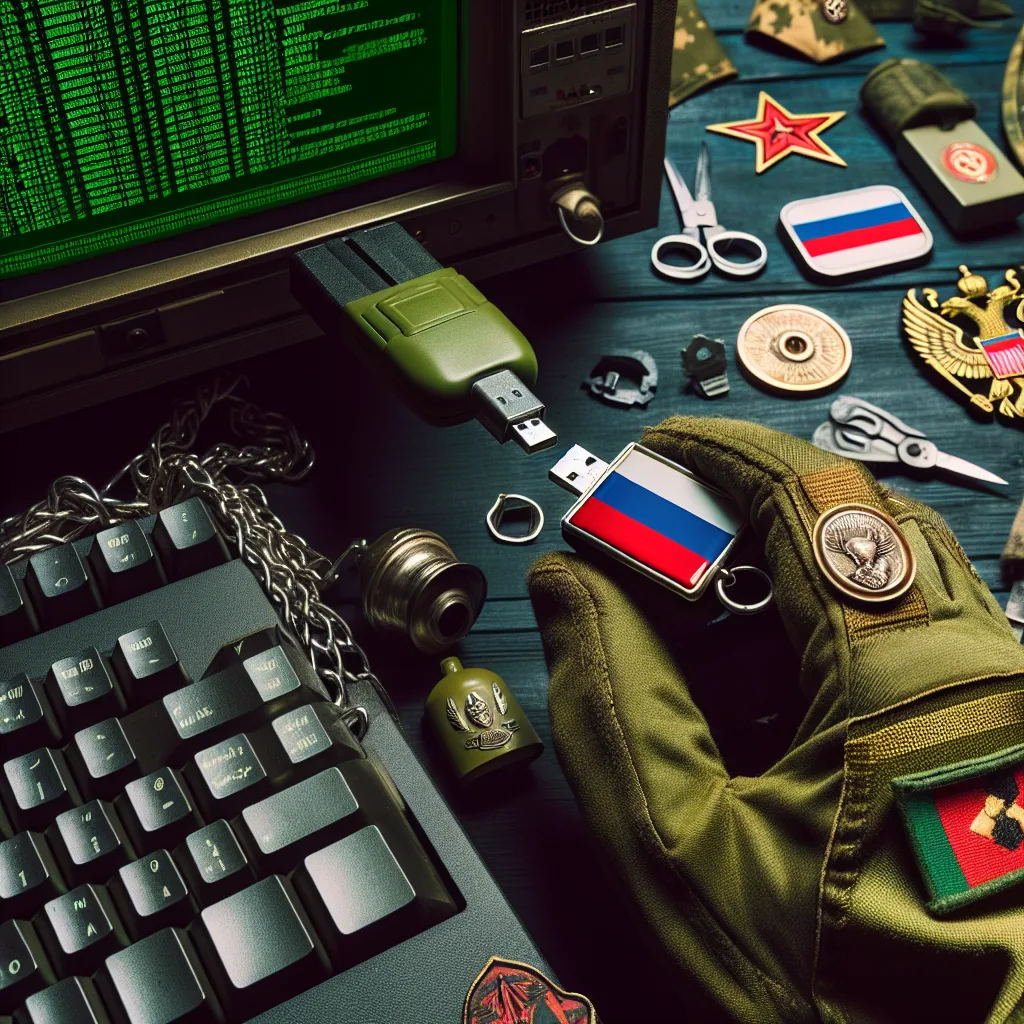
USB Warfare: The New Front in Cyber Conflict
In an age where the battlefield extends far beyond the physical realm, the recent revelations about Russian state-backed hackers targeting Western military operations in Ukraine underscore a chilling evolution in cyber warfare. The hacking group known as Gamaredon, also referred to as “Shuckworm,” has reportedly employed a novel tactic: the use of malicious USB drives to infiltrate military systems. This raises critical questions about the vulnerabilities of modern military operations and the lengths to which adversaries will go to exploit them.
The stakes are high. As nations grapple with the implications of cyber threats, the intersection of technology and military strategy becomes increasingly complex. The use of removable drives as vectors for cyberattacks not only highlights the ingenuity of these hackers but also exposes a significant gap in cybersecurity protocols within military frameworks. How did we arrive at this point, and what does it mean for the future of military operations?
To understand the current situation, one must consider the historical context of cyber warfare. The rise of the internet and digital technologies has transformed the landscape of conflict. Cyberattacks have become a tool of statecraft, with nations employing them to achieve strategic objectives without the need for conventional military engagement. The Russian government has been particularly adept at leveraging cyber capabilities, with groups like Gamaredon at the forefront of these efforts. Since the onset of the conflict in Ukraine in 2014, Russian cyber operations have escalated, targeting not only military infrastructure but also critical civilian systems.
Currently, reports indicate that Gamaredon has been actively targeting a specific military mission of a Western country involved in Ukraine. The group is believed to have deployed malicious USB drives, a tactic that exploits the human element of cybersecurity. These drives can be easily introduced into secure environments, bypassing traditional network defenses. Once connected to a computer, the malware can execute, allowing hackers to gain access to sensitive information and disrupt operations. This method is particularly concerning because it capitalizes on the trust that personnel place in physical devices, a trust that is often overlooked in cybersecurity training.
The implications of these attacks are profound. For military operations, the integrity of information systems is paramount. A successful breach can lead to compromised missions, loss of sensitive data, and even endanger lives. Moreover, the psychological impact on military personnel cannot be understated. The knowledge that adversaries are employing such tactics can erode trust in technology and create an atmosphere of paranoia. This is not merely a technical issue; it is a matter of national security and public trust.
Experts in cybersecurity and military strategy emphasize the need for a multi-faceted approach to counter these threats. According to Dr. Emily Hargrove, a cybersecurity analyst at the Center for Strategic and International Studies, “The use of USB drives in cyberattacks is a stark reminder that human behavior is often the weakest link in security protocols. Military organizations must prioritize training and awareness to mitigate these risks.” This perspective highlights the importance of not only technological defenses but also the cultivation of a security-conscious culture within military ranks.
Looking ahead, the potential for escalation in cyber warfare is significant. As adversaries continue to refine their tactics, Western military operations must adapt to an evolving threat landscape. This includes investing in advanced cybersecurity measures, conducting regular training exercises, and fostering collaboration between military and civilian cybersecurity experts. The challenge lies not only in defending against current threats but also in anticipating future ones. As technology advances, so too will the methods employed by malicious actors.
In conclusion, the targeting of Western military operations by Russian hackers using malicious USB drives serves as a stark reminder of the vulnerabilities inherent in modern warfare. As nations navigate this complex landscape, the question remains: how prepared are we to defend against an enemy that operates in the shadows, exploiting our trust in technology? The answer may well determine the outcome of future conflicts, both on the battlefield and in the digital realm.



