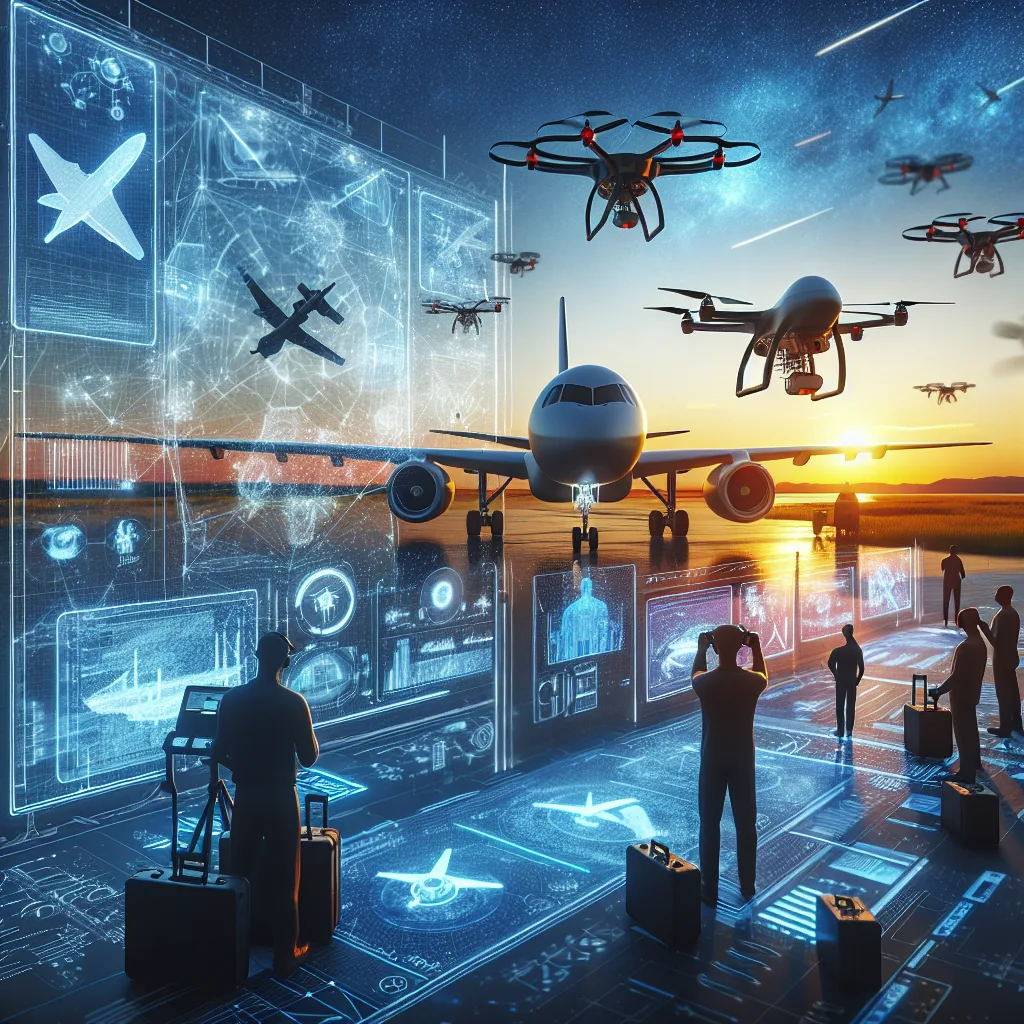
Revolutionizing Aircraft Maintenance: The Future of Aviation Through Drone-Enhanced Extended Reality
As the aviation industry grapples with increasing maintenance times, a new wave of technological collaboration is emerging, promising to transform how aircraft are serviced. With planes spending more time in hangars than ever before, the stakes are high. Can the integration of drone technology and extended reality (XR) solutions provide the efficiency boost the industry desperately needs? Recent partnerships between tech firms and aviation stakeholders suggest that the answer may lie in the skies.
The aviation sector has long been a cornerstone of global connectivity, but it is also one of the most regulated and scrutinized industries. According to the Federal Aviation Administration (FAA), maintenance delays have surged, with aircraft often remaining grounded for extended periods due to complex inspection requirements. This trend not only affects airline profitability but also passenger satisfaction and operational efficiency. The question looms: how can the industry adapt to these challenges while ensuring safety and compliance?
Historically, aircraft maintenance has relied heavily on manual inspections and traditional diagnostic tools. However, as aircraft technology has advanced, so too have the demands for quicker turnaround times. The FAA’s recent reports indicate that maintenance-related delays have increased by over 20% in the past five years, prompting a reevaluation of existing practices. In response, a coalition of tech firms is now exploring innovative solutions that leverage drone technology and XR to streamline maintenance processes.
Currently, several companies are piloting initiatives that utilize high-resolution imaging from drones to conduct detailed inspections of aircraft. These drones can capture intricate details that may be missed by the human eye, providing maintenance crews with a comprehensive view of an aircraft’s condition. For instance, a recent collaboration between a leading drone manufacturer and a major airline has demonstrated that drone-assisted inspections can reduce the time required for routine checks by up to 30%. This not only expedites the maintenance process but also enhances the accuracy of inspections.
Why does this matter? The implications of integrating drone technology into aircraft maintenance extend beyond mere efficiency. By reducing the time aircraft spend in hangars, airlines can increase their operational capacity, ultimately leading to higher revenues. Moreover, enhanced inspection accuracy can lead to improved safety outcomes, addressing one of the industry’s most critical concerns. As airlines face mounting pressure to optimize their operations, the adoption of these technologies could represent a pivotal shift in how maintenance is approached.
Experts in the field emphasize the importance of this technological evolution. Dr. Emily Carter, an aviation technology analyst, notes that “the integration of drones and XR not only modernizes the inspection process but also aligns with the industry’s broader goals of sustainability and efficiency.” By minimizing the need for extensive manual inspections, airlines can reduce their carbon footprint associated with maintenance operations, further enhancing their appeal to environmentally conscious consumers.
Looking ahead, the trajectory of drone-enhanced maintenance solutions appears promising. As more airlines and maintenance organizations adopt these technologies, we may witness a significant shift in industry standards. Regulatory bodies like the FAA are already exploring frameworks to accommodate these innovations, which could lead to faster approvals and wider implementation. Stakeholders should keep an eye on upcoming pilot programs and regulatory changes that may pave the way for broader adoption.
In conclusion, the collaboration between tech firms and aviation stakeholders to integrate drone technology and extended reality into aircraft maintenance represents a critical juncture for the industry. As maintenance times rise and operational pressures mount, the potential for these innovations to reshape the landscape is immense. Will the aviation industry embrace this technological revolution, or will it cling to traditional practices? The answer may very well determine the future of air travel as we know it.



