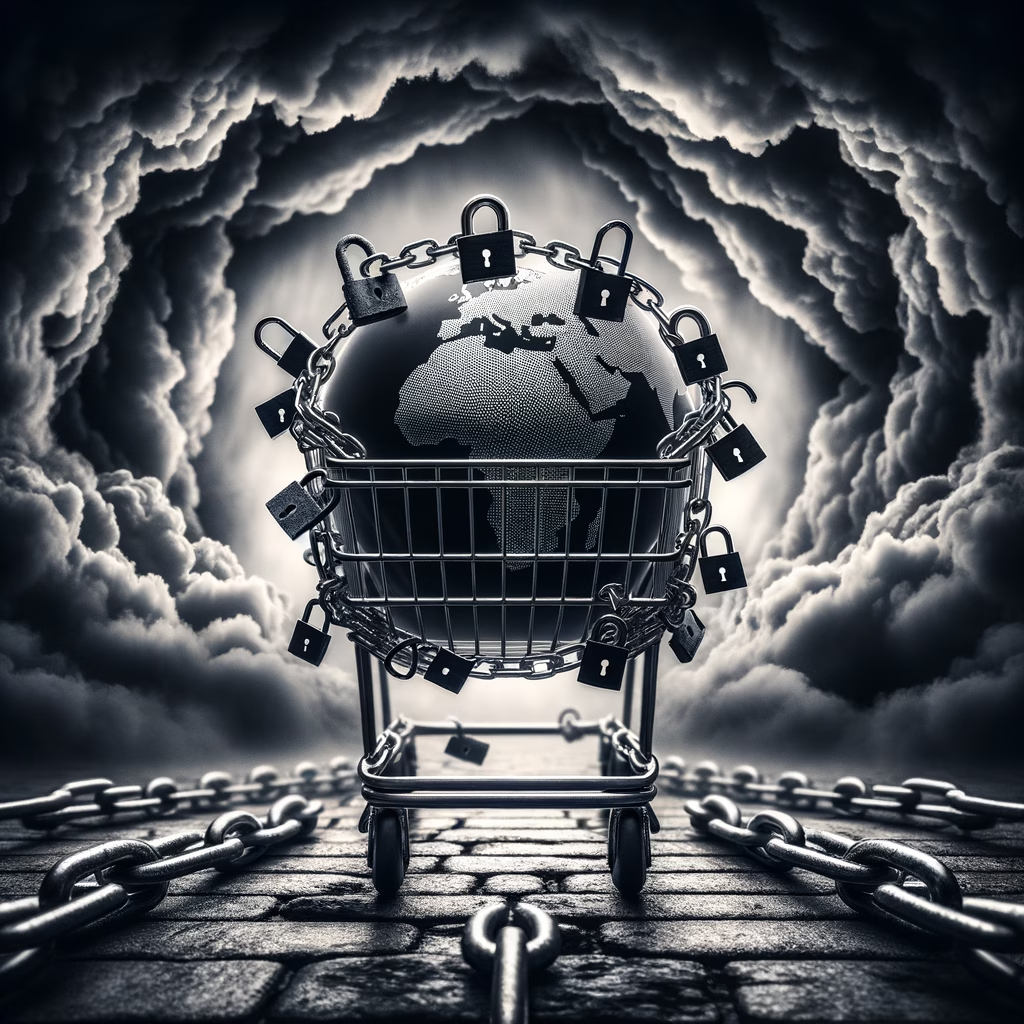
“How secure is the checkout line?” This question, once confined to concerns about credit card skimmers and shoplifting, now echoes ominously through boardrooms and government halls worldwide. The retail sector, long considered a prime target for cybercriminals due to its high volume of transactions and sensitive customer data, has seen a startling escalation in ransomware attacks during the second quarter of 2025. According to cybersecurity firm BlackFog, publicly disclosed ransomware incidents against retail companies surged by 58% in Q2 compared to the previous quarter, with businesses in the United Kingdom bearing the brunt of this wave.
Ransomware, a type of malicious software that encrypts victims’ data and demands payment for its release, has evolved from isolated incidents into a pervasive threat that disrupts critical services and jeopardizes customer privacy. Retailers, juggling complex supply chains and consumer expectations, have become increasingly vulnerable as digital transformation deepens their reliance on interconnected systems. BlackFog’s findings highlight this vulnerability: while ransomware attacks have been a growing menace across multiple industries, the retail sector’s spike in Q2 2025 signals a troubling trend that calls for immediate attention.

In the first quarter of the year, retailers already faced mounting cyber risks. Yet, the leap in attacks—58% higher in Q2—suggests that cybercriminals are refining their tactics and expanding their reach. The United Kingdom’s retail firms were particularly targeted, underscoring regional dynamics that could be influenced by regulatory environments, technological infrastructure, or geopolitical factors. This pattern echoes observations by the UK’s National Cyber Security Centre (NCSC), which recently noted an increase in ransomware targeting critical industries, including retail.
For technologists, the surge represents both a challenge and an opportunity. “Retailers must invest in proactive cybersecurity measures, including zero-trust architectures and rigorous incident response plans,” advises Dr. Lena Wu, Chief Security Officer at CyberSafe Solutions. “The sophistication of ransomware strains today means that traditional defenses are no longer sufficient.” This aligns with BlackFog’s own recommendations to enhance endpoint security and employee training, given that phishing remains a primary entry vector for ransomware attacks.
Policymakers, meanwhile, are grappling with how best to legislate and enforce protections without stifling innovation. The increased ransomware activity in retail raises questions about mandatory reporting standards, cyber insurance frameworks, and international cooperation to track and dismantle criminal networks. James Mulholland, a cybersecurity policy analyst at the International Institute for Strategic Studies, notes, “The transnational nature of ransomware demands a coordinated response that balances national interests with global security imperatives.”
From the perspective of the consumer, the ramifications are immediate and personal. Beyond the inconvenience of interrupted service or lost access to online storefronts, data breaches resulting from ransomware attacks jeopardize personal information, potentially leading to identity theft and financial fraud. A recent survey by the Consumer Federation of America revealed growing consumer apprehension about digital retail security, with 63% expressing reluctance to shop online due to cybersecurity concerns.
Adversaries behind these ransomware campaigns are often sophisticated criminal enterprises leveraging cryptocurrency anonymity and decentralized communication platforms to evade law enforcement. Their motivations extend beyond financial gain; some attacks serve as distractions from broader espionage efforts or geopolitical signaling, adding complexity to an already opaque threat landscape.
As the retail sector braces for what may be an ongoing onslaught, the question remains: how can businesses, governments, and consumers collectively fortify themselves against a threat that evolves as swiftly as the technology it exploits? Without concerted and adaptive strategies, the checkout line’s newest risk may not only be data theft but a fundamental erosion of trust in the digital marketplace itself.
For those watching the intersection of commerce and cybersecurity, this surge in ransomware attacks is more than a statistic—it is a clarion call to vigilance and resilience in the face of relentless digital adversaries.
Source: Infosecurity Magazine



