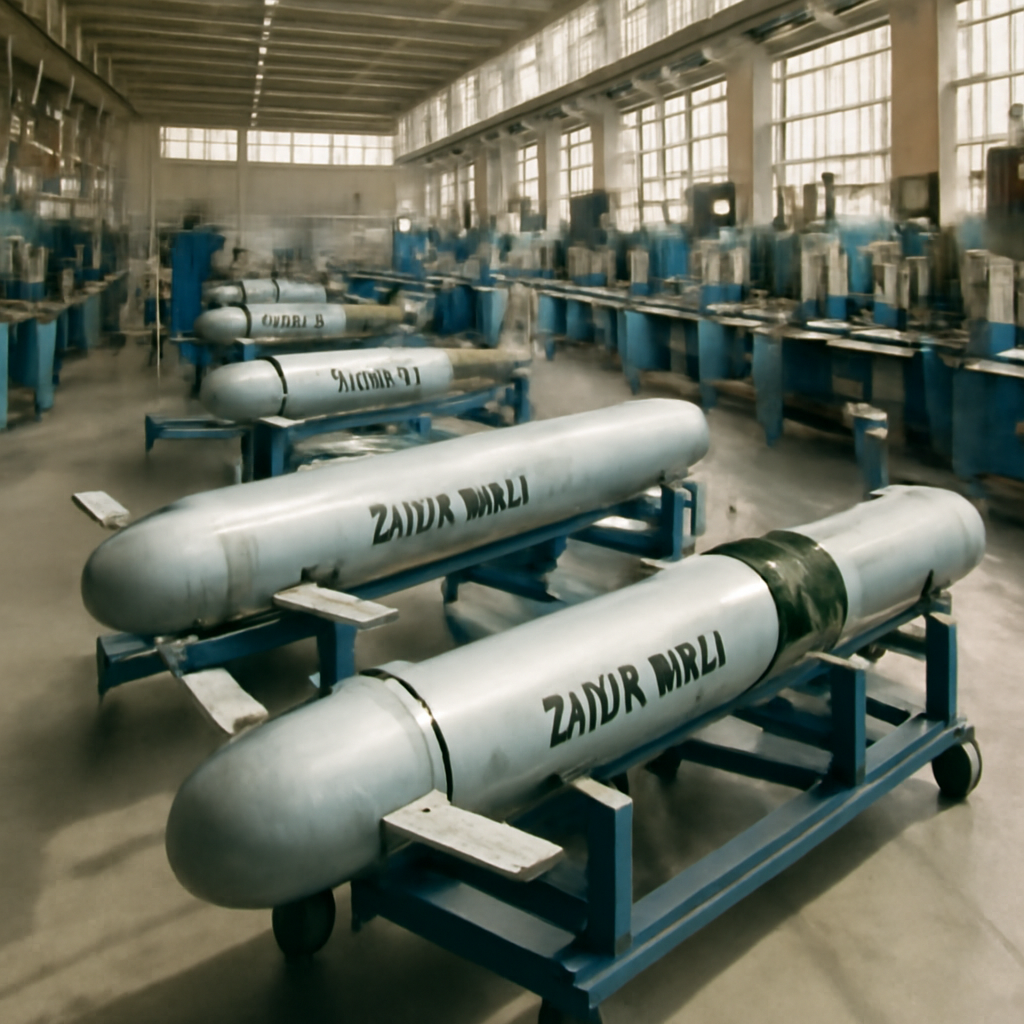
The Navy has awarded RTX subsidiary Raytheon a $22.9 billion contract to ramp Tomahawk cruise missile production to 1,000 rounds a year, a move the company and the Pentagon say will require heavy investment and a multiyear production build-up.
The Navy’s $22.9 billion award to RTX/Raytheon
The contract, announced in August 2026, formalizes a commitment to expand Tomahawk output to a stated production rate of 1,000 rounds per year. The award follows a February framework agreement between the Pentagon and RTX that “laid the groundwork” for the finalized deal, according to reporting on the contract.
RTX said the production increase will occur over a “multiyear period,” but did not provide a specific timeline for the ramp up in its public statements.
Raytheon’s stated investments and recent production gains
Raytheon President Phil Jasper said in a statement: “We are making significant investments in our workforce, technology, supply chain and facilities to dramatically boost production capacity and meet surging demand.” The company also said in a news release that it has “invested heavily” to boost production of the Tomahawk and other munitions, and that it delivered three times more Tomahawks in the first half of 2026 compared with the same period last year.

Audit-ready is a season. It shouldn't be.
Evidence in spreadsheets, controls drifting between audits, frameworks multiplying on flat headcount. Nubivance runs continuous compliance on Rapid7 Cyber GRC - SOC 2, HIPAA, ISO 27001, PCI, CMMC.
End the scrambleThe Pentagon’s acquisition approach: multiyear contracts as leverage
The award is part of a broader Pentagon strategy that has, over the past year, leaned on multiyear contracts as an incentive for prime contractors to make large, sustained investments in production facilities and supply chains. “The Department called upon industry to expand munitions production, and RTX has answered that call,” said Michael Duffey, the Pentagon’s top acquisition official. In his statement, Duffey added: “This Tomahawk award increases our ability to equip the Joint Force, ensuring our Warfighters never face a fair fight.”
Related framework agreements for other missiles
Beyond Tomahawk, Raytheon has framework agreements aimed at increasing production of multiple missile types. The company has arrangements to raise output of the AMRAAM air-to-air missile, Standard Missile-6, and Standard Missile-3 IIA, and to accelerate production of Standard Missile-3 IB. During a July 23 earnings call, RTX CEO Chris Calio said the company had “very, very productive and constructive conversations” with the Pentagon about turning those framework agreements into definitive contracts.
What this means for the Joint Force, RTX, and the Pentagon
- For the Joint Force: The Pentagon frames the award as increasing its ability to equip forces, citing the Tomahawk contract as a way to avoid “a fair fight,” a phrase used by Michael Duffey in the Pentagon’s statement.
- For RTX/Raytheon: The company says it will expand investments across workforce, technology, supply chain and facilities and points to near-term production gains — delivering three times more Tomahawks in H1 2026 versus H1 2025 — as the foundation for the planned scale-up.
- For Pentagon acquisition leaders: The contract exemplifies the department’s use of multiyear agreements as a lever to induce industrial investment; framework agreements from earlier in the year have begun to be converted into this large, definitive award, and company leadership characterizes ongoing talks as productive toward similar conversions.
The $22.9 billion award codifies a significant, multiyear effort to expand Tomahawk capacity and follows the Pentagon’s recent playbook of using longer-term contracts to drive industrial investment. The contract specifies a target output but leaves the timing of the ramp unspecified, and Raytheon’s public statements reiterate both the scale of internal investment and the company’s recent delivery gains. At the same time, RTX’s broader conversations with the Pentagon about converting framework agreements for AMRAAM, Standard Missile-6, and SM-3 variants into definitive contracts remain a named next step in the company’s public remarks.