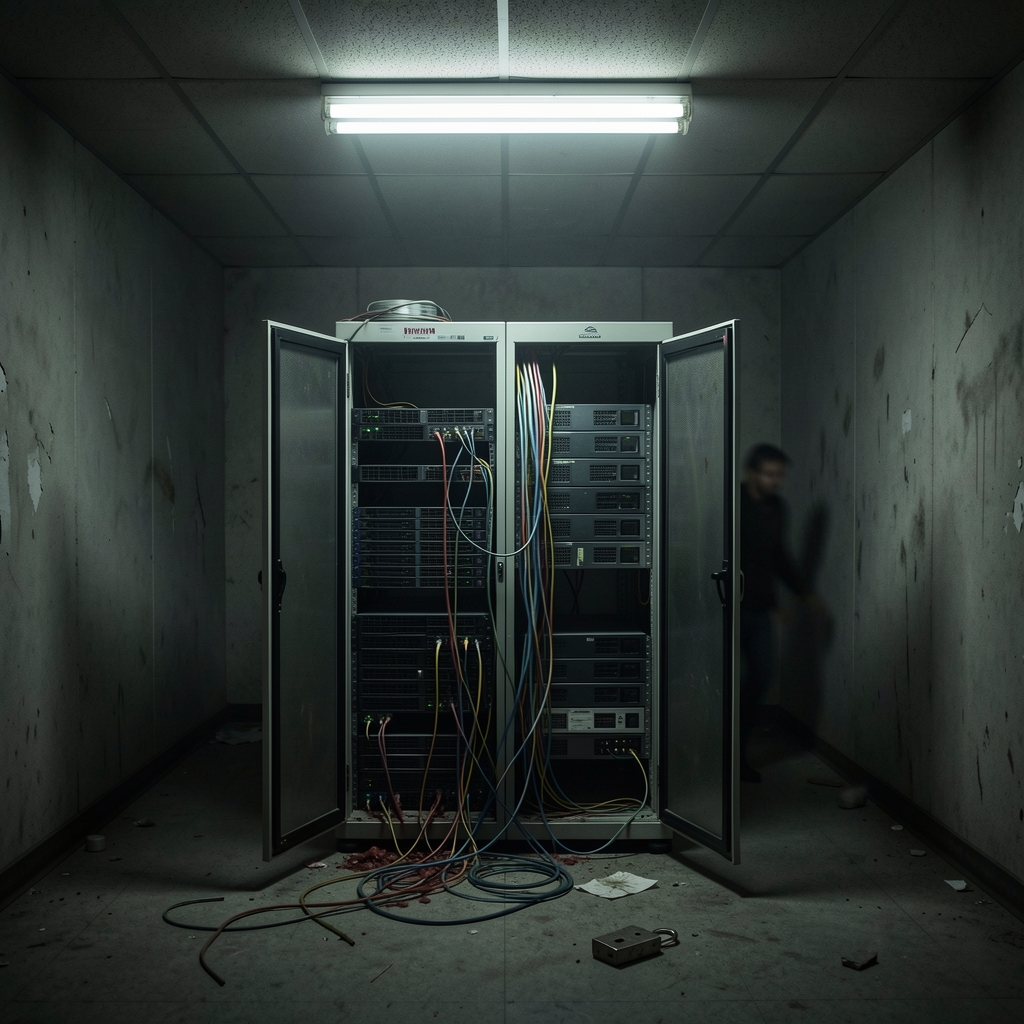
"Your cybersecurity is only as good as the physical security of the servers," the Pwned column warns — and then it does what the column promises: it immortalizes a failure so obvious it reads like an invitation to trouble.
The anecdote the column holds up
The Pwned column, which describes itself as chronicling "the worst vulns that organizations opened up for themselves," spotlighted a case in which a server-room lock proved ineffectual. The piece frames the failure with a blunt analogy: "If you’re the kind of person who leaves your car doors unlocked with a pile of cash in the center console, this week’s story is for you."
That juxtaposition — a technological crown jewel protected by something that could as well be theatrical — is the column’s starting point. Whether the failure was a poorly fitted lock, a propped-open door, or an install that amounted to security theater, the Pwned column treats the outcome the same: an avoidable weakness made public.
Why physical security still matters
The column’s central premise is simple and stark: digital defenses mean little if someone can reach the hardware. By drawing attention to a server-room lock that failed its basic purpose, the piece reminds readers that physical and cyber security are inseparable parts of a single posture.
Framing the episode within Pwned’s roster of "worst vulns" emphasizes that these are not theoretical risks but everyday lapses. The warning is pragmatic: when physical protections are weak, the rest of an organization’s safeguards can be bypassed, degraded, or rendered irrelevant.

Audit-ready is a season. It shouldn't be.
Evidence in spreadsheets, controls drifting between audits, frameworks multiplying on flat headcount. Nubivance runs continuous compliance on Rapid7 Cyber GRC - SOC 2, HIPAA, ISO 27001, PCI, CMMC.
End the scrambleDifferent lenses on the same failure
- Technologists: The column prompts engineering and security teams to reassess assumptions about where trust begins — at the keyboard or at the door. Simple fixes often come down to procurement choices, installation quality, and routine inspection.
- Policymakers and managers: The episode underlines the need to budget for and audit basic controls. A line item for a "lock" is not the same as verifying that it actually locks.
- Users and customers: The story is a reminder that institutional promises of security must be matched by observable practices. Confidence is a product of both policy and visible, functioning controls.
- Adversaries: For those seeking access, a weak physical barrier is a low-cost, high-payoff target. The column’s portrayal of the failure is effectively a how-not-to guide for defenders and a map of opportunity for attackers.
What this episode leaves us asking
The Pwned column’s blunt framing — that a failed server-room lock is akin to leaving cash in plain sight — is uncomfortable because it is both obvious and often ignored. Spotlighting such lapses performs a public service: it shames complacency, elevates an easily overlooked risk, and forces organizations to reckon with the basic mechanics of protection.
If cybersecurity is a layered enterprise, then every layer must function. When the most elemental layer fails, governance, policy, and technical sophistication matter less. The question for organizations is not merely whether they have locks, but whether those locks actually stop someone who wants in.
https://go.theregister.com/feed/www.theregister.com/2026/04/16/pwned_server_room_lock_lol/



