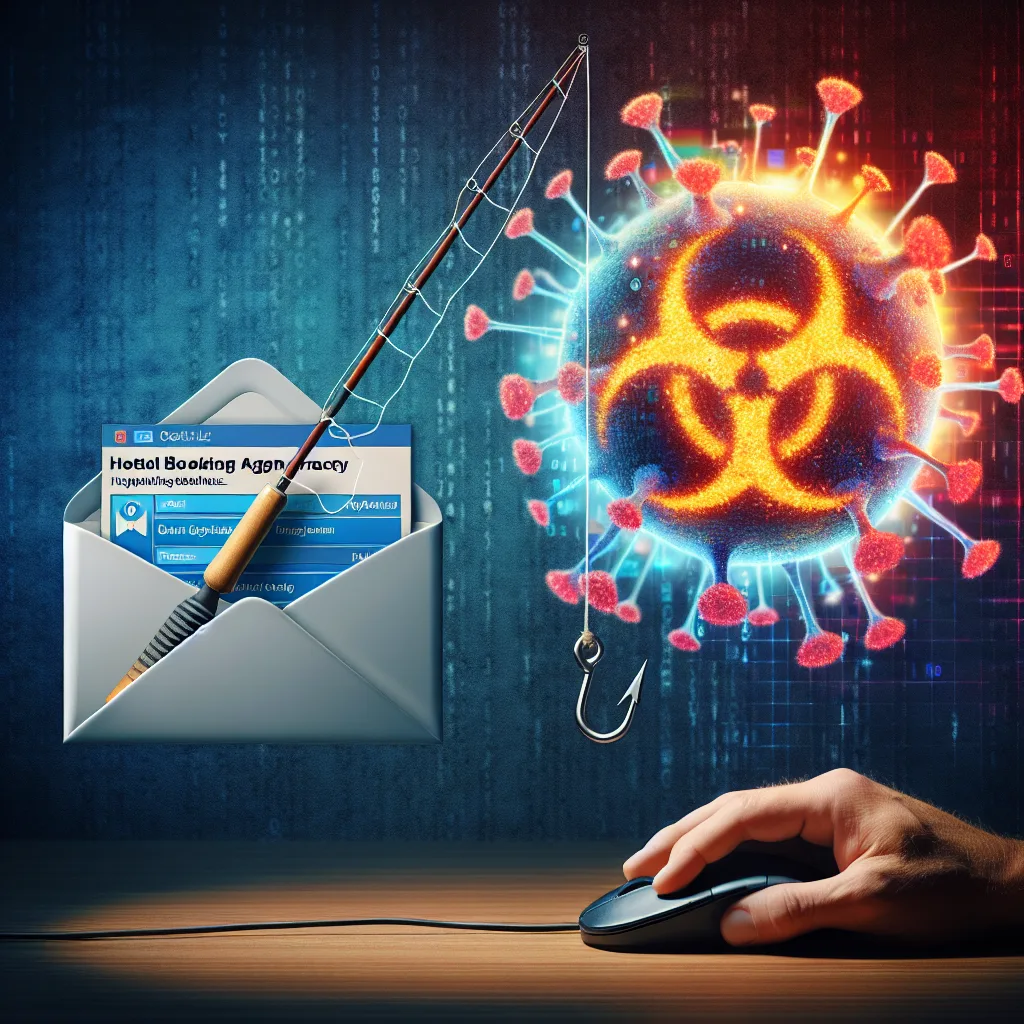
Crafty Digital Heist: How Fake Booking.com Emails Lured the Hospitality Industry into a Malware Trap
A wave of malicious emails, arrogantly disguised as communications from Booking.com, has sent ripples through the hospitality sector. This phishing campaign, leveraging a tool known as ClickFix to install malware, illustrates the sophistication of modern cybercrime—a digital assault on trust that experts warn is only growing in complexity and frequency.
The campaign’s modus operandi is both familiar and unsettling. Recipients, often employees at hotels, travel agencies, and other establishments relying on online booking systems, have reported receiving emails that mimic official Booking.com correspondence. With high-quality graphics and precise language intended to evoke legitimacy, the emails urge unsuspecting users to click on embedded links. Once clicked, these links trigger the installation of malware through a mechanism identified as ClickFix, a tool that ostensibly simplifies the malware delivery process while concealing its nefarious intent.
Phishing—fraudulent attempts to obtain sensitive information—has historically preyed on human error. The present campaign adapts this old trick to a new digital landscape. By spoofing the branding and language of a trusted industry player, cybercriminals elevate their success rate, attacking not just individuals but entire organizations within the hospitality sector. This dual-pronged risk of employee credential compromise and subsequent system infiltration underlies the current urgency among security professionals and industry leaders to reassess their cybersecurity protocols.
Booking.com, a leading platform in the travel industry, has long been a name synonymous with reliability and ease of use. Given its established reputation, the exploitation of its brand in phishing schemes is a sobering reminder of how digital trust can be weaponized. Cybersecurity agencies, including the Cybersecurity and Infrastructure Security Agency (CISA), have emphasized caution. They remind organizations to verify any unexpected communication and be vigilant when navigating unfamiliar links or attachments.
In the backdrop of an increasingly digital economy, where much of the hospitality industry’s operations depend on timely data exchange and online transactions, the implications of such attacks extend beyond immediate financial risk. There is a potential for systemic disruption where compromised networks could lead to data breaches, loss of customer trust, or even a temporary shutdown of critical operations.
Industry experts point to several factors that have contributed to the current environment ripe for phishing attacks:
- Email Authenticity: Modern phishing emails are crafted with meticulous attention to detail, replicating official logos, language, and formatting to avoid arousing suspicion.
- Vulnerable Sectors: The hospitality industry, which often relies on multiple digital platforms for booking and customer management, presents a fragmented security landscape.
- Tech Evolution: Tools like ClickFix streamline the malware installation process, enabling nefarious actors to bypass traditional safeguards.
Current observations indicate that the phishing emails are carefully targeted. Recent alerts from cybersecurity firms like Proofpoint and Recorded Future confirm that the campaign is not a random scattering of malicious attempts but rather a strategic effort to infiltrate organizations where digital reservations and data are integral to business operations. This targeted approach raises questions about whether isolated incidents might soon morph into broader, coordinated attacks if preventative measures are not widely adopted.
Why does this matter? Beyond the immediate financial damage associated with malware infections, these incidents represent an erosion of public trust in digital communications. Clients and partners depend on the integrity of branded emails as part of the broader ecosystem of digital commerce. When that trust is compromised, the fallout can be both reputational and operational, potentially leading to tighter regulations and increased compliance costs for affected businesses.
Security analysts such as Robert Hannigan, former head of GCHQ’s National Cyber Security Centre, have stressed that while technology evolves, so do the tactics of adversaries. “Phishing isn’t going away—it’s simply adapting,” Hannigan has noted in past interviews with cybersecurity outlets. In this campaign, the use of tools like ClickFix to deploy malware underscores the arms race between defensive measures and cybercriminal ingenuity. Such perspectives are echoed by experts at Proofpoint, who have documented a steady rise in sophisticated phishing techniques over recent years.
Looking ahead, it is anticipated that the phishing campaign exploiting Booking.com’s brand could serve as a catalyst for broader industry-wide improvements in cybersecurity protocols. With regulatory bodies and industry associations now closely monitoring these trends, businesses may be compelled to adopt advanced threat detection systems and employee training programs emphasizing the recognition of fraudulent emails.
Moreover, experts suggest that there will likely be a more collaborative approach between the private sector and governmental agencies to combat these sophisticated cyber threats. Initiatives involving information sharing, real-time alerts, and coordinated responses are expected to become commonplace, as agencies like CISA continue to issue timely advisories following emerging incidents.
The true challenge lies in adapting to an evolving threat landscape where digital trust is routinely manipulated for criminal gain. As cybercriminals refine their techniques, organizations must pivot towards more holistic and resilient cybersecurity strategies, balancing robust technical defenses with ongoing staff education.
The rise of phishing campaigns such as this serves as a potent reminder: the digital realm is as much a battleground of human behavior as it is of technological prowess. In a time when digital communications are the backbone of global commerce, questions abound about how much trust organizations can place in familiar names and brands. As industry watchdogs and cybersecurity professionals rally to fortify defenses, one must wonder—can trust remain an unassailable stronghold in our increasingly interconnected world?