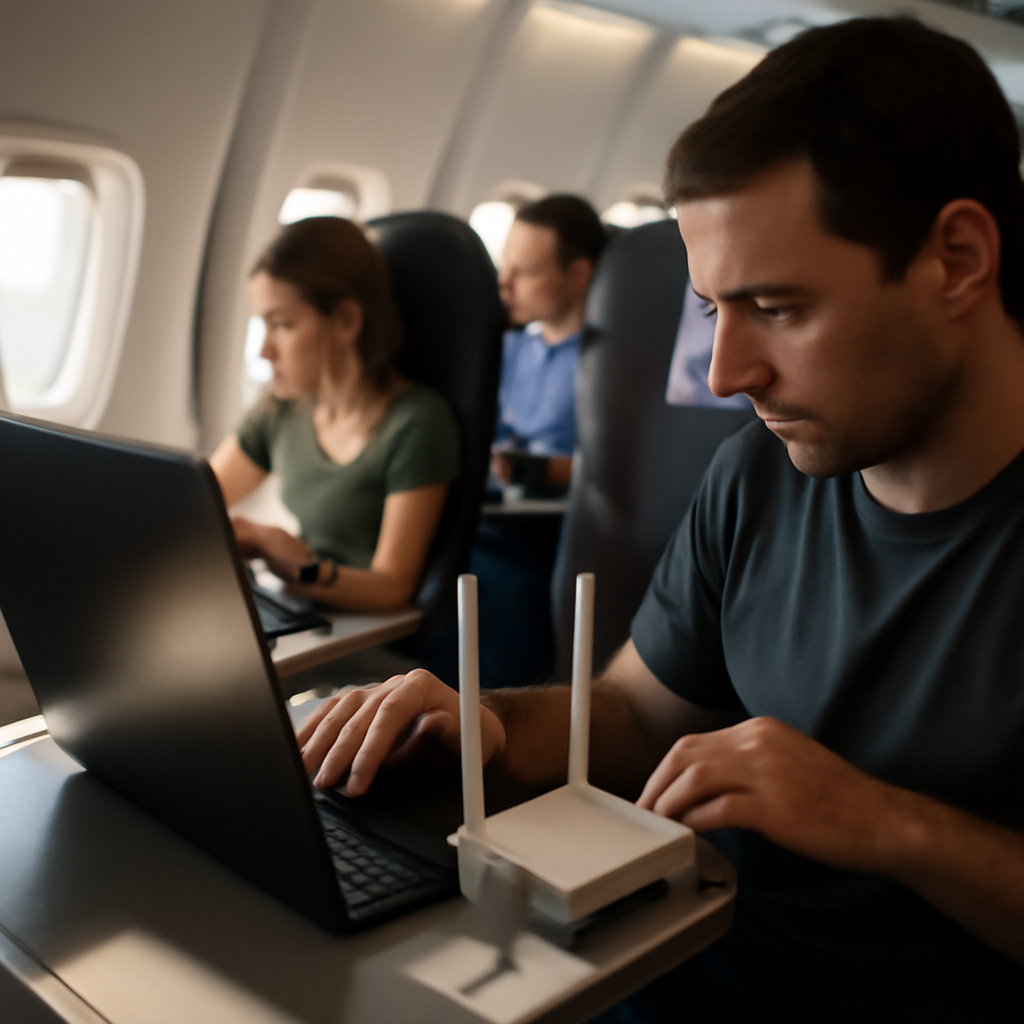
“HEY ALERT CORP SECURITY WE HAVE A PAX ON THAT HAS CREATED A SCAM WIFI CALLED DELTA WIFI FAST WE BELIEVE THEY ARE TRYING TO SCAM THE OTH PAX,” read an Aircraft Communications Addressing and Reporting System (ACARS) message sent by the crew of Delta Flight 591, a flight that departed Las Vegas for Atlanta after DEF CON.
ACARS crew messages and the immediate timeline
The crew’s ACARS traffic, first noted by flight watchers late Monday, signaled an unusual onboard network incident. A follow‑up ACARS message blamed “A BUNCH OF PAX THAT WERE AT A CYBER CONFERENCE IN LAS” who “WERE ABLE TO JAM OUR WIFI” and broadcast their own signal. Beyond those text messages, public accounts diverged: social posts and forum threads offered competing descriptions of what happened as the aircraft was in transit and after it landed.
Delta Air Lines’ confirmation and operational response
Delta confirmed the incident to The Register and supplied several clarifying points. “We are fully investigating to gather a complete set of facts, which will take time,” a Delta spokesperson said in an email. The airline said the safety of the plane, crew and passengers “was never in question, and no aircraft systems were affected.” Delta further stated there was no hack of any Delta system, including the in‑flight Wi‑Fi, but did confirm that an unauthorized Wi‑Fi network was broadcast onboard “for a short period of time.” Cabin crew temporarily deactivated the in‑flight Wi‑Fi for around 30 minutes as a result of the incident, Delta added, and said it would partner with federal law enforcement and aviation regulators on the investigation.

The cyber insurance questionnaire just landed. Now what?
SOC 2, HIPAA, insurance renewals - someone has to own security strategy. Nubivance provides fractional CISO leadership without the full-time salary.
Get a security leadAlleged methods: fake SSID, deauthentication, and a Wi‑Fi Pineapple mention
Public reporting and social media supplied competing technical narratives. An X (Twitter) poster speculated the fake network was intended to phish passenger credentials. A Facebook post shared to Reddit claimed the event involved a deauthentication attack that kicked users off the legitimate network and then presented a fake landing page. That Reddit‑linked Facebook post suggested the equipment used could have been a device such as a Wi‑Fi Pineapple, a device capable of broadcasting fake networks and performing deauth attacks. A commenter on the Hacking subreddit said they were at the Las Vegas terminal and saw similar activity aimed at airport Wi‑Fi. Posts on Facebook and X claimed law enforcement was waiting at the gate; a different post in the Delta subreddit, from someone claiming to have been on the flight, said they did not see police waiting at the gate. Atlanta’s airport police division told The Register they were unaware of the incident, and Atlanta’s Department of Aviation declined to comment.
Legal exposure under the FCC and the Communications Act, section 333
The Register cited an FCC PDF noting that intentional Wi‑Fi blocking can violate the Communications Act’s section 333. The Register summarized the legal exposure this way: “A willful and knowing violation punishable under the Act’s general criminal provision could carry a penalty of up to one year in prison and/or a fine of up to $10,000 upon conviction.” The Register also reported that the prison term could extend to up to two years if the offender had been caught doing this before.
What this means for technologists, federal regulators, and passengers
- Technologists and security teams: the incident highlights risks tied to rogue SSIDs and deauthentication techniques on passenger networks. Delta’s temporary shutdown of in‑flight Wi‑Fi for roughly 30 minutes demonstrates a short, operational mitigation but also underlines the need for monitoring and incident response plans for airborne networks.
- Federal regulators and law enforcement: Delta has signaled it will “partner with federal law enforcement and aviation regulators” on a formal probe. If investigators determine deliberate interference occurred, the FCC’s Communications Act provisions provide a statutory enforcement route with both fines and criminal penalties noted in the cited FCC guidance.
- Passengers and airport operators: public accounts tied the activity to attendees of a cyber conference in Las Vegas and to similar behavior in airport terminals. Passengers should be wary of connecting to networks with suspicious names; airport divisions and local police may be called to clarify whether any incident crosses from nuisance or pranking into illegal interference.
The facts on record are straightforward but incomplete: ACARS messages flagged a “scam” SSID and alleged jamming, Delta confirmed an unauthorized onboard broadcast and a short Wi‑Fi shutdown, and social posts offered multiple, competing technical explanations. Delta’s promised cooperation with federal law enforcement and aviation regulators establishes the next formal step — but whether investigators will find a willful violation under section 333 of the Communications Act, or identify a particular device or individual responsible, remains to be determined.