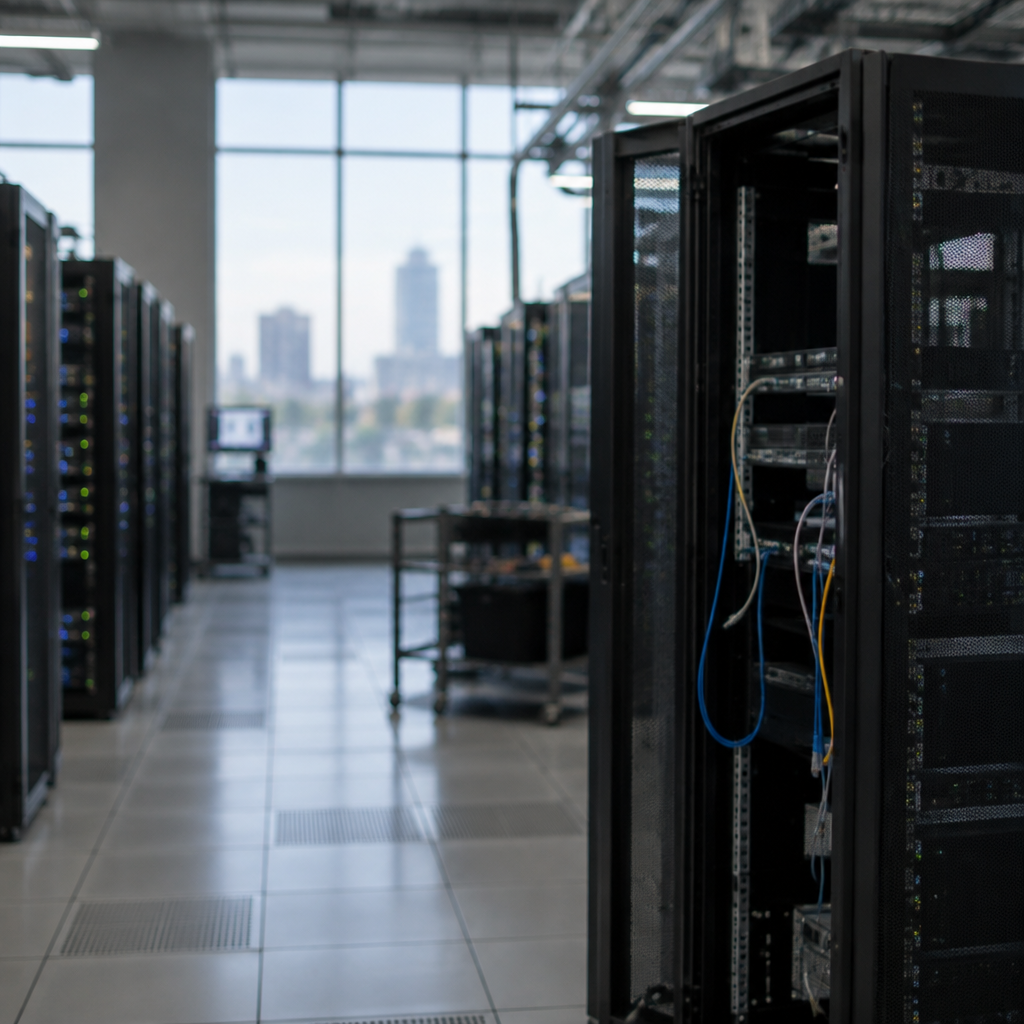
“Last week we surpassed a hundred thousand CVEs, and that's more than double 2025's total and we're there in mid-November,” Jessica Lyons said on The Register's Kettle podcast — a blunt tally that frames the week when Outlook, banks, airlines and classified networks all briefly failed.
Microsoft 365 and Outlook: a faulty update, not a coordinated strike
The week began with a large Microsoft outage that touched Outlook and other 365 services. Microsoft later described the root cause as “a faulty software update that we pushed back in July, and it's affecting all of our 365 services now,” a formulation that pushed many observers to ask whether the failure was an attack. The Kettle hosts reported that security professionals generally assessed the incident as a bug in pushed code rather than a coordinated hostile operation.
FAA disruption traced to L3Harris network upgrade
The Federal Aviation Administration briefly grounded flights after experiencing a communications failure. Initial public alarm quickly raised the specter of an attack, but the podcast reported that the outage was linked to a network upgrade: the FAA's provider, L3Harris, was “switching out the copper wiring with fiber.” The work was described as part of an ongoing project — an upgrade that, in hindsight, commentators noted may have been poorly timed on a Friday the 13th.

The cyber insurance questionnaire just landed. Now what?
SOC 2, HIPAA, insurance renewals - someone has to own security strategy. Nubivance provides fractional CISO leadership without the full-time salary.
Get a security leadChase, US Bank and Apple: bugs, outages and customer pain
Customers of Chase, US Bank and other banks found themselves unable to withdraw funds after a major outage. Chase told customers the issue was “a software bug in an on‑premises hardware system” and said it was not the result of a cyber attack. Apple also experienced multiple service problems affecting Apple Support, iCloud, Apple Pay and retail stores, leaving some customers waiting in lines because services were offline.
NSA classified network, Canonical and the DDoS outlier
The National Security Agency's classified internal communications network went offline during the same period; the agency said the interruption was due to “scheduled routine maintenance.” The open‑source vendor Canonical suffered a separate distributed denial‑of‑service incident just ahead of its Ubuntu Summit — a conventional DDoS that the hosts flagged as an example where an attack, rather than maintenance or legacy bugs, was clearly the cause. The Canonical case stands out amid the week’s broader pattern.
Root causes: deferred maintenance, legacy stacks, and AI surfacing old bugs
The podcast's analysts returned again and again to common themes rather than a single conspiracy: aging, underfunded infrastructure and long‑deferred maintenance; deep technical debt across embedded controllers and operating system components; and the rapid emergence of many vulnerabilities as automated tools and AI accelerate discovery.
Jessica Lyons framed the cluster as “software vulnerabilities, it's deferred maintenance,” and warned that AI is accelerating the rate at which old bugs are found and must be patched. The show noted two Microsoft Patch Tuesdays that included “more than a thousand CVEs” patched and disclosed, and observed that the current pace has produced a backlog of code that now needs urgent updates.
Liam Proven pushed the diagnosis deeper: modern devices are “legions of distributed systems” — multiple embedded processors, stacks and operating systems inside a single phone or server — and many of those components are not patched uniformly. He referenced Ken Thompson's “Reflections on Trusting Trust” to underline how deep, hard‑to‑see flaws can be embedded in toolchains, and raised the practical problem that some devices have code burned in ROMs that cannot be updated at all.
What this means for technologists, policymakers, and end users
- Technologists and security teams: face a rising volume of CVEs and pressure to patch at scale. The podcast noted a strong temptation to use AI to both find and fix bugs, but also warned that AI‑generated fixes may accelerate fragility if the fixes are not well understood.
- Policymakers and procurement leaders: are being pushed toward choices about sovereignty and procurement. The show highlighted Schleswig‑Holstein's migration from Microsoft 365 to Open‑Xchange and contrasted it with Denmark’s failed open‑source pilot that reverted to Microsoft — concrete illustrations of tradeoffs between dependence, cost and political will.
- End users and enterprises: continue to suffer tangible disruptions — grounded flights, inaccessible emails, failed bank withdrawals and offline retail services — and must weigh the costs of staying on hosted platforms versus returning to on‑premises systems, a move the hosts described as technically possible but politically and financially difficult.
The week’s pattern was unambiguous: in most of these failures, the immediate causes were maintenance, upgrades, and software bugs rather than a single, coordinated digital assault. But the broader lesson the podcast left listeners with was starker — the internet and its critical systems are encrusted with decades of technical debt and brittle stacks, and AI is now surfacing far more of those flaws, faster. Whether societies choose to rebuild, interpose new layers, or accept recurring outages depends less on technology than on political will, procurement choices, and how much operational pain the public and businesses will tolerate.