"Abdulrahman Alfozan allegedly concealed a covert recording device inside his employer's executive conference room to secretly capture sensitive communications about the company's super intelligence technology," the FBI director said.
The arrest, charges, and employment history
On October 9, 2026, the U.S. Department of Justice announced the arrest of Abdulrahman Alfozan, 35, who has been charged with using or endeavoring to use "an electronic, mechanical, or other device to intercept oral communications." The complaint says Alfozan had been employed at OpenAI since July 2025 as an engineering lead; he has since been terminated. If convicted, he faces a maximum penalty of five years in prison, a $250,000 fine, and three years of supervised release.
Alfozan's LinkedIn profile, cited in the complaint, lists a master's in data science from the University of California, Berkeley (2025), prior employment at Meta as a senior systems engineer, and a role as founding engineer at Nash.
The device: where it was placed and what OpenAI found
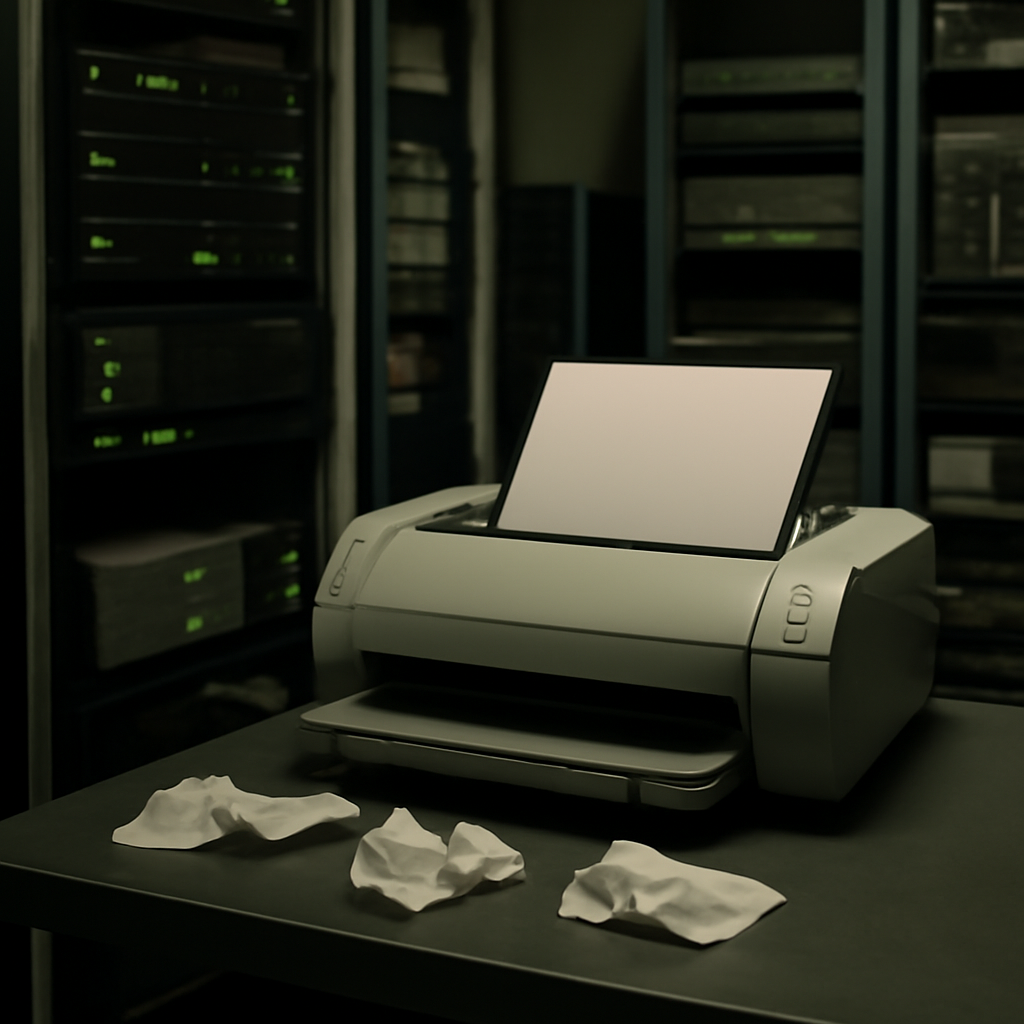
OpenAI personnel discovered a hidden audio recording device inserted into a USB port on the back of a television in an executive conference room on or around September 30, 2026. The complaint alleges the device had been concealed in toilet paper and installed sometime around September 28, 2026. Closed-circuit television (CCTV) footage obtained from within OpenAI's office showed Alfozan appearing near the executive conference room on multiple dates before the discovery, despite having no authority to access or participate in meetings there.
OpenAI described the device to reporters as "sophisticated." In a message to TechCrunch, the company said the device contained "advanced encryption, audio monitoring capabilities, and a mechanism for transferring data designed to evade monitoring." OpenAI also said it used its own AI models to "understand the device and where it had come from" and that it referred the matter to the FBI after discovery.
The complaint notes the executive conference room was reserved for discussions involving "highly confidential technical, commercial, and strategic information, including proprietary research, product plans, and business-development opportunities, as well as nonpublic information about OpenAI's technical progress and strategic decisions, capabilities, priorities, government engagements, and commercial relationships."

Audit-ready is a season. It shouldn't be.
Evidence in spreadsheets, controls drifting between audits, frameworks multiplying on flat headcount. Nubivance runs continuous compliance on Rapid7 Cyber GRC - SOC 2, HIPAA, ISO 27001, PCI, CMMC.
End the scrambleDigital footprints: productivity tools, chatbot prompts, and travel in the office
Investigators allege Alfozan also used an unspecified productivity tool to collect details about OpenAI's building addresses, meeting rooms, meeting-room capacities and calendars, "leadership and exec" locations, and external partner meetings. The complaint further ties a chatbot account associated with Alfozan's spouse to a series of prompts submitted between September 24 and 30, 2026, that relate to building and operating a covert recorder.
Sample prompts attributed to that chatbot account, as listed in the complaint, include:
- "Build a continuous audio recorder"
- "Customize Wi-Fi ... connectivity"
- "Improve audio and live listening"
- "Encrypt the SD card"
The complaint also alleges that prompts related to the device's custom header and unique MAC address were submitted between September 27 and 28, 2026. On October 5, 2026, Alfozan is alleged to have entered the executive conference room and appeared to look behind the television into which the device had been inserted. That same day, he allegedly left a bag unattended in a different room at an OpenAI building; the bag contained a second recording device plus his wallet and ID.
OpenAI, the FBI, and the question of exfiltration
OpenAI told the press it found no current indications that the employee had inappropriately accessed or exfiltrated model weights, source code, or customer data. The company emphasized its security program seeks to protect against a range of threats "from insider risks to cybercriminals to nation states," and characterized this case as an example of "how AI can help address these sophisticated security threats."
FBI Director Kash Patel framed the arrest in counterintelligence terms, saying "Protecting American SI [super intelligence] innovation is essential to safeguarding our nation's economic strength and national security, and the FBI views that mission as one of our highest counterintelligence priorities." The Department of Justice filed the criminal complaint that led to the October 9 arrest.
How technologists, policymakers, and enterprise security teams are likely to respond
Technologists and security teams will watch the technical descriptions closely — in particular, OpenAI's characterization of the device as having advanced encryption, audio monitoring, and a data-transfer mechanism designed to evade monitoring — and will likely review physical-access controls, USB-port policies, and detection tooling in sensitive rooms.
Policymakers and regulators will note the counterintelligence framing used by the FBI and the Department of Justice and may press for clarity about what was accessed and how workplace devices and AI tools can be used to assist or subvert security postures.
Enterprise procurement and facilities leaders will take particular interest in the complaint's account that an employee allegedly leveraged an internal productivity tool and a third-party chatbot account to build operational knowledge and technical instructions; those groups are likely to reassess what tools are allowed to query workplace scheduling and location data.
This case ties a physical covert device to a digital trail of tools and prompts, and it raises a narrow but concrete set of questions the public and the courts will now resolve: who had access to recorded content, whether any sensitive material moved offsite, and how such a device was constructed to avoid detection. The Department of Justice has brought criminal charges and the matter is now in the hands of prosecutors and investigators.