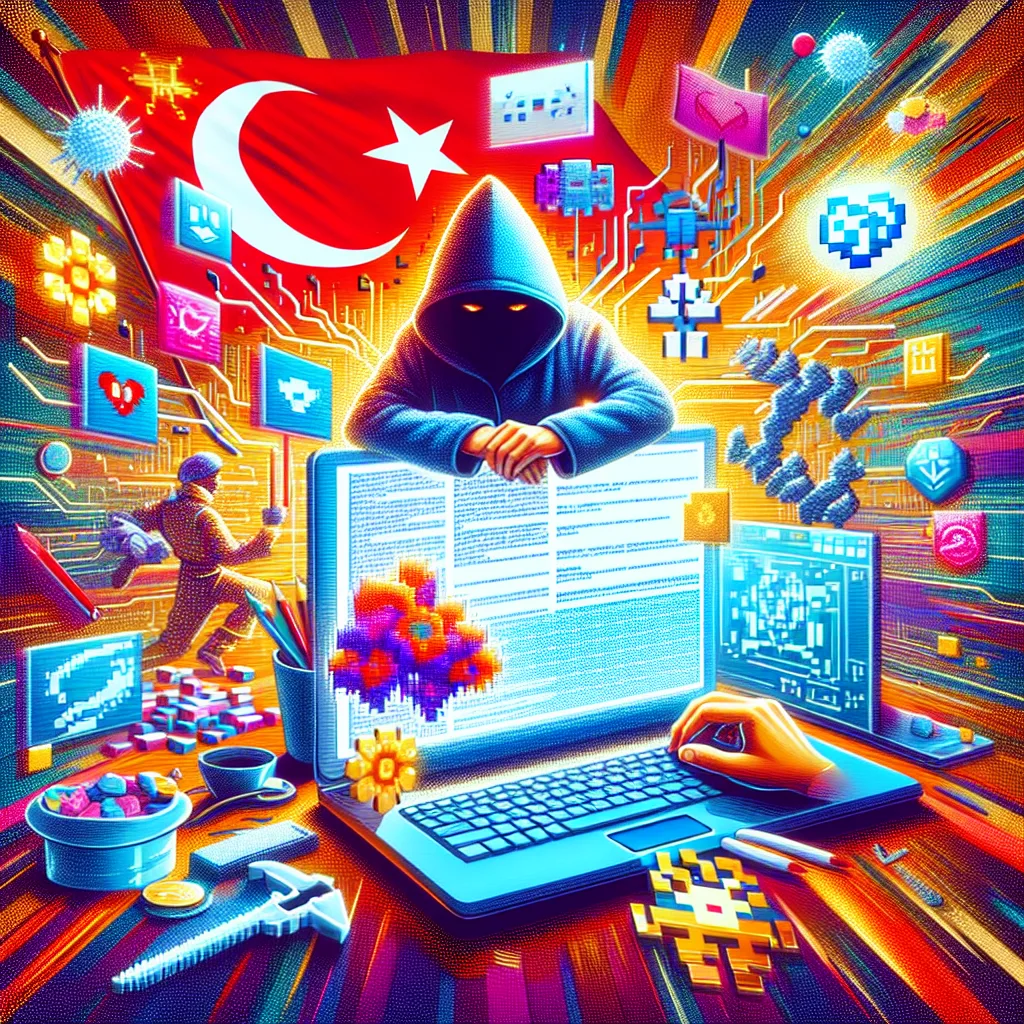
Cyber Shadows: How a Compromised Text Editor Targets the Uyghur Community
In a startling revelation that interweaves the digital realm with geopolitical strife, researchers at Canada’s Citizen Lab have identified a malicious phishing campaign and supply chain attack using an open source text editor. The campaign, apparently aimed at Uyghur individuals residing outside China, underscores the increasingly sophisticated measures by which state-connected entities may seek to silence or surveil ethnic minority groups. In a world where digital vulnerabilities can translate into real-world consequences, this discovery forces us to ask: Who stands to benefit when lines of code serve as instruments of repression?
At the heart of this report is an unsettling development in the ongoing struggle for human rights and digital security. The Uyghur community, long subjected to systemic repression from Beijing, now faces the threat of a technology-based attack. While the integrity of open source software has historically been a cornerstone for secure and transparent coding practices, the poisoning of this particular text editor casts a dark shadow over its reliability and raises the specter of state-sponsored cyber manipulation.
To understand the gravity of the situation, one must first consider the broader background. Over the last decade, international attention has steadily increased regarding China’s treatment of the Uyghur population—a Muslim ethnic minority predominantly living in the Xinjiang region. Numerous reports from human rights organizations, including Amnesty International and Human Rights Watch, have chronicled instances of mass detentions, forced labor, and pervasive surveillance. Against this backdrop, Beijing’s attempt to further destabilize the community by potentially exploiting trusted digital tools becomes a matter not merely of technical intrigue, but of profound human consequence.
The attack unfolds through what appears to be a two-pronged strategy. On one hand, a phishing campaign seeks to harvest credentials and sensitive information from Uyghur individuals vulnerable to targeted messaging. On the other, the supply chain attack compromises the source code of an open source text editor—a tool widely valued in developer communities for its accessibility and reliability. Once the compromised software is downloaded and installed, the malware subtly embeds itself within the user’s system, quietly establishing a remote foothold for further exploitation. This method, while not unheard of, is particularly alarming due to its indirect approach, exploiting a tool that many would consider inherently benign.
According to the recent analysis released by Citizen Lab—an independent research group at the University of Toronto renowned for its disclosures on state-sponsored cyber activities—the malicious code appears to be designed specifically to target Uyghur users living in exile. The researchers emphasized that the technical markers and behavioral patterns of the malware strongly suggest involvement from actors with ties to Beijing’s extensive cyber infrastructure. Although official statements linking the campaign directly to the Chinese government have not been released, the circumstantial evidence points to a continuing pattern of efforts to monitor and intimidate dissidents, regardless of their physical location.
This incident is significant for several reasons. First, it illustrates the increasingly blurred line between cyber espionage and direct human rights violations. Cybersecurity experts note that while phishing and supply chain attacks have become relatively common, the targeting of an ethnic minority via open source software is an innovative, if insidious, tactic. Second, the incident raises crucial questions about the security protocols of open source projects. Typically, the collaborative nature of open source software is seen as a strength, ensuring transparency and rapid bug resolution. However, this attack demonstrates that even well-regarded projects are not immune to exploitation when they become the medium for more sophisticated surveillance and data collection efforts.
For policymakers, this event is a stark reminder of the need for robust digital safety nets. Governments and international organizations have repeatedly emphasized the importance of cybersecurity, but incidents like this reveal the inherent challenge of defending not just state infrastructure, but also the digital lives of vulnerable populations abroad. Cybersecurity analyst and former National Cybersecurity Advisor Michael Daniel has argued in various public forums that “the borderless nature of the internet means that traditional notions of sovereignty and protection do not apply in a straightforward manner.” Such insights are particularly poignant here, as the Uyghur community straddles multiple jurisdictions, making coordinated protection and redress all the more complex.
The implications extend into economic realms as well. The open source ecosystem contributes significantly to global innovation, and any erosion of trust in these tools could have a chilling effect. Investors and enterprises alike track cybersecurity risks with a keen eye, knowing that breaches can disrupt vital operations and undermine public confidence. In this context, the compromised text editor becomes more than a single point of vulnerability; it symbolizes a broader risk to the integrity of digital development, particularly when targeted by state-affiliated actors.
Industry experts such as cybersecurity strategist and former NSA official Richard Clarke have long cautioned that state-sponsored cyber activities are evolving in tandem with technological advancements. While Clarke is widely known for his post-9/11 assessments and his warnings about the vulnerabilities in critical infrastructure, his analyses extend to the subtleties of software supply chain attacks. With verifiable indicators linking this incident to Beijing’s digital strategies, analysts argue that non-state actors and diaspora communities may increasingly find themselves in the crosshairs of such pervasive cyber campaigns. The current event thus represents a convergence of technical audacity and geopolitical intent.
As observers look forward, several key developments may shape the outcome of this unfolding narrative. International cybersecurity alliances, such as the newly reinvigorated efforts of NATO’s Cooperative Cyber Defence Centre of Excellence, are likely to intensify their scrutiny of state-sponsored exploits. Meanwhile, human rights groups are expected to leverage this incident to advocate for stronger global oversight over digital repression. The interplay between technology and human rights is complex, and events such as the poisoned text editor serve as a stark reminder that digital tools, while empowering, can be repurposed as instruments of oppression.
While Beijing’s motives remain a subject of speculation among experts, the evidence thus far paints a picture of calculated intent. In a world where digital infrastructure is increasingly interwoven with daily life, what becomes available to malicious actors is not merely a line of code, but a pathway to influence, intimidation, and control. The covert nature of phishing and supply chain attacks, combined with the historical animosity towards the Uyghur community, underscores why this incident is being scrutinized not just as an isolated cyber event, but as part of an ongoing campaign of political and social containment.
The current landscape suggests that additional safeguards are essential. Developers working on open source projects may need to bolster their security protocols, while users, particularly those from vulnerable communities, might benefit from increased digital literacy and enhanced protective measures. The intersection of technology with human rights continues to challenge our conventional understandings of security and trust, calling for a more integrated approach that encompasses technical, social, and legal dimensions.
In the coming months, stakeholders across sectors should closely examine the fallout from this incident. Governments may need to update cybersecurity policies and invest further in educational initiatives that enhance digital resilience among diaspora communities. Meanwhile, international bodies might consider sanctions or diplomatic measures aimed at curbing state-sponsored cyber aggression. The ripple effects of such measures could redefine how online spaces are secured and who is held accountable when vulnerabilities are exploited for political ends.
As history has shown, technological tools are double-edged. They serve as conduits for innovation and empowerment, while simultaneously offering channels for those determined to suppress challenges to the status quo. The poisoned text editor stands as a stark exemplar of this duality, a reminder that progress can be jeopardized when the lines between utility and exploitation blur.
Ultimately, the question that lingers is universal: In a world where digital networks span continents and ideologies clash in cyberspace, how do we safeguard the delicate balance between technological advancement and human security? The incident with this open source tool is a clarion call for stakeholders at every level to reaffirm their commitment to digital integrity, ensuring that the promise of open innovation is not overshadowed by the specter of digital repression.
This episode not only challenges our perceptions of open source reliability but also invites a broader reflection on the responsibilities of developers, policymakers, and the global community in an era when lines of code wield the power to shape human realities. With vigilance and collaboration, perhaps we can turn this dark chapter into a catalyst for strengthening the digital defenses that underpin both innovation and human rights.