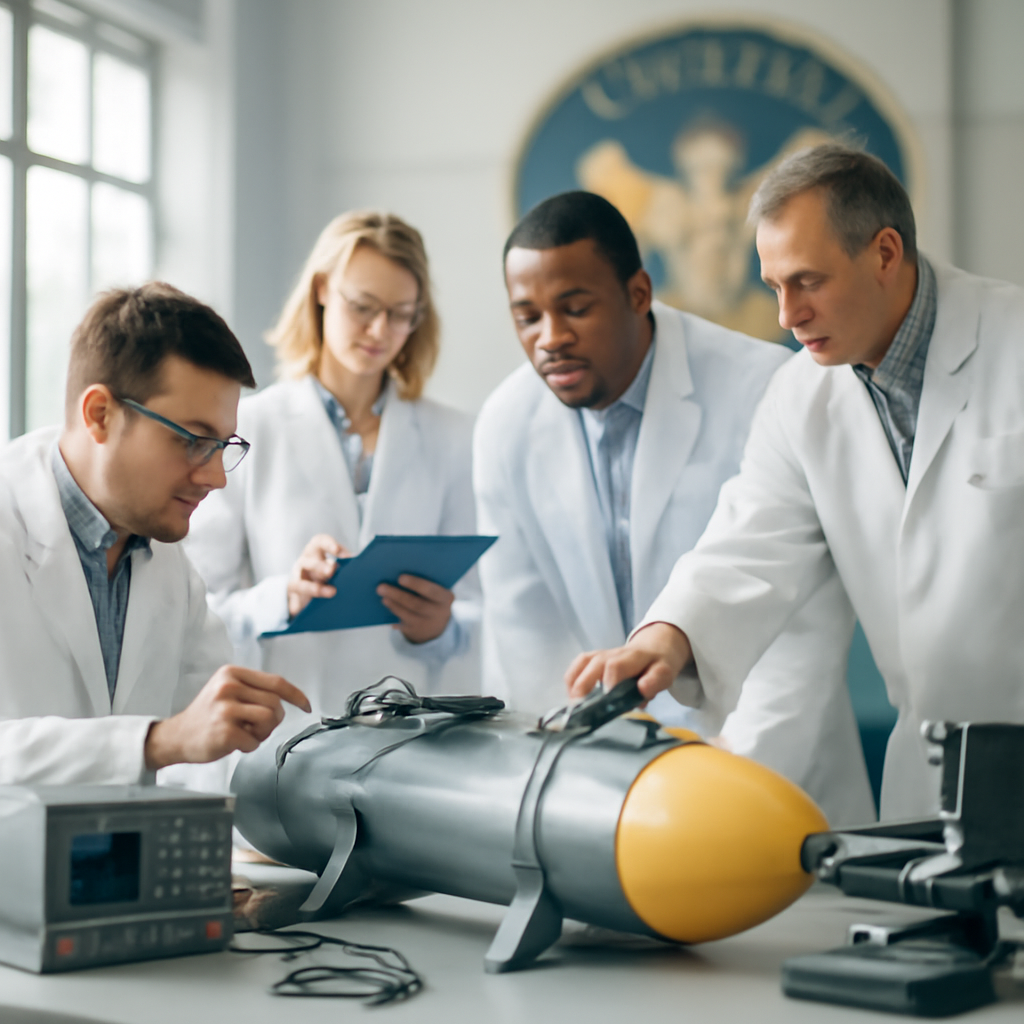
"Speed is, of course, the word of the year in our business," Chief of Naval Research Rachel Riley told an audience at the Defense One Tech Summit on June 16, 2026, framing a Navy push to get science and technology into operational hands faster and more selectively.
ONR strategy: "Feed S&T at Speed to the Fleet and Force"
The Office of Naval Research is finalizing a new strategy called "Feed S&T at Speed to the Fleet and Force," designed to accelerate delivery of technology to sailors and marines while concentrating limited research funds on problems industry will not solve on its own, Riley said. The document, in final production, urges closer collaboration with the Defense Innovation Unit, warfighters, and other stakeholders, and aims to explain "in plain English" what ONR does and what the Navy wants from industry.
Riley said the office is working to "de-layer and simplify" its bureaucracy so that the limiting factor on technology development becomes "the physical science and not the processes and the policies around it." The strategy therefore couples procedural streamlining with clearer signals to potential industry partners about ONR's unique role.
Prioritizing what only ONR can fund from a roughly $3 billion budget
Riley framed an allocation problem in stark terms: ONR manages roughly $3 billion in research funds and must identify work that is too early, too specialized, or insufficiently profitable for commercial investment. She said she oversees "1,100 Ph.Ds who work for me, almost all in STEM," and recounted asking them how to avoid duplicating industry effort. Their answer, she recalled, was simple: "If there is profit to be made, then it is something where industry capital will flow."
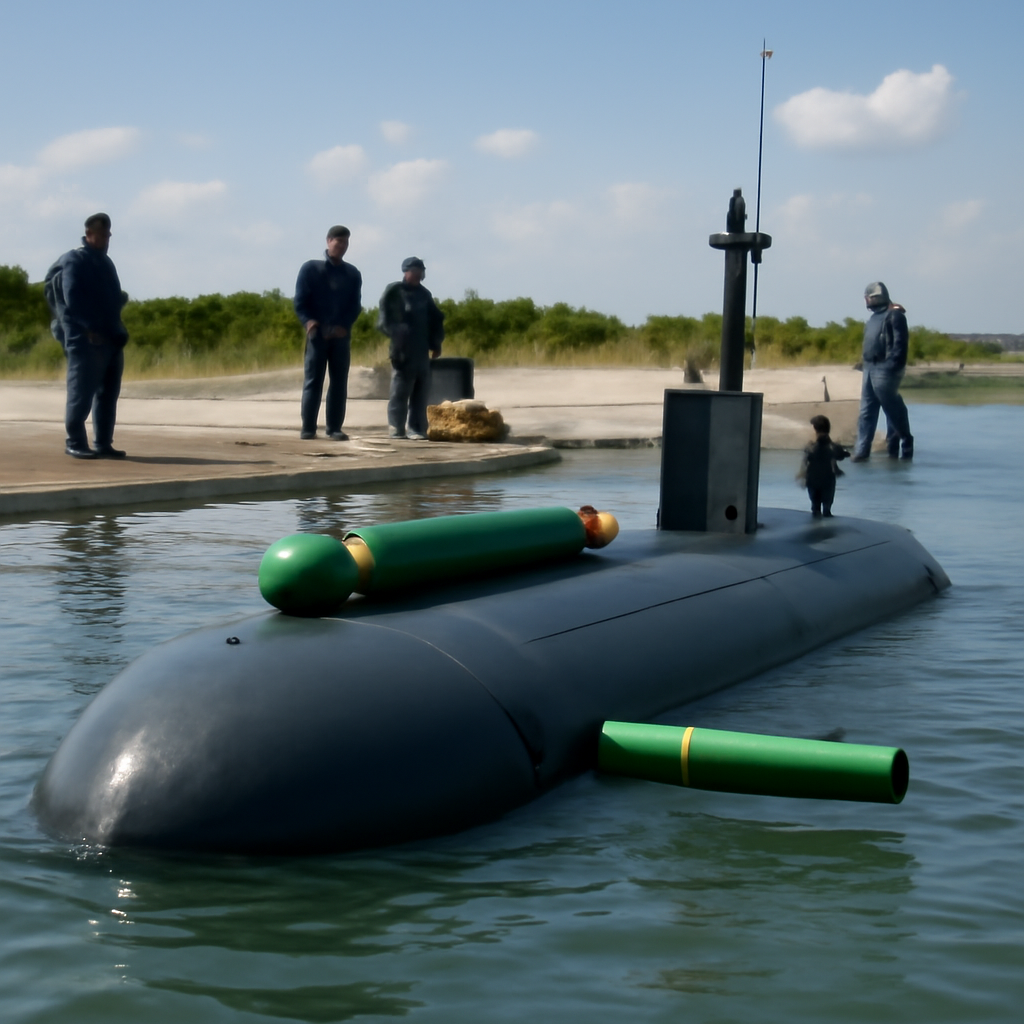
By that logic, Riley said ONR must focus on technologies "far from ready, or that no one but the U.S. military needs." She offered a concrete example: "there's really no commercial need for very quiet tubes that move through the water for a very long time"—her shorthand for submarine-related technologies—and concluded ONR must keep investing so the submarine force remains "the most lethal in the world."

The cyber insurance questionnaire just landed. Now what?
SOC 2, HIPAA, insurance renewals - someone has to own security strategy. Nubivance provides fractional CISO leadership without the full-time salary.
Get a security leadDIU maritime work: rescue, contested logistics, and mine countermeasures
Jarred Conley, principal director for maritime efforts at the Defense Innovation Unit, described recent operational advances that underscore the pace DIU seeks. He called the rescue of two Army Apache helicopter pilots by a 24-foot Saronic Corsair unmanned surface vessel "a great week at the Defense Innovation Unit," noting the system went "from first splash to success in four months."
Conley said DIU's maritime unit is now focused on contested logistics—including an autonomous resupply vessel effort—and on clearing naval mines like those Iran has used or threatened to use to close the Strait of Hormuz. He called mine-warfare "one of the Navy's most underfunded domains" despite its impact on the global economy, and noted that neutralizing mines presently "still requires humans," either flying aboard an MH-60 helicopter or deploying explosive ordnance disposal teams.
To broaden machine roles in mine countermeasures, DIU launched an MCM Modernization Prize Challenge last month; candidate systems are expected to deploy by September, Conley said.
Uncrewed systems, scaling, and the limits of one-to-one control
Both speakers highlighted a shared technical and operational challenge: moving from one human controlling one platform to one human supervising many. Riley warned that too many current approaches resemble "little kids playing soccer," and said that model "is not good enough for our American warfighters." She noted that controlling undersea robots is "a different game" than flying unmanned aerial vehicles, and said ONR is funding academic research into how insects and birds swarm to develop mathematical models that scale to unmanned vehicles.
Conley added a complementary point on mass and acceptance: "going from zero to one is achievable, but going from one to 100 is hard," and commanders' increasing willingness to accept an "80% solution," provide feedback, and iterate quickly is helping development at scale.
What this means for warfighters, the Defense Innovation Unit, and defense contractors
- Warfighters: Expect earlier access to prototypes and an emphasis on systems that can operate at scale under human supervision, particularly in underfunded missions like mine countermeasures and contested logistics.
- Defense Innovation Unit (DIU): DIU will continue rapid experimentation—evidenced by the Saronic Corsair rescue—and will press prize challenges and deployments scheduled by September to push machine roles into operations.
- Defense contractors: ONR is urging program officers to act as "thought partner[s]" to industry, with the goal of handing useful technology off to commercial firms once matured; contractors should expect clearer statements of need and closer technical engagement from ONR program officers.
Conley also voiced support for a Capitol Hill proposal to create a combatant command for robots and automation, signaling a policy conversation on organizational arrangements to manage accelerating autonomy and scale.
The new ONR strategy lands at a practical inflection point: ONR is finalizing a document that pairs a push for bureaucratic simplification with a discipline for funding only what industry will not and a plan to partner more tightly with DIU and warfighters. The next visible milestones will include DIU's candidate MCM systems deploying by September and ONR moving its strategy from final production into implementation—actions that will show whether "speed" becomes doctrine or remains an aspiration.