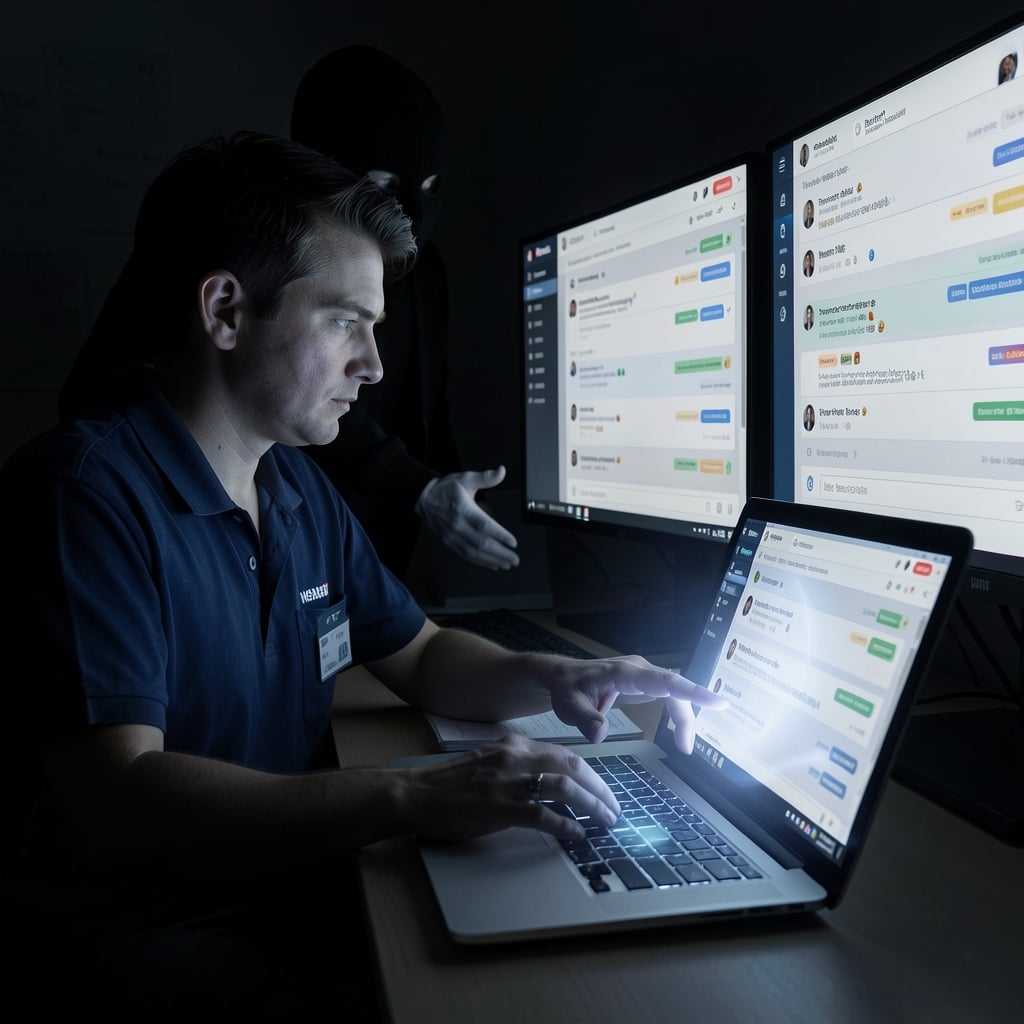
"Microsoft is warning of threat actors increasingly abusing external Microsoft Teams collaboration and relying on legitimate tools for access and lateral movement on enterprise networks."
What Microsoft reported
Microsoft has issued a warning that adversaries are turning Microsoft Teams—specifically its external collaboration features—into an attack vector. The company said attackers are not only abusing Teams for helpdesk impersonation attacks (as signaled in Microsoft’s notice and the reporting title) but are also depending on legitimate, built‑in tools to gain access and move laterally inside enterprise networks.
Why this matters
The combination Microsoft describes presents a particular dilemma for defenders. Using a widely adopted collaboration platform for impersonation exploits social trust and common workflows, while leaning on legitimate system tools to traverse networks can reduce the visibility of malicious activity. That dynamic can make detection and response more complex: defenders must distinguish routine, permitted collaboration and administration from deceptive use designed to escalate access or reach additional resources.
Perspectives to consider
- Technologists: Microsoft’s warning calls attention to the need to examine how collaboration platforms are configured for external participants and how administrative and native tooling is monitored when used during support or troubleshooting sessions.
- Users and helpdesks: The notice underscores a reputational risk inherent in helpdesk interactions—trusted workflows can be imitated. Users and support personnel may need clearer verification steps and awareness that attackers can exploit the same collaboration channels they rely on.
- Policymakers and risk managers: Even without naming specific incidents, the pattern Microsoft described suggests that policies governing third‑party access, logging of administrative tool use, and external collaboration deserve review to reduce opportunities for abuse.
- Adversaries: According to Microsoft’s characterization, attackers favor blending into normal activity by using legitimate features and tools—an approach that complicates simple signature‑based defenses and elevates the value of behavioral and context‑aware detection.
What organizations should weigh
Microsoft’s warning frames a choice between convenience and control. External collaboration accelerates work across organizations and with partners, but it also expands the surface attackers can attempt to exploit. Similarly, legitimate administrative tools enable efficient operations but, when misused, can enable stealthy access and lateral movement. Organizations must therefore weigh how to preserve collaboration while tightening verification, telemetry, and controls that help separate benign from malicious activity.
Microsoft’s notice is brief but pointed: collaboration platforms and native tooling are part of today’s attacker playbook. Will defenders adapt their configurations, monitoring, and user practices fast enough to close the gap?