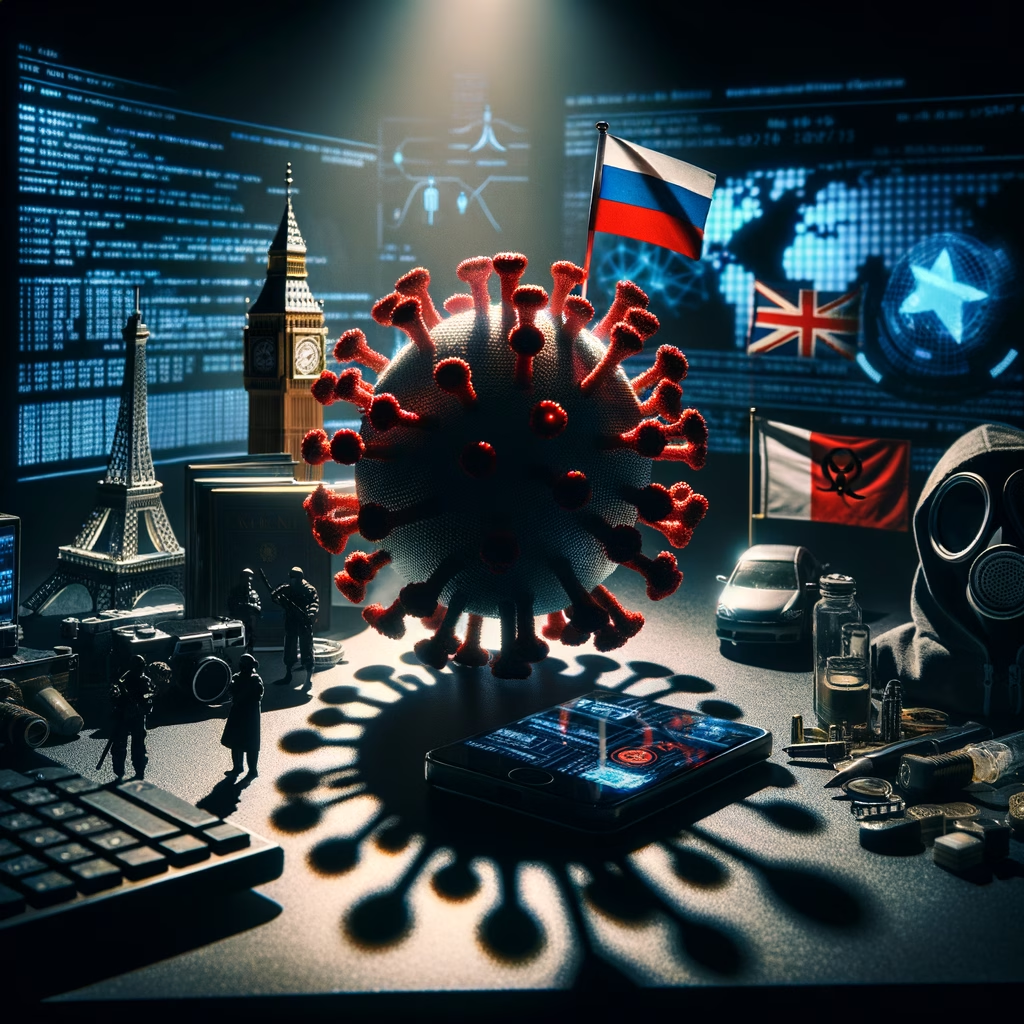
In a digital landscape increasingly beset by threats, one question looms large: how secure are our communications when shadowy operatives can infiltrate our inboxes with alarming ease? Recent revelations from the UK government have ignited this concern, shedding light on the activities of a notorious Russian hacking group known as APT28, or Fancy Bear. This group, linked to the Russian military intelligence agency GRU, has been deploying a new form of malware designed specifically to harvest Microsoft email credentials, posing significant risks to organizations worldwide.
APT28 has garnered a reputation for its relentless cyber operations, which have targeted a range of institutions—from political organizations to military establishments. The new malware, recently uncovered by UK cybersecurity officials, signifies a troubling evolution in their capabilities. This sophisticated tool is engineered to extract login information from Microsoft accounts, granting malicious actors access to sensitive communications and valuable data. As the UK’s National Cyber Security Centre (NCSC) warns, the implications of this breach extend far beyond individual accounts; they threaten the very integrity of communication systems used by public and private sectors alike.
The current cybersecurity climate is already fraught with challenges. With the rise of remote work and increasing reliance on cloud-based solutions, vulnerabilities in email systems have become a pressing concern. The malware reported by NCSC exemplifies this threat, designed to exploit weaknesses in Microsoft services that many users take for granted. According to the UK’s digital defense chief, “the threat posed by state-sponsored groups like APT28 cannot be overstated. Their ability to disrupt, steal, and manipulate information poses a challenge not just to the UK, but to global security.”
Different stakeholders view this issue through varied lenses. Technologists may ponder the effectiveness of current security measures and the need for more robust protocols. Policymakers might see it as a call to strengthen international cybersecurity collaborations and establish stricter regulations on digital espionage. Meanwhile, users find themselves caught in the crosshairs, uncertain about how to protect their personal and professional communications in an era when data breaches are increasingly commonplace.
Yet, amid these layers of complexity, one must ask: what steps can individuals and organizations take to mitigate their risks? Cyber hygiene practices, such as enabling two-factor authentication and regularly updating passwords, are essential defenses. However, these measures often fall short against sophisticated malware. Experts stress the importance of remaining vigilant and proactive, urging users to stay informed about potential threats and employ advanced security solutions to safeguard their digital environments.
As the dust settles on this latest revelation, the risks are clear. The discovery of new malware from APT28 serves as a stark reminder of the vulnerabilities that pervade our interconnected world. With the landscape of cyber warfare evolving rapidly, can we ever truly feel secure in our digital communications? As the stakes rise, the imperative to bolster our defenses has never been more pressing.
For further reading, visit the original story at The Register.




