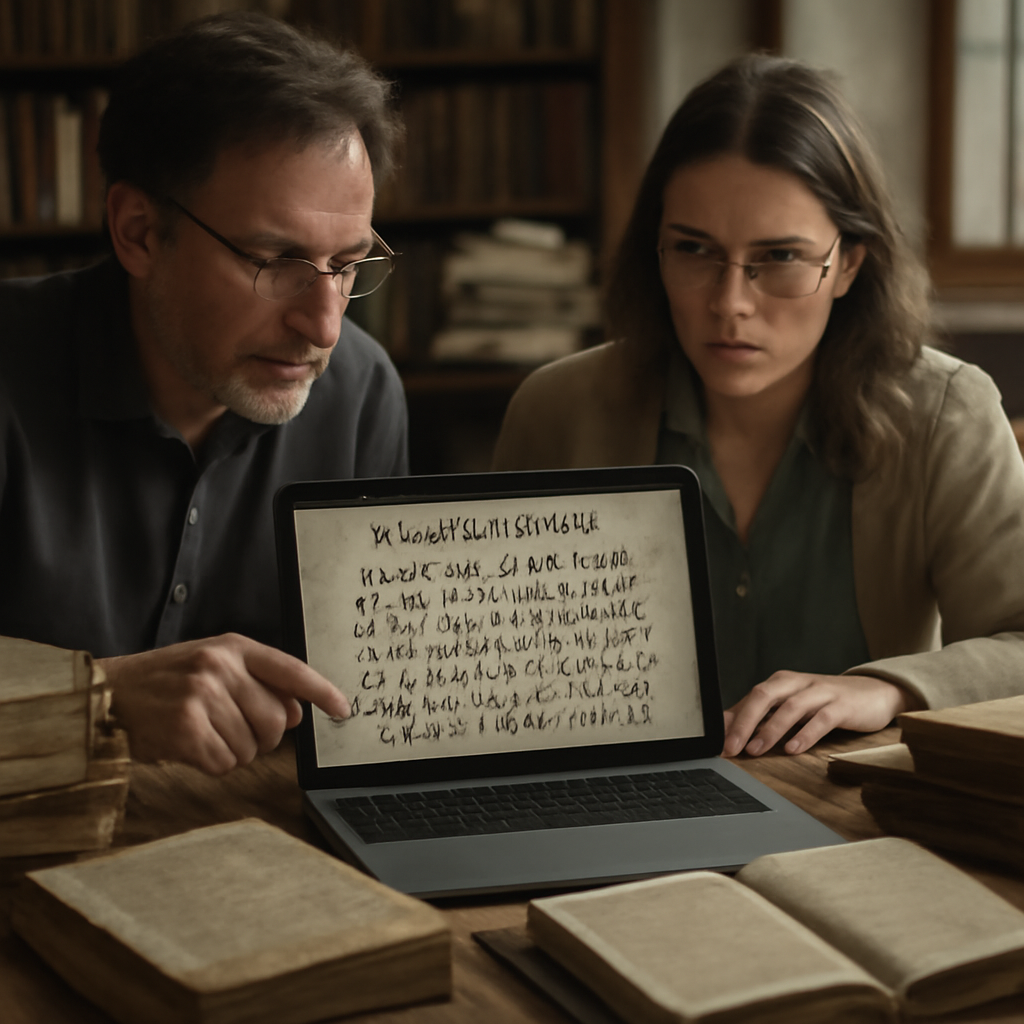
What is at stake is contained in a single, compact report: "Researchers are using machine learning algorithms to decrypt historical pencil-and-paper ciphers." That line, brief and plain, describes a present activity that links modern computation — "machine learning algorithms" — to texts produced in an earlier era — "historical pencil-and-paper ciphers."
Researchers are applying machine learning algorithms
The source states, without further elaboration, that "researchers are using machine learning algorithms." Those four words tell us two concrete facts: first, that the actors are identified as researchers (plural); second, that the method cited is described as machine learning algorithms (plural). From the report itself we therefore know who is acting in general terms and what class of computational tools they are deploying.
Target: medieval, historical, pencil-and-paper ciphers
The headline identifies the targets as "medieval ciphers," while the body of the report uses the phrase "historical pencil-and-paper ciphers." Taken together, the source defines a target set that is both historical in origin and—by the phrase pencil-and-paper—analog in its production. Those specific descriptors are the only explicit characterization of the materials under study in the source.

Audit-ready is a season. It shouldn't be.
Evidence in spreadsheets, controls drifting between audits, frameworks multiplying on flat headcount. Nubivance runs continuous compliance on Rapid7 Cyber GRC - SOC 2, HIPAA, ISO 27001, PCI, CMMC.
End the scrambleWhat the report asserts about decryption
The verb used in the source is "decrypt," applied to the medieval/historical ciphers. The report thus frames the work as an effort to convert those cipher texts into some form of readable output. Beyond that single verb, the source offers no published claims about success rates, specific breakthroughs, samples, or timelines.
Technical mapping: machine learning algorithms meet pencil-and-paper ciphers
The report links two distinct terms: "machine learning algorithms" and "pencil-and-paper ciphers." That juxtaposition is itself a factual point in the source: modern algorithmic techniques are being brought to bear on ciphers that were created with pencil and paper. The source does not name particular algorithms, architectures, datasets, or toolchains; it states only the broad approach and the broad object of study.
What this means for researchers, historians, and cryptanalysts
- Researchers: The source explicitly identifies researchers as the actors performing the work; they are using machine learning algorithms to attempt decryption of historical ciphers.
- Historians: The materials are described as "historical" and "medieval" in the source, placing them within the domain that historians study; the report ties those materials to the researchers' work.
- Cryptanalysts: The source uses the verb "decrypt" in connection with ciphers, linking the activity reported to the practice of analyzing and reversing enciphered texts.
The record the source provides is spare. It conveys an intersection of methods and materials: machine learning algorithms applied to medieval, pencil-and-paper ciphers. It does not, in its published line, supply details about who the researchers are, what algorithms they use, which specific ciphers are under examination, whether any decryptions have been achieved, or how the work is being validated.
That simplicity leaves a small number of concrete takeaways firmly anchored in the report's wording: (1) multiple researchers are engaged; (2) the computational approach is described as machine learning algorithms; (3) the objects of that effort are described both as medieval and as historical pencil-and-paper ciphers; and (4) the activity is framed as decryption.
The sentence the source gives us is short enough to fit on a postcard, but it signals a bridge between eras: an explicitly modern, algorithmic toolkit applied to explicitly older, manually produced secret texts. Beyond that bridge, the source offers no further scaffolding. The fact reported stands on its own and invites further, more detailed reporting should the researchers or repositories involved publish methods, datasets, or results.
https://www.schneier.com/blog/archives/2026/06/ai-used-to-decrypt-medieval-ciphers.html