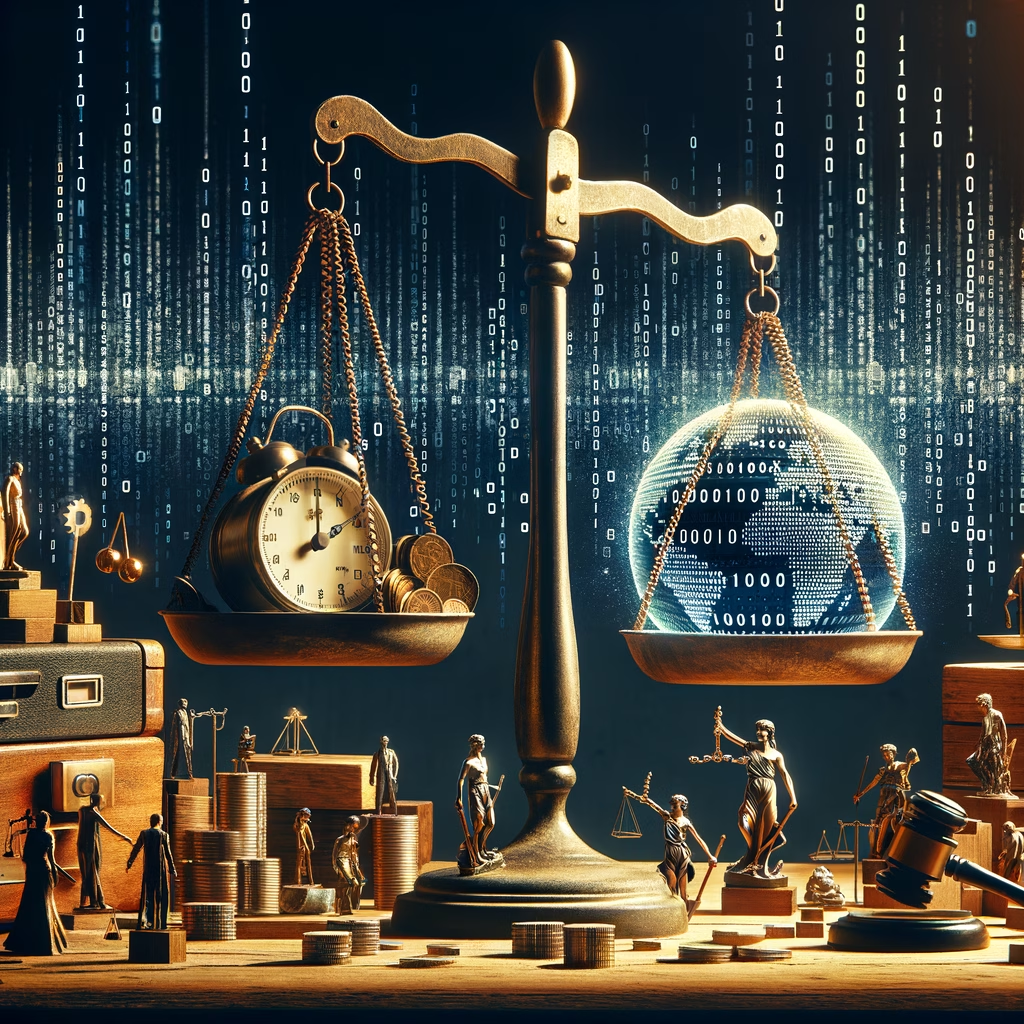
“How do you measure trust in a digital world?” This question lies at the heart of legal metrology today, a field that might not often make headlines but underpins the fairness and accuracy in our everyday transactions. From the groceries we buy to the fuel filling our cars, the integrity of measurement standards is crucial. Yet, the digital age has introduced new complexities, challenging traditional metrological practices and pushing the boundaries of how measurement standards are defined and enforced.
Legal metrology, the science and practice of legally regulated measurements, has long been the backbone of commercial and regulatory activities. It ensures that weighing scales, fuel dispensers, and even water meters operate within strict accuracy limits to protect consumers and businesses alike. Historically, these instruments were largely mechanical and straightforward to verify. But as smartphones, smart grids, and digital sensors proliferate, the landscape of measurement has radically transformed.

Today, smartphones are no longer just communication devices. According to a 2023 Pew Research Center report, over 85% of adults in developed countries own smartphones that can perform multiple functions: from capturing high-resolution images and navigating with GPS to processing payments and monitoring health metrics. These multipurpose devices are increasingly integrated with Internet of Things (IoT) technologies, which rely heavily on precise measurements transmitted digitally. The question arises: how does legal metrology adapt to this digital environment where measurements are intangible bits of data rather than physical quantities?
Dr. Jean-Marc Yvon, President of the International Committee of Legal Metrology (CIML), explained in a 2022 interview, “The challenge is ensuring that digital measurement instruments maintain the same level of trustworthiness as their analog predecessors, despite being more complex and often software-dependent.” This complexity is compounded by software updates, cybersecurity threats, and the decentralized nature of digital data collection and processing.
The current situation presents a multifaceted puzzle. On one hand, the increasing digitization of measurement systems offers unprecedented opportunities for real-time data collection and enhanced accuracy. Smart meters in homes can transmit energy usage instantly, enabling better resource management and consumer awareness. On the other hand, the reliance on algorithms and software introduces vulnerabilities. A 2023 cybersecurity audit conducted by the European Metrology Network revealed that many digital measurement devices face risks of tampering or data manipulation, which could undermine legal metrology’s foundational principle of impartiality.
Policymakers are beginning to respond to this new reality. The European Union’s Measuring Instruments Directive (MID) was recently updated to encompass certain digital measurement devices, requiring manufacturers to implement software verification protocols and cybersecurity safeguards. Similarly, the National Institute of Standards and Technology (NIST) in the United States is researching frameworks to certify digital measuring instruments with embedded artificial intelligence, acknowledging that traditional metrology verification methods are insufficient in isolation.
Technologists, meanwhile, are exploring blockchain technology as a tool to enhance traceability and transparency in digital measurements. By recording measurement data on immutable ledgers, the integrity of the information can be better preserved, potentially deterring fraud. However, experts like Professor Lisa Chen of MIT caution that “blockchain is not a silver bullet. It adds complexity and energy costs, and its effectiveness depends on wider ecosystem trust and governance.”
Users and consumers stand at the receiving end of these developments. While digital measurement devices offer convenience and sophistication, there remains skepticism. A 2024 consumer survey by the Consumer Federation of America found that 62% of respondents were concerned about whether digital meters and sensors are as reliable as traditional devices, especially in contexts like utility billing and product weights. Transparent communication about certification and regulatory oversight is vital to maintaining consumer confidence.
Adversaries—whether hackers or entities seeking unfair competitive advantage—pose an ongoing threat. The digital nature of modern measurement systems expands the attack surface for manipulation or fraud, which could have cascading effects on markets and safety. The World Legal Metrology Organization (WELMEC) has emphasized the need for international cooperation to establish standards and enforcement mechanisms that address these cross-border vulnerabilities.
As measurement standards evolve in the digital age, the stakes remain high. Without robust legal metrology frameworks adapted to digital technologies, trust in everyday measurements could erode, destabilizing markets and consumer protections. Yet, embracing the digital transformation can also enhance precision, accessibility, and efficiency—if done thoughtfully and transparently.
So, how do we measure trust itself in this new era of digital metrology? Perhaps it lies not just in the technology, but in the collective commitment of technologists, regulators, and users to uphold fairness, accuracy, and integrity—values that have long been the bedrock of legal metrology and must now be reimagined for the digital age.