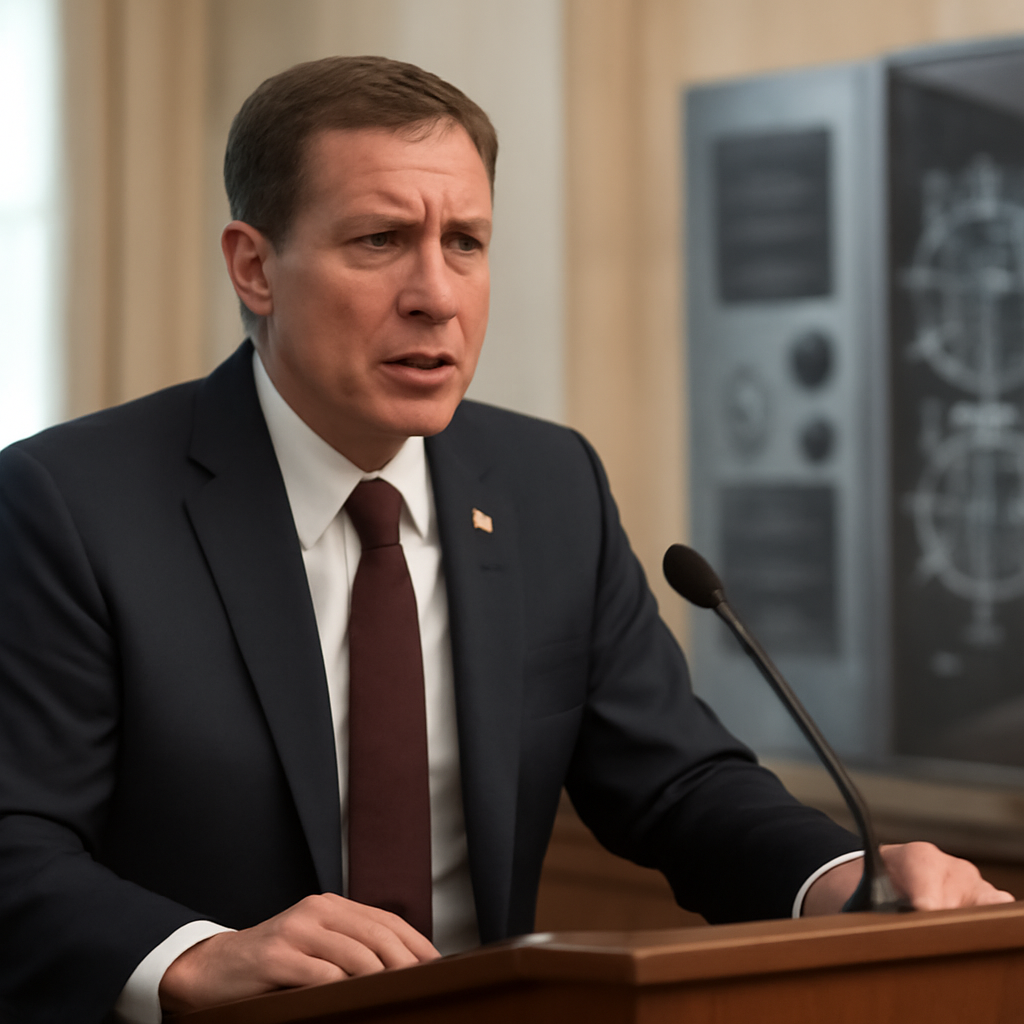
"Making sure that, in particular, where our real computational brains are, the National Security Agency, making sure they have access to the most capable hacking tools … it would be insane not to do that, right?" Rep. Jim Himes, D-Conn., asked on a panel at Politico’s Security Summit, summing up a growing debate inside the U.S. government over how—and who—should get early access to advanced artificial intelligence models that can both attack and defend digital systems.
Rep. Jim Himes frames the debate
Himes delivered his remarks as the administration weighs a major artificial intelligence executive order and debates whether the Commerce Department or the intelligence community should oversee evaluations of AI models. He argued that access for the spy community is essential and said the Commerce Department should also play a role. In his remarks he cautioned that the government should be "cultivating — not damaging — our relationship with the producer of this remarkable new technology," a nod to Anthropic, and warned that if the dispute between the Defense Department and Anthropic "drags out" it could become "a massive liability for United States national security" if the secretary of defense "gets a bee in his bonnet" and decides to target the company.
Mythos, Anthropic, and NSA testing
Officials familiar with the matter told reporters that the National Security Agency has been testing Mythos, a major Anthropic model that Anthropic has held back from full public release because of its substantial cyber capabilities. Himes’ remarks referenced ongoing legal complaints Anthropic has lodged at the Defense Department, and the source material notes that the DOD deemed Anthropic a supply chain risk earlier this year after the company said it would not meet certain Pentagon demands.

Audit-ready is a season. It shouldn't be.
Evidence in spreadsheets, controls drifting between audits, frameworks multiplying on flat headcount. Nubivance runs continuous compliance on Rapid7 Cyber GRC - SOC 2, HIPAA, ISO 27001, PCI, CMMC.
End the scrambleThe Commerce Department versus the intelligence community
Media reports say the White House is split over where to place an AI-evaluation center. The Washington Post reported that some in the administration want the intelligence community to get first access and oversight, while Commerce officials are pushing back against a proposal to house an evaluation center within the intelligence community. That internal tug-of-war sits alongside the planned presidential trip to China this week, where President Donald Trump is expected to discuss AI matters with Chinese President Xi Jinping.
Draft contracting language and government use of private technology
According to reporting in Nextgov and FCW, officials are circulating draft policy documents containing language intended to clarify the government’s ability to use private-sector technology without outside stipulations. It is not clear from those reports whether the contracting language will be included in an executive order or in a separate policy initiative, but the drafts indicate an active push to define how the federal government may obtain and deploy capabilities developed by private AI producers.
What this means for the National Security Agency, the Commerce Department, and Anthropic
- National Security Agency: The NSA has been testing Mythos, signaling an appetite inside the spy community to access models with "substantial cyber capabilities" for both defensive and offensive operations, as Himes advocated.
- Commerce Department: Commerce officials are reported to be resisting an intelligence-community-centric evaluation center, indicating they want an ongoing role in how models are assessed and regulated.
- Anthropic: The company is both the subject of testing by the NSA and the center of legal disputes with the Defense Department, having been labeled a supply chain risk after refusing certain Pentagon demands. Himes urged the government to avoid damaging its relationship with Anthropic.
The debate outlined by lawmakers and reported in multiple outlets points to a broader shift inside the administration: officials are moving from a laissez-faire posture toward a more interventionist stance on AI, particularly where models create new cyber risks. The immediate questions are concrete and narrow—who will evaluate sensitive models, which agencies will have early access, and whether draft contracting language will enshrine government rights to use private technologies without added stipulations—but their answers will shape how quickly, and under what terms, powerful AI capabilities move between commercial labs and national-security hands.