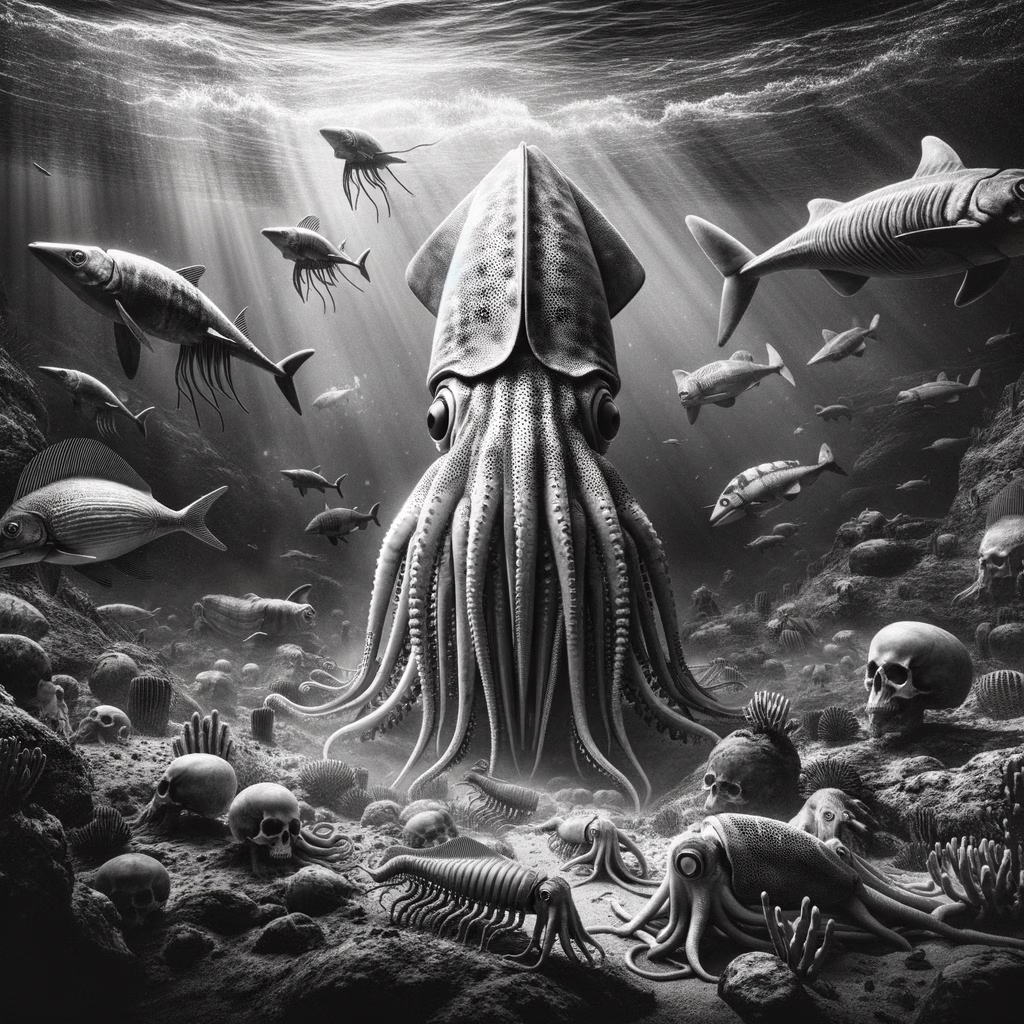
In the deep, shadowy waters of the Late Cretaceous, a curious question looms: what if the greatest oceanic dominance came not from the powerful jaws of dinosaurs but from the agile tentacles of squids? New research sheds light on this enigmatic chapter in Earth’s history, unearthing a trove of evidence that suggests squids, long relegated to a supporting role in the marine ecosystem, were, in fact, pivotal players in their environment.
The challenge in studying squids arises from their unique biology. Unlike their shelled relatives, these cephalopods lack hard structures that would typically fossilize, complicating efforts to trace their evolutionary lineage. In light of this, a dedicated team of researchers sought an innovative solution: they turned their attention to ancient squid beaks, which possess the necessary durability to survive the rigors of time and geological processes. By focusing on these hard mouthparts, the team aimed to piece together the evolutionary story of squids, unveiling the secrets of their past.
Utilizing advanced fossil discovery techniques, the researchers employed cutting-edge digital imaging to create intricate 3D models of Late Cretaceous rock formations in Japan. This revolutionary method allowed them to explore the depths of the rock without disturbing it, revealing a treasure trove of ancient cephalopod beaks. The result? A staggering collection of 1,000 fossilized specimens, including 263 identifiable squid beaks and 40 entirely new squid species, now embedded in our understanding of marine life during this tumultuous period.
Why does this matter? For one, it reshapes our understanding of biodiversity in the Late Cretaceous oceans. Prior to this research, squids were largely underappreciated in paleontological narratives dominated by more visually striking creatures like ammonites or the fearsome predatory reptiles of the sea. By demonstrating that squids were not merely passive inhabitants but significant players in their ecosystems, we gain insight into the complexities of marine food webs and the evolutionary strategies that enabled their survival.
Furthermore, the implications of this research extend beyond paleontology. Technologists stand to benefit from the advanced techniques used to uncover these fossils. The digital imaging methods applied here could revolutionize fields as diverse as archaeology and conservation biology, enabling deeper understanding of ancient ecosystems without causing harm to the delicate artifacts within them. As policymakers grapple with the modern implications of biodiversity loss, these findings remind us of the intricate tapestry of life that has evolved over millions of years and the need to preserve it.
Despite the excitement surrounding this discovery, it is essential to approach it with a critical lens. Some may argue that overemphasis on ancient squids could distract from the conservation efforts needed for contemporary cephalopod species, many of which face threats from climate change and ocean acidification. Others might contend that focusing on the past could detract from immediate biodiversity crises, a valid concern as ecosystems across the globe face unprecedented pressures.
In conclusion, the late Cretaceous oceans were not merely a backdrop for larger-than-life dinosaurs but a dynamic habitat where squids exhibited remarkable evolutionary resilience. As we navigate the challenges of the present, the lessons from these ancient beings may offer vital insights into our own biodiversity crisis. How can we ensure that the legacy of these fascinating creatures, which thrived millions of years ago, does not fade into obscurity in today’s rapidly changing world?
For further reading, visit: Source