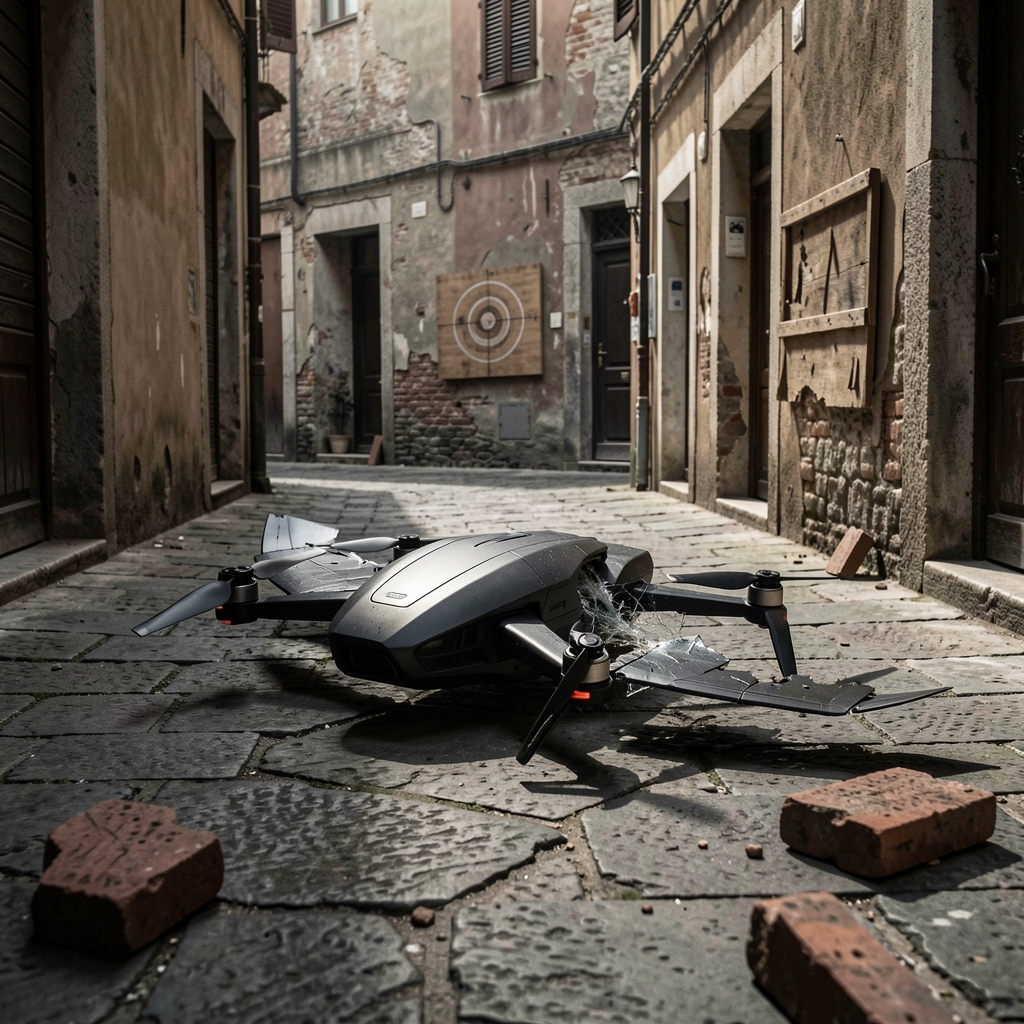
Italian Defense Innovator Unveils “Zombie” Drone for Real-World C-UAS Training
Italian defense developer AURYN Aero has introduced a novel, reusable aerial target drone designed specifically for counter-unmanned aircraft system (C-UAS) training—a field that is rapidly evolving to keep pace with modern airborne threats. Dubbed the AY-44Q “Zombie,” this innovative platform is engineered to simulate realistic adversarial tactics, providing defense forces and security operators with dynamic, repeatable training scenarios in live-fire environments.
On a sunlit testing ground outside Italy, engineers and military trainers witnessed the first live demonstration of the Zombie’s capabilities. The drone’s design, optimized for durability and repeated regeneration in the field, marks a strategic shift in how aerial target practice can be conducted. AURYN Aero has clearly positioned the AY-44Q as a response to the growing need to counter sophisticated unmanned threats, combining cutting-edge technology with battlefield realism.
Historically, training for aerial engagements relied heavily on expendable targets or simulated digital environments that could not fully capture the unpredictability and rapid maneuvering of live adversaries. This gap has become particularly acute in an era where unmanned aerial vehicles have evolved from reconnaissance tools to potential delivery vehicles for disruptive payloads. With nations around the globe reassessing their defensive postures, innovations like the Zombie offer not just a test of response times and tactics, but also a tangible proof-of-concept for an adaptive, cost-efficient training ecosystem.
In this context, the AY-44Q “Zombie” is more than just a technological novelty—it is a practical solution to a pressing operational challenge. Industry observers note that by integrating a reusable platform into training regimens, military forces can reduce long-term costs associated with target replacement and maintenance, while simultaneously achieving higher fidelity in their counter-drone operations. As reported in the Defence Blog, AURYN Aero describes the Zombie as “a reusable target drone built for intense, live training scenarios,” highlighting its potential to fundamentally change the economic and tactical landscape of C-UAS readiness.
Several key attributes bolster the Zombie’s appeal in modern defense strategy:
- Realistic Simulation: Engineered to mimic a range of aerial threat profiles, the Zombie offers trainers a realistic scenario to test engagement protocols and refine tactical responses.
- Cost Efficiency: The drone’s reusable design minimizes overall expenditure, enabling recurring training exercises without the high costs of disposable targets.
- Field-Regenerable Durability: Built to be rapidly restored to operational status after live-fire encounters, the Zombie supports continuous, intensive training sessions.
- Adaptability: Its design allows for variable mission simulations, accommodating evolving adversarial tactics in C-UAS operations.
This development is particularly notable given the current surge in commercial drone proliferation. Nations such as the United States and members of the North Atlantic Treaty Organization (NATO) have been ramping up investments in technologies and training regimes that address both state-sponsored drone operations and the unpredictable actions of non-state actors. The AY-44Q “Zombie” aligns directly with these strategic imperatives, offering a solution that is not only technologically advanced but also operationally practical.
AURYN Aero’s initiative is emblematic of broader trends in defense innovation. The increasing democratization of drone technology—once the preserve of military research labs—poses unique challenges for security forces. The misuse of commercially available drones in incidents of espionage, smuggling, and even retaliatory strikes has spurred governments globally to rethink air defense systems. In response, training regimes must now incorporate unpredictable, multifaceted aerial scenarios to ensure readiness against rapid technological progressions on the potential adversary side.
Military analysts and industry experts have taken keen interest in the Zombie’s potential. Defense strategists emphasize that an effective C-UAS training program relies not just on high-tech engagement systems but also on the ability to replicate the complexities of real-life aerial combat. Jane’s Defence Weekly has, in recent analyses, pointed to the increasing reliance on such dynamic training tools as a critical component of modern defense preparedness.
During an industry briefing, a representative from AURYN Aero outlined the strategic vision behind the AY-44Q: “We designed the Zombie to serve as an enduring asset in training environments, where realism meets repeatability. Our goal is to ensure that those responsible for countering aerial threats have access to a tool that represents the evolving nature of unmanned threat vectors.” While the statement underscores the technical prowess behind the drone, it also highlights a broader narrative: the need for holistic and economically sustainable training measures in an era marked by rapid technological evolution.
The Zombie drone’s regeneration capability is particularly relevant in scenarios that mimic prolonged engagements or high-intensity conflict settings. Field operatives and C-UAS trainers often face the challenge of balancing operational realism with budgetary constraints; the AY-44Q bridges this gap, facilitating an iterative learning process without incurring prohibitive costs. As defense departments consider the balance between manpower, training budgets, and technological investments, the relevance of a system that can be “rebuilt” or reused after shedding simulated damage becomes self-evident.
Looking ahead, the introduction of the Zombie could catalyze further innovations in aerial target design. With adversaries increasingly employing swarms of low-cost, agile drones, the training infrastructure must evolve to counter these multi-vector threats. This progressive drone platform may soon be complemented by additional technologies, such as artificial intelligence-driven target simulation, further blurring the lines between virtual and live training environments.
Policy implications are also worth noting. As national defense strategies continue to incorporate technological advancements, regulators and defense procurement authorities will have to balance immediate tactical benefits with long-term strategic investments. The reusable nature of the AY-44Q not only presents a case for modernizing military training but also invites broader discussions on sustainable defense spending—a conversation already underway in several European defense circles.
In an ever-changing security landscape, the introduction of platforms like the Zombie underscores an essential truth: as threats evolve, so too must the methods used to counter them. The AY-44Q is not merely a drone tailored for one-off demonstrations; it represents a tangible shift towards resilient, cost-effective, and realistic training methodologies that keep pace with the dynamic challenges of modern aerial warfare. Its field-regenerable design ensures that training can continue even in the most rigorous sequences, reinforcing operational readiness and tactical flexibility.
The broader defense community – from military strategists to defense technologists – is likely to monitor developments closely. As C-UAS requirements continue to grow in importance, observing how such technologies integrate into comprehensive training systems will offer valuable insights into future military operations. If the success of the Zombie signals a new chapter in defense training, one might expect further innovations that marry technological sophistication with field-grade durability.
Ultimately, the unveiling of the AY-44Q “Zombie” by AURYN Aero is a timely reminder of the interplay between innovation and practical application in modern defense. As threats converge and evolve, so too must our approaches to counter them. For policymakers, military operators, and strategic analysts, the Zombie is both a mirror to current challenges and a window into the future of aerial defense training. In a domain where every second counts, the ability to rehearse and refine responses in realistic, high-intensity scenarios is indispensable. One is left to ponder: in an age of technical marvels and relentless innovation, can any adversary truly keep pace with our ever-improving methods of self-defense?



