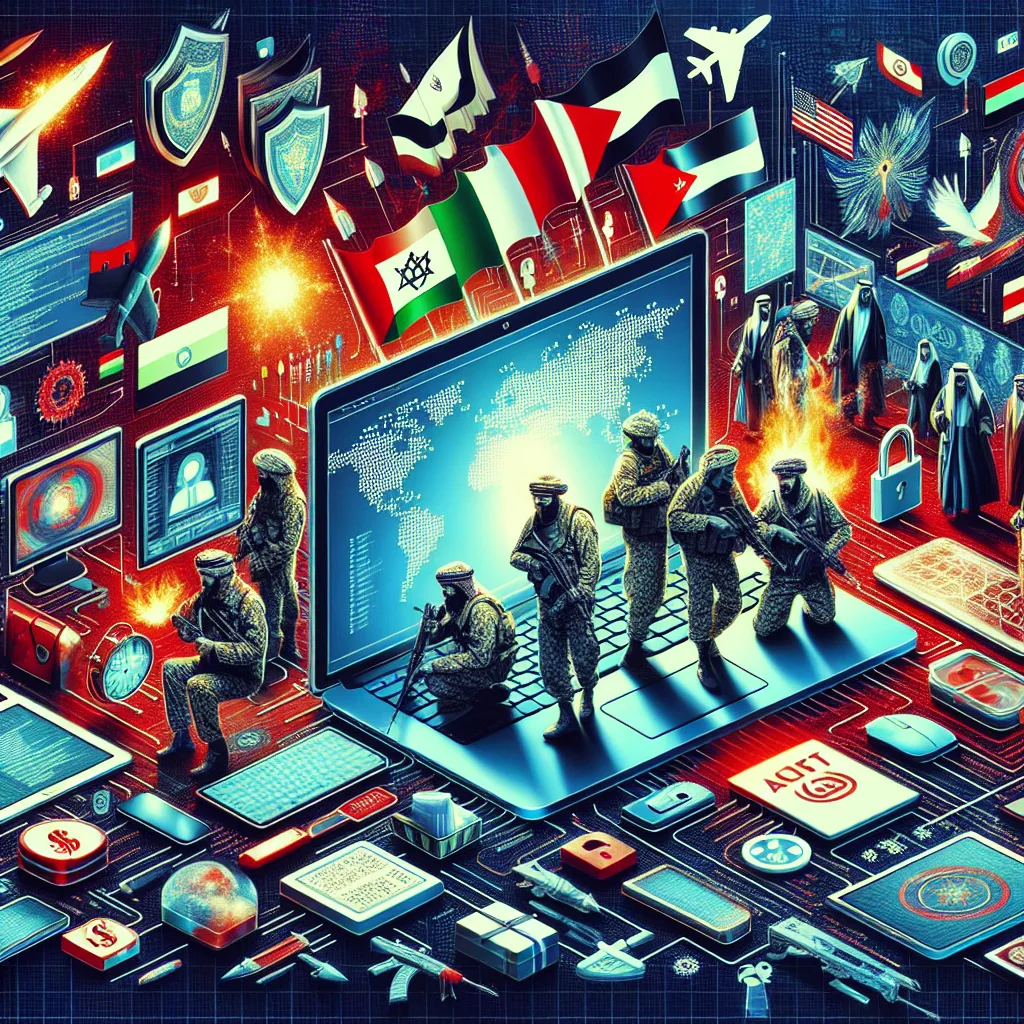
Iranian Cyber Forces on High Alert: The New Landscape of Digital Warfare
The recent escalation in military conflict between Israel and Hamas has set the stage for an intensified cyber skirmish, with Iranian hacking groups reportedly “on high alert,” according to Amazon’s Chief Information Security Officer, CJ Moses. As geopolitical tensions flare, these state-sponsored operatives and hacktivists have sharpened their focus, readying for potential retaliatory strikes. Yet the nature of their activity appears to diverge from traditional expectations, raising questions about the evolving dynamics of cyber warfare.
To understand the current scenario, one must delve into the historical context that has shaped Iran’s cyber capabilities. Since the Stuxnet attack in 2010, which targeted Iran’s nuclear program and was widely attributed to Israeli and U.S. cyber efforts, Tehran has invested heavily in bolstering its own cyber arsenal. The Islamic Republic’s commitment to developing sophisticated hacking units is no mere afterthought; it is woven into its broader strategy of asymmetric warfare against perceived adversaries.
The current state of affairs crystallizes this strategy. In the aftermath of recent military escalations, Iranian cyber actors have ramped up their operations—not just in terms of volume but also in sophistication. As revealed in Moses’s interview, the response from these groups may not be a straightforward tit-for-tat approach but rather a more nuanced set of operations designed to destabilize or embarrass adversaries while avoiding direct confrontation that could escalate further military action.
This shift in tactics is significant for multiple reasons. First and foremost is the question of public trust in digital security infrastructure. If Iranian groups can successfully execute high-profile attacks or disseminate disinformation during this period of conflict, it might not only affect governmental operations but also undermine civilian confidence in technology and security measures. With significant sectors of society increasingly reliant on digital platforms, any breach could send ripples through economic stability and public safety.
Adding another layer to this complex landscape is the rise of what some experts are calling “next-gen script kiddies,” driven by advancements in artificial intelligence (AI). These individuals may lack the extensive technical skills traditionally required for hacking but can leverage AI tools to perform advanced tasks quickly and effectively. This democratization of hacking skills represents a paradigm shift, one that allows less experienced operatives to participate meaningfully in cyber conflicts. The concern is that as AI tools become more accessible, they will embolden a wider array of actors—both state-sponsored and independent—to engage more aggressively in cyberspace.
The implications are profound across several domains: security experts warn that as AI lowers barriers to entry for cyber operations, governments must reassess their defense strategies to counter both professional hackers backed by nation-states and opportunistic individuals who may act on their own initiatives. For policymakers, there is an urgent need for updated regulations that account for these novel threats without stifling innovation or imposing undue burdens on legitimate tech development.
Looking ahead, stakeholders need to keep a close eye on several emerging trends: how Iranian hackers adapt their tactics in response to international pressure; whether there will be increased collaboration among hacktivist groups across borders; and how governments will fortify defenses against an influx of less-experienced attackers leveraging AI technologies. There’s a possibility that if these groups find success in disrupting adversarial systems or spreading disinformation effectively during heightened tensions, it could influence global norms around cyberspace engagement.
As we navigate this new terrain where digital operations intersect with traditional military confrontations, one fundamental question looms large: In an age when our infrastructures are increasingly intertwined with cyberspace vulnerabilities, how can nations safeguard not only their physical borders but also their digital perimeters? With stakes this high, failure to answer could have consequences far beyond immediate geopolitical disputes.



