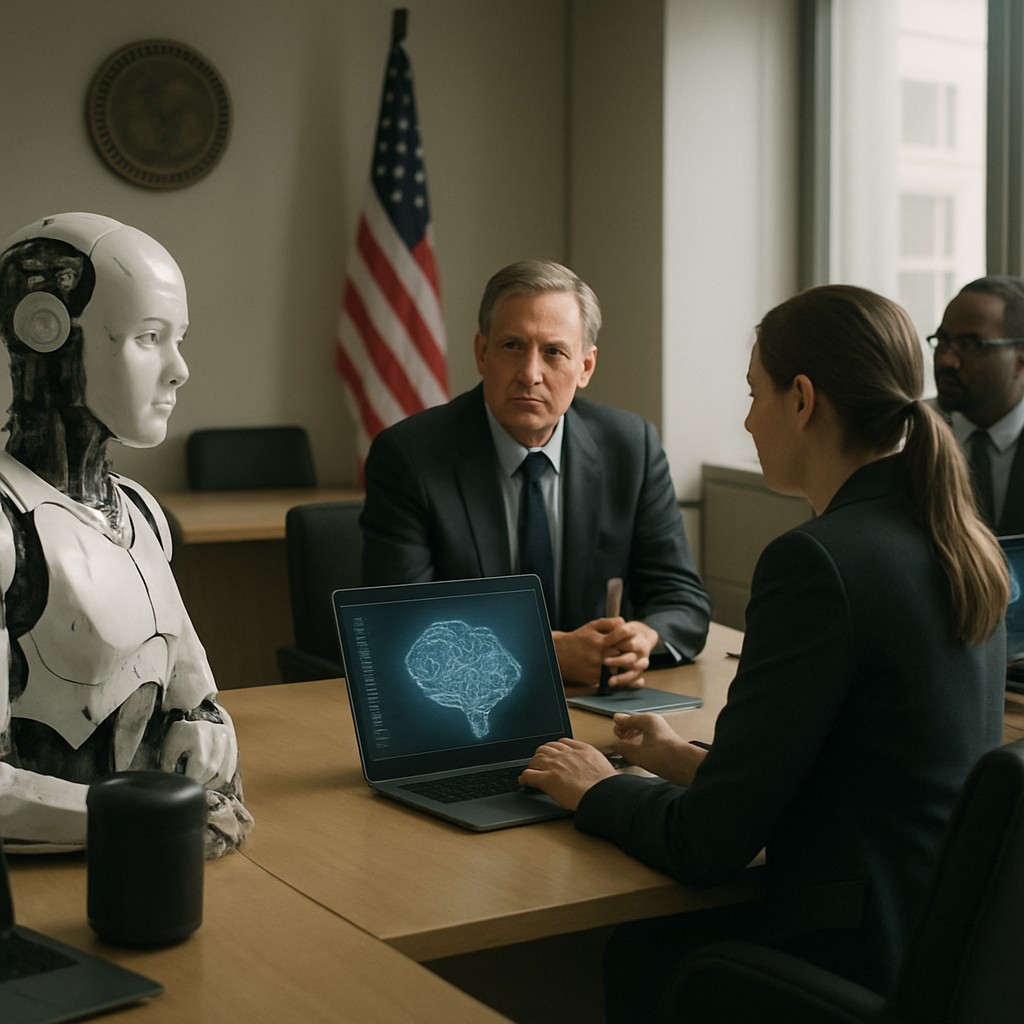
"You have to make sure that you have the checks and controls in place before you just go running down so fast," Brandon Ragle said, summing Illinois' cautious posture as the state moves from AI experiments to enterprise adoption.
Brandon Ragle on a governance-first approach
Brandon Ragle, the State CIO and secretary of innovation and technology for the State of Illinois, frames AI as both a major opportunity and a governance challenge. He told ISMG that, if implemented with strong controls and oversight, artificial intelligence can improve workforce productivity and enhance citizen services. Ragle leads enterprise IT strategy, cybersecurity and digital transformation across state government and has spent more than two decades in public sector technology focusing on scalable, secure platforms that support operational efficiency and responsible innovation.
Illinois' statewide AI policy and the "crawl-walk-run" model
Illinois has established a statewide AI policy and is working closely with agencies to operationalize it. Ragle describes the state's adoption path as a "crawl-walk-run" model that lets employees begin using AI tools while keeping data protection, compliance and security at the forefront. That framing drives a deliberate rollout, prioritizing controls and oversight before rapid expansion.

This site is the portfolio.
OSINTSights runs on Cloudflare Workers, D1, R2, and Vectorize, with an AI pipeline on Hetzner ARM. Nubivance designed, built, and operates it. We do the same for clients.
See what we buildEarly use cases: caseworkers, generative tools and cybersecurity
Ragle identified a tightly scoped set of early deployments aimed at practical, role-based results. Initial use cases include supporting caseworkers with policy analysis and recommendations, improving employee productivity through generative AI tools, and enhancing cybersecurity operations. Each of these use cases is built around a human-in-the-loop model to preserve accuracy and accountability.
Identity, data and security as scaling prerequisites
In the ISMG video interview, Ragle emphasized three technical pillars required to scale AI responsibly across state government: identity, data and security. Those pillars underpin the state's insistence on checks and controls, and they inform the governance frameworks, training programs and approved use cases Illinois is developing with its agencies.
Building a dedicated AI office and appointing a chief AI officer
To guide enterprise-wide adoption and strategy, Illinois is building out a dedicated AI office and preparing to appoint a chief AI officer. The new office and leadership role are intended to centralize governance, maintain oversight of approved use cases, and shepherd the state from restricted pilots toward broader, managed use.
How technologists, policymakers and the workforce are responding
- Technologists and security teams: Will focus on implementing the identity, data and security controls Ragle highlights while keeping humans in the loop for decision support and operational tasks.
- Policymakers and agency leaders: Are collaborating with the state's central IT functions to develop governance frameworks, training programs and lists of approved use cases consistent with the statewide AI policy.
- The workforce and citizens: Can expect targeted productivity tools for employees (including caseworker supports) and the prospect of enhanced citizen services, delivered under formal oversight designed to preserve accuracy and accountability.
Illinois' approach is deliberately incremental: a statewide policy, hands-on agency collaboration, a human-in-the-loop requirement for early use cases, and a planned AI office with a chief AI officer to coordinate the move to enterprise adoption. The next concrete milestone the state has signaled is standing up that office and leadership role — a step that will show whether the "crawl-walk-run" model produces sustained, governed use across the enterprise.