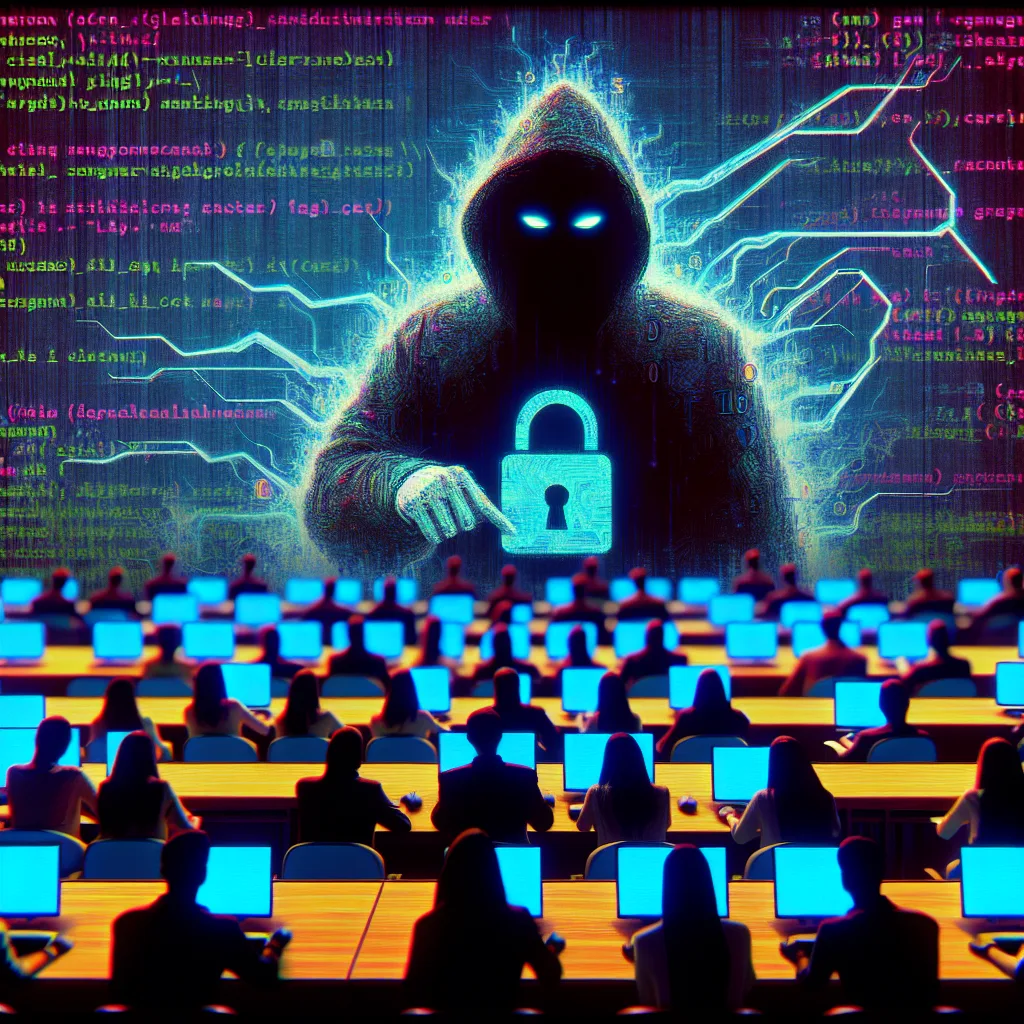
Fake CAPTCHA and Malware: A New Front in the Cyber Assault on Academic Tools
In a disturbing twist that underscores the relentless evolution of cybercrime, security experts have confirmed that an unauthorized breach of the widely used iClicker platform exploited deceptive CAPTCHA interfaces to distribute malware to students. As educational institutions grapple with rapidly changing digital environments, this incident exposes vulnerabilities in systems trusted by millions for in-class engagement.
The breach was first identified by cybersecurity researchers tracking an unusual surge in network traffic associated with the iClicker site. By presenting students with what appeared to be legitimate CAPTCHA challenges, the attackers covertly redirected users to compromised pages designed to install malicious software. Such malware, once on a device, can harvest sensitive personal information and potentially open the door to broader system intrusions.
This report comes at a time when digital education tools are increasingly indispensable in modern learning environments. iClicker, a platform that has become nearly ubiquitous across campuses for interactive polling and attendance tracking, is now under scrutiny for its susceptibility to these emerging forms of exploitation. Early indicators suggest that the malware was specifically tailored to bypass traditional endpoint defenses, exploiting a trust gap between the institution and its software providers.
Background on the technology reveals that CAPTCHA systems were originally designed as a safeguard against automated attacks. However, by masquerading as a genuine CAPTCHA challenge, the criminals capitalized on users’ inherent trust in these security mechanisms. The tactic has evolved into a more sophisticated variant that not only tricks the user but also compromises the system’s integrity—a shift that cybersecurity professionals warn could signal the beginning of a new era in academic cyberattacks.
The Federal Bureau of Investigation and the Cybersecurity and Infrastructure Security Agency have both issued advisories urging educational institutions to re-examine their digital security protocols. In an official statement released last week, the FBI advised that administrators deploy multi-layered authentication measures and increase the monitoring of network traffic associated with educational platforms. Analysts also note that while the immediate damage appears contained, a breach of this nature could lead to long-term repercussions such as identity theft, unauthorized data collection, and even remote control of compromised systems.
This incident unfolds against the backdrop of continuous technological innovation—a realm now witnessing a fascinating juxtaposition. While cybercriminals refine their methods, tech companies are also advancing digital research tools. Notably, ChatGPT’s Deep Research feature, a breakthrough designed for multi-step complex research tasks, has introduced an option to save reports as PDFs. This development highlights the dynamic between enhancing user productivity and the persistent need to secure digital environments from exploitation.
The stakes are high. With educational institutions often operating on limited cybersecurity budgets and legacy systems, students are inadvertently positioned as the front line of experimental cyber warfare. It is a striking reminder of how the everyday tools that facilitate learning can simultaneously become conduits for sophisticated digital threats. The fact that a trusted interface such as a CAPTCHA could be manipulated to install malware represents a significant weakening of public trust in digital safeguards.
Experts in the cybersecurity community, including analysts from FireEye and the Cyber Threat Alliance, emphasize that while the current breach is alarming, it is not an isolated event. As one senior cybersecurity official at the Cybersecurity and Infrastructure Security Agency noted, “This attack is emblematic of how attackers are moving beyond brute force techniques and are now investing in targeted, context-specific exploits.” Their assessment reinforces the need for institutions to adopt proactive measures and continuously update their defensive strategies.
Looking ahead, the implications of this incident stretch beyond immediate remediation. The breach could spark a reevaluation of security frameworks across academic platforms—a wake-up call for stakeholders to implement robust, adaptive countermeasures. In parallel, the enhanced capabilities provided by tools like ChatGPT’s Deep Research may empower researchers and administrators to better understand and respond to the evolving threat landscape. By integrating advanced analytics and comprehensive threat intelligence, educational entities could potentially transform reactive security measures into proactive defense strategies.
For those on the front lines of digital education security, the challenge now is twofold: safeguarding increasingly complex digital infrastructures and rebuilding confidence in technology’s role in the classroom. As institutions plan for future cyber defense enhancements, the incident serves as a stark reminder that no system is too trusted, and no interface too benign to be exploited by determined adversaries.
In an era where every digital tool has the potential to be both a facilitator and a vulnerability, the question remains: How can institutions reconcile the need for technological innovation with the imperative of robust security measures? As the digital landscape continues to evolve, the human cost of cyber complacency grows ever more significant, urging both policymakers and educators to invest in a secure future for learning.



