"The attack path has been blocked. We fixed the cloud vulnerability and blocked the access used in this incident," the company said.
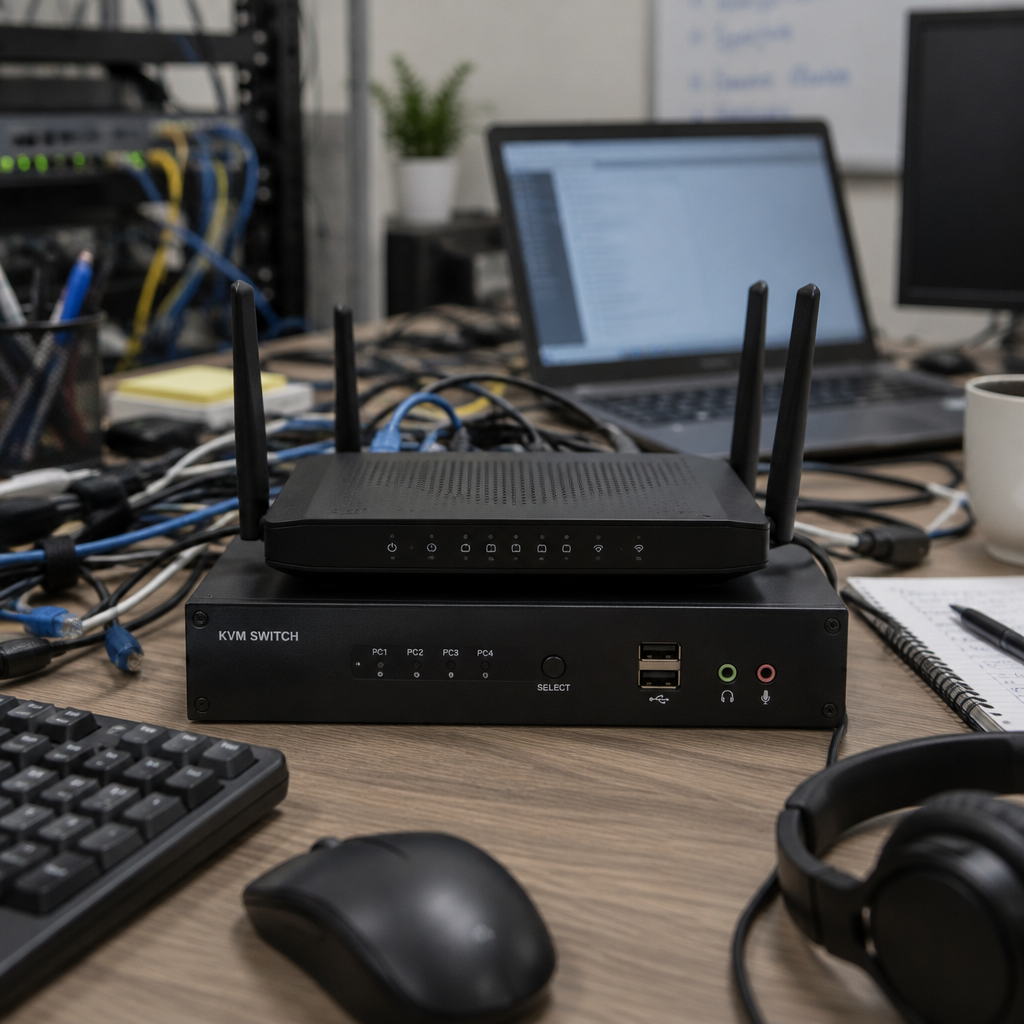
GL.iNet confirmed on November 20 that an unauthorized party exploited a vulnerability in its GoodCloud remote‑management services to install custom malware on customers' routers and KVM devices. Infections reported by users and researchers included persistent backdoors and root‑level reverse shells that provided remote interactive access to compromised hardware.
GoodCloud cloud fix, firmware schedule, and disclosure limits
GL.iNet said it has fixed the cloud vulnerability and blocked the access used in the incident, and that "Devices can no longer be newly infected through this attack path." The company also warned that those measures do not remove malware already present on infected devices. Stable firmware updates containing additional security fixes for both routers and KVM devices were scheduled for release on November 22, 2026.
GL.iNet has not disclosed how the attackers exploited its cloud platform, how many customers were impacted, or whether information was stolen from compromised devices. The company said it is investigating whether computers connected to infected KVM devices were also compromised and plans to notify identified affected customers using the email addresses associated with their cloud accounts.
Malware behavior, persistence, and indicators of compromise
Community and researcher evidence describes a tailored installer script named ni.sh that recognizes multiple GL.iNet device models, downloads executables named gl-helper and gb, and establishes persistence via startup scripts and scheduled tasks. The installer disguises the malicious process as crond -i /tmp/.log, an indicator GL.iNet initially advised customers to look for.
The payloads also included functionality to install SSH public keys for remote access, modify file timestamps, periodically contact a remote server to retrieve commands, and replace the legitimate netstat utility with a script that filters out connections to 66.245.219[.]252. Reverse shells observed in infected routers connected outbound to 170.39.226[.]219 using the Linux nc utility, giving attackers a remote command channel.

Nobody's watching your logs at 2 AM.
Full SOC coverage without building one. Nubivance deploys and manages Rapid7 InsightIDR and MDR for organizations that need detection and response, not another dashboard.
Get coverageRemoteToHome, forum reports, and BleepingComputer analysis
Researchers at RemoteToHome Consulting reported analyzing 183 routers they own or manage and found suspicious activity on 152 devices: 24 with root‑level reverse shells, 47 with an older persistent backdoor, and 81 showing evidence that attacker‑supplied commands had executed. RemoteToHome also identified a potential command‑injection weakness in GL.iNet's GoodCloud client involving an AstroWarp/SD‑WAN handler that passes cloud‑supplied values into shell commands with root privileges; GL.iNet has not confirmed that this handler was used in the observed attacks.
On November 19 a forum user who owns a compromised GL‑RM1 KVM reported network logs showing downloads of ni.sh and executables from 66.245.219[.]252 and later communications with roughly 1,800 residential IP addresses daily and repeated contacts with the TRON blockchain API. BleepingComputer examined copies of ni.sh and a malicious Lua payload recovered from a GL‑MT2500 router. The ni.sh installer contained Chinese‑language developer comments, hardcoded command‑and‑control IPs (66.245.219[.]252 and 65.20.71[.]131), and code to hide its network connections and persist across reboots. Some recovered malicious files had timestamps as early as December 2025.
Detection, the community cleanup tool, and GL.iNet guidance
GL.iNet linked to a community‑developed detection and cleanup scanner as part of its official support instructions. The scanner checks for known malware files, suspicious processes, modified system utilities, and configuration files changed for persistence; it can collect forensic evidence and optionally remove known components. The project's developers caution the scanner cannot detect every infection, and malicious files stored in configuration directories may survive an ordinary firmware upgrade.
GL.iNet recommends customers check devices for signs of compromise and install the latest security firmware when available. For KVM devices, the company lists recommended firmware versions: version 1.10.3 or later for RM10, RM1, RM1V2, RM1PE, and RM4PE; version 1.10.3 beta or later for RM10RC; and version 1.8.7 or later for RMQ1. Router owners are urged to install the latest security firmware for their specific model as soon as it becomes available.
What this means for router owners, KVM users, and incident responders
- Router owners should run the scanner GL.iNet linked, watch for the crond -i /tmp/.log process, update firmware when published, and be prepared to reinstall firmware without retaining existing settings if malware persists.
- KVM users must assume the possibility that computers controlled by compromised KVM devices were accessed; GL.iNet explicitly recommends analyzing those computers for potential compromise.
- Incident responders and administrators should preserve forensic evidence before resetting devices, avoid restoring potentially infected configurations, rotate credentials and access keys that may have been exposed, and consider monitoring for outbound connections to the IPs and domains observed in the community reports.
The immediate cloud fix closes the avenue used for new infections, but the confirmed presence of persistent backdoors and reverse shells — some with timestamps going back to December 2025 — means the work of cleanup and forensic verification is ongoing. GL.iNet continues to investigate and will notify identified customers by email; for now the only definitive controls are firmware updates, device scans, and cautious evidence preservation.