Google will provide five gigawatts of compute capacity over five years to Anthropic — a single line in a multibillion-dollar pact that illuminates how the race for frontier AI is now a contest over power, chips and long-term infrastructure commitments.
Google's investment terms: $10 billion now, up to $40 billion tied to milestones
Under the agreement reported first by Bloomberg and confirmed to ISMG by Google, the deal begins with an initial $10 billion investment from Google and includes performance-linked provisions that could raise the total to as much as $40 billion. The arrangement is being made at an approximate valuation for Anthropic of $350 billion, a figure the report says aligns with Anthropic's February funding round even though secondary market interest has suggested valuations as high as $800 billion.
Compute and infrastructure: five gigawatts, TPUs, and strategic leverage
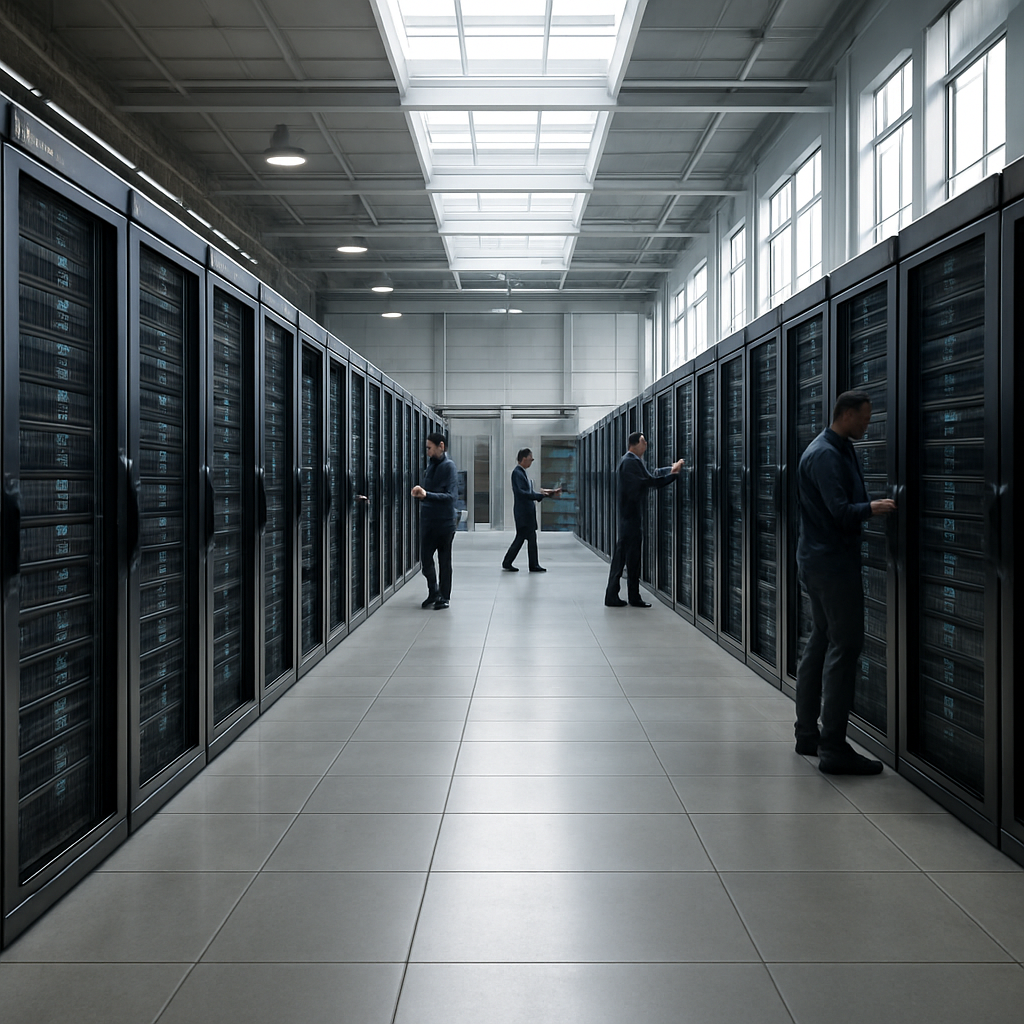
A major component of the deal is Google Cloud delivering five gigawatts of compute capacity over five years. The source materials state that Anthropic relies heavily on Google Cloud and its tensor processing units (TPUs), which the report describes as a key alternative to Nvidia chips. That combination — large-scale power commitments plus specialized processors — gives Google strategic leverage as a supplier of scarce AI compute resources at a time when model training and inference are bounded by chip availability, energy and datacenter space.

Audit-ready is a season. It shouldn't be.
Evidence in spreadsheets, controls drifting between audits, frameworks multiplying on flat headcount. Nubivance runs continuous compliance on Rapid7 Cyber GRC - SOC 2, HIPAA, ISO 27001, PCI, CMMC.
End the scrambleAnthropic's growth and product traction: Claude, Claude Code, Mythos and revenue
The pact arrives as Anthropic faces fast-rising demand that has created infrastructure constraints, the reporting says. Anthropic's Claude platform, and Claude Code in particular, have become widely used among developers for software generation, fueling the company's momentum. The company’s annual revenue is reported to exceed $30 billion. The story also notes Anthropic disclosed a new model, Mythos, earlier in the month; Mythos has restricted access because of cybersecurity concerns and there have been reports of unauthorized use.
Circular finance and supply-chain scrutiny: investor-as-vendor concerns and Pentagon risk
Analysts quoted in the reporting describe the arrangement as circular: cloud providers invest in AI firms and then sell them compute resources, creating financial relationships that also serve as infrastructure contracts. That circularity is flagged as a potential area of concern, alongside broader supply‑chain dependencies. The company faces a Pentagon designation as a supply‑chain risk, the source says, and the combination of restricted-model access and reports of unauthorized use raises questions about misuse of advanced models. The report also highlights that frontier AI development requires tens of billions in capital and long-term infrastructure commitments — a cost profile that helps explain why hyperscalers are moving from mere customers or partners to deep financial backers.
How technologists, policymakers, and procurement leaders will respond
- Technologists and security teams will watch infrastructure constraints and restricted‑access models: the five‑gigawatt commitment may ease short-term compute bottlenecks, but restricted access to models like Mythos and reports of unauthorized use are concrete security issues to monitor.
- Policymakers and regulators will scrutinize supply‑chain dependencies and the circular investor‑vendor model: the Pentagon designation as a supply‑chain risk and analyst concerns about cloud providers acting both as investors and vendors create clear regulatory levers and oversight questions.
- Enterprises and procurement leaders will weigh long‑term compute availability against vendor concentration: access to TPUs and multi‑year power commitments influence choices about where to host or buy advanced AI services and shape vendor risk assessments ahead of potential IPOs or shifts in market power.
The deal also sits alongside other hyperscaler moves. The Google pact comes days after Amazon committed up to $25 billion to Anthropic, and the reporting notes the Amazon move as a $5 billion investment with potential for an additional $20 billion — underscoring hyperscalers' intense competition to back leading AI labs while tying up compute capacity.
For buyers, defenders and overseers of AI systems, the headline numbers matter less than the structural realities they reveal: success in frontier AI increasingly depends on capital, long-term access to compute and strategic partnerships with major cloud providers. Anthropic’s reported consideration of an initial public offering as early as this October frames current investments as potentially high-value, pre‑IPO stakes for major backers. That timeline, combined with the Pentagon supply‑chain designation, restricted-model disclosures and reports of unauthorized use, leaves concrete questions about governance, continuity of access and risk that market participants and regulators alike will need to answer in the months ahead.