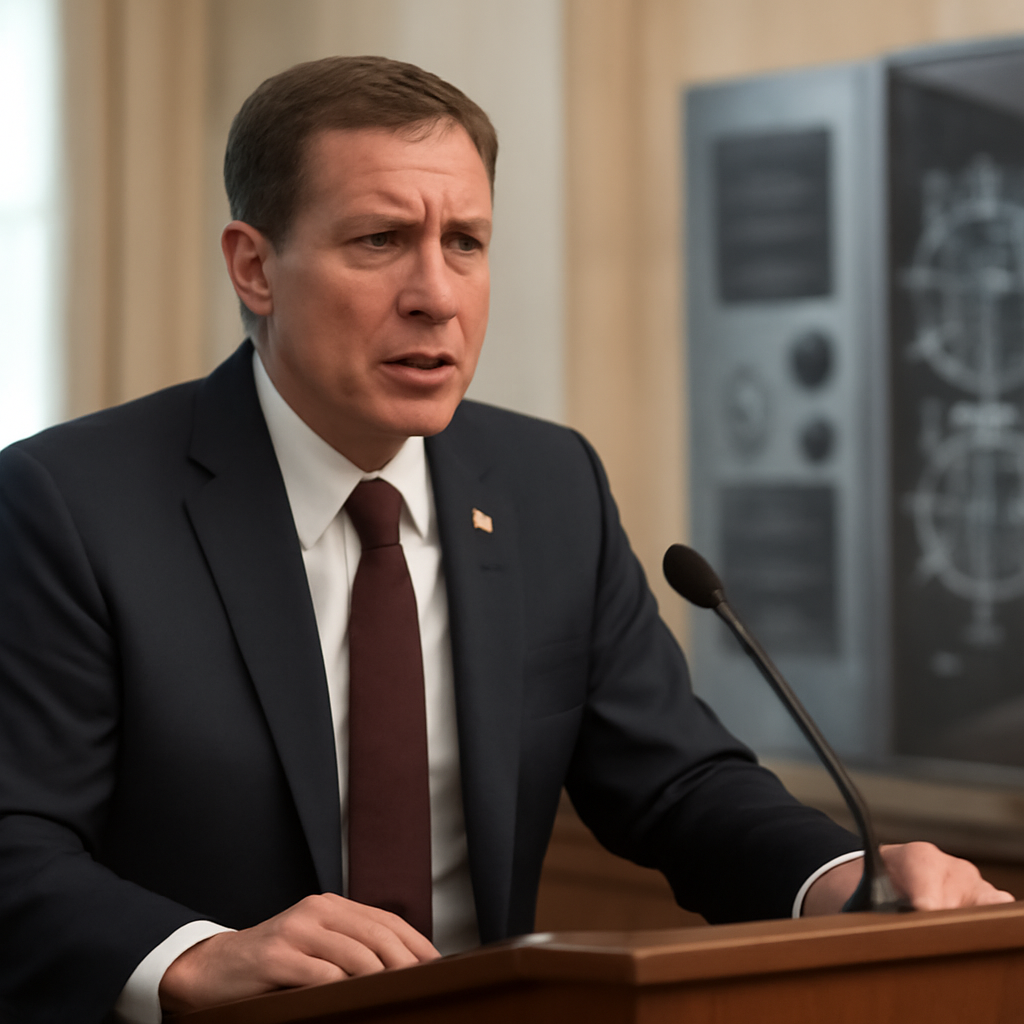
"The Army must scale up the integration of these developments without abandoning its other capabilities or other factors that provide superiority, namely the commander’s judgement and collective strength," Gen. Jacques de Montgros wrote in his first agenda for the service, dated Aug. 24 and publicly shared on X.
Artificial intelligence and autonomous systems: the immediate priority
Montgros places rapid integration of artificial intelligence (AI) and autonomous systems at the top of his list. He described the need as the army’s most pressing matter and insisted that adoption must not come at the expense of traditional strengths—specifically, "the commander’s judgement and collective strength." The language frames AI not as a silver bullet but as a capability that must be scaled while preserving human-led decision-making and unit cohesion.
"Europe’s strategic awakening" and operational posture
The new chief links the army’s modernization to a broader geopolitical shift he calls "Europe’s strategic awakening," a theme he noted was echoed at the July 14 Bastille Day military parade in Paris. Montgros argues the force must be capable of combining surprise, maneuver, and attrition to secure decisive action "at the time of our choosing," signaling an operational emphasis on flexibility across the spectrum of conflict rather than continued focus on a single mission set.

The cyber insurance questionnaire just landed. Now what?
SOC 2, HIPAA, insurance renewals - someone has to own security strategy. Nubivance provides fractional CISO leadership without the full-time salary.
Get a security leadFunding for capability transition: €36 billion added to 2026–30 plan
Montgros notes that additional funding could help the army adapt to future threats and transition away from low-intensity counter‑insurgency missions toward greater European strategic autonomy. Paris formally adopted a revised military programming law on Aug. 18 that adds €36 billion ($42 billion) to defense spending over the 2026–30 period—an explicit fiscal resource Montgros identifies as a lever for the changes he wants to make.
Demographics, recruitment, and the new national service program
Montgros called demographic change a long-term hurdle and tied the army’s future mission success to its capacity to "recruit, retain, and remain deeply rooted in the Nation, giving a full place to active-duty soldiers, reservists, and national service volunteers." To that end, France’s new voluntary national military service program officially launches this month and is expected to initially welcome 3,000 participants aged 18 to 25. The program lasts ten months and includes five weeks of basic military training before participants join a unit in the navy, air force, or army.
For context, Montgros cited force-size figures from 2025: roughly 200,000 military personnel and 64,000 civilian personnel across the French Armed Forces, with annual recruitment at 27,000—numbers that frame the scale of the demographic challenge he highlights.
What this means for technologists, policymakers, and recruits
- Technologists and security teams: Rapid AI and autonomy integration will demand new tactics for testing, fielding, and maintaining systems that must operate alongside human commanders accountable for judgment and collective action. Expectations are for programs and exercises to demonstrate interoperability with existing capabilities.
- Policymakers and procurement leaders: The €36 billion added to the 2026–30 military programming law gives a defined fiscal envelope to shift procurement priorities toward autonomy, sensors, and sustainment; the agenda makes clear that funding choices will be central to transitioning away from low-intensity missions toward broader strategic autonomy.
- Recruits, reservists, and national service volunteers: The voluntary national service program—3,000 initial participants, ten-month duration, five weeks of basic training—will be the army’s near-term experiment in broadening its societal roots and enlarging the pool of personnel the chief identifies as essential for future mission accomplishment.
Taken together, Montgros’ Aug. 24 agenda sets out three linked challenges—technology, strategy, and people—each backed by concrete markers: an immediate push to integrate AI and autonomy, a public framing of Europe’s strategic shift tied to a recent national parade, and a sizable addition to defense spending intended to fund the transition. His closing aspiration for the force is succinct and pointed: he wants "an Army that is feared, proud, and bold."