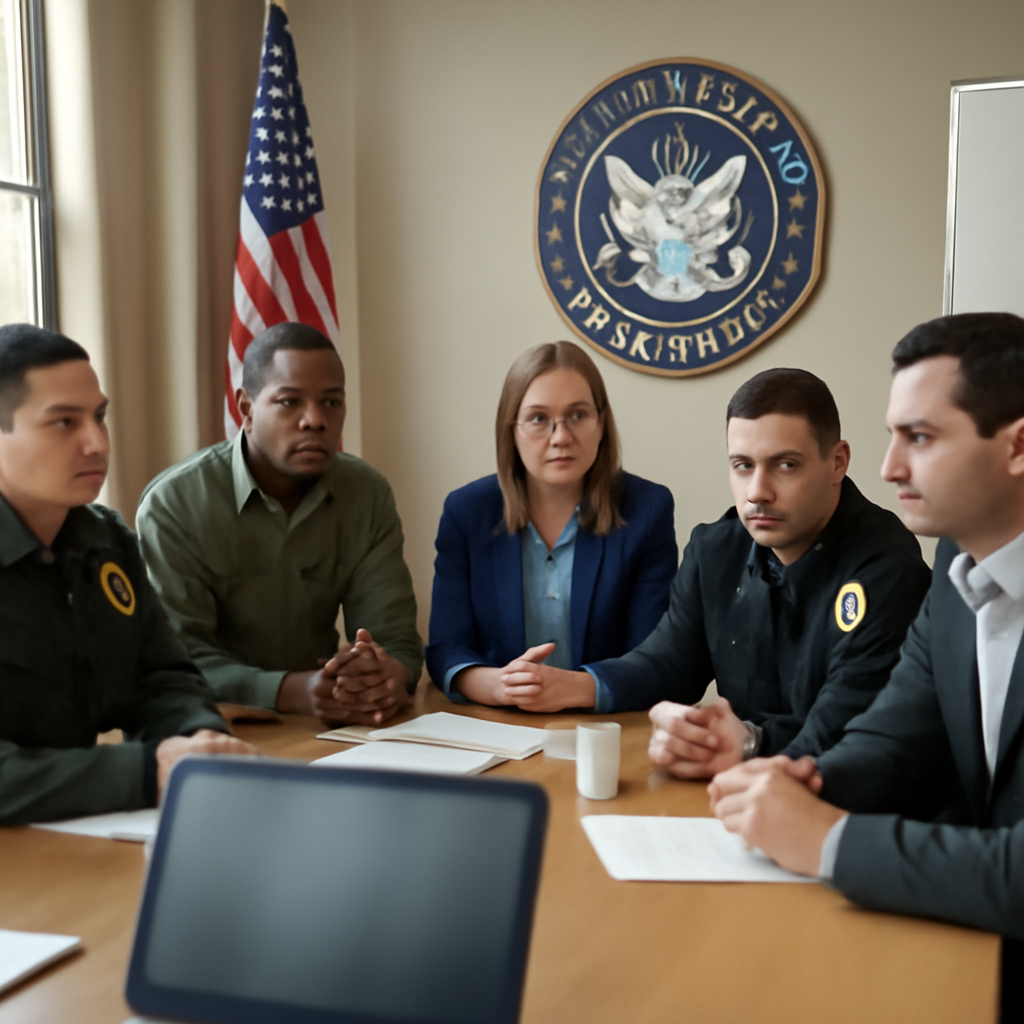
"The real challenge is not only storage volume. It is a combination of scale, defensibility, and continuity," said Oliver Silva, Vice President of Product at Casepoint, capturing the central dilemma federal legal teams now face.
The data types stressing federal legal workflows
Federal agencies are no longer managing just forms, emails, and paper-scanned records. The source material catalogues an expanding set of modern data: chat data, cloud collaboration content, mobile data, images, video, digitized records and even digital artifacts such as emojis in government communications. That diversity matters because each data type carries native context that traditional file-share models and generic archives do not retain.
Why storage is now a legal-operations problem, not merely infrastructure
The argument is straightforward: preservation, retrieval, review, and defense of data are vital legal activities, and storage choices directly affect those workflows. The piece asserts that when data is preserved in one system, staged in another, reviewed in a third, and archived somewhere else, agencies create avoidable operational risk — extra handoffs, inconsistent records, audit‑trail gaps, and transfer costs. In short, storage that lives apart from collection, staging, and review can undermine the very processes legal teams rely on when litigation, investigations, congressional inquiries, FOIA requests, or compliance demands arise.

This site is the portfolio.
OSINTSights runs on Cloudflare Workers, D1, R2, and Vectorize, with an AI pipeline on Hetzner ARM. Nubivance designed, built, and operates it. We do the same for clients.
See what we buildOliver Silva on continuity and minimizing data movement
Silva frames the requirement in practical terms: storage must support preservation, staging, active review, long‑term archive, and rapid reactivation without forcing agencies to move sensitive data across tools and providers. That emphasis on continuity is offered as a defense against the common pitfalls named above — lost context, fractured audit trails, and increased exposure to spoliation or tampering accusations when evidence traverses multiple environments.
Security and auditability requirements: FedRAMP and Impact Levels
Security is presented as a gating factor. The source specifies that civilian‑agency solutions must meet FedRAMP Moderate and FedRAMP High authorizations; for the DOW, Impact Level 5 (IL5) and Impact Level 6 (IL6) authorizations are called out. Purpose‑built storage, the piece argues, should provide strong access controls, complete auditability, and demonstrable support for high‑security workloads so agencies can mitigate risks of breaches, tampering, and other spoliation while preserving the integrity of records, documents, and images.
What this means for federal legal teams, IT teams, and oversight bodies
- Federal legal teams: They must be able to demonstrate a defensible chain of custody — showing who touched data, when it was preserved, how it moved, and whether it remained intact — across litigation, investigations, congressional inquiries, and FOIA work.
- IT and procurement teams: The piece urges consolidation toward integrated workflows that reduce manual transfers and limit dependence on outside providers for routine data movement, favoring solutions that keep sensitive information inside one authorized environment.
- Courts, inspectors general, and oversight bodies: The ability to provide complete visibility into every action on evidence is framed as essential for withstanding scrutiny from judicial and oversight processes.
The prescription is consistent throughout: purpose‑built storage — not generic cloud repositories or fragmented toolchains — increases the legal defensibility of records by preserving native data and context, reducing risky transfers, and keeping sensitive information accessible throughout the evidence lifecycle. Investment, the source concludes, is needed in systems designed to scale and handle growing demands so that storage becomes a unified part of the broader data discovery workflow, rather than a disconnected destination.
The author of the original piece is Stephanie Hendricks, a marketing and public relations consultant with Piper Strategies. For federal legal teams confronting rising volumes and variety of data, the core decision is practical and procedural: adopt storage that preserves native formats, documents chain of custody, and meets defined security authorizations — because when oversight or litigation arrives, the quality of those choices will determine whether records hold up under scrutiny.