"Virtualine ignored more abuse than your last three therapists," a Virtualine post on HackForums boasted in June 2025, according to court documents. That claim now resides alongside a U.S. Department of Justice action that has taken the virtualine[.]net domain offline as part of an international operation targeting a bulletproof hosting provider accused of facilitating a range of criminal conduct.
FBI seizure and international partners
The Department of Justice announced on Tuesday that it seized the Virtualine domain after finding the service was being used to commit and facilitate prolific criminal activity, including "the advertisement of sexually explicit images of minors, the intentional disclosure of nonconsensual intimate visual depictions of adults and minors, and international money laundering designed to conceal and promote criminal conduct," the DoJ said.
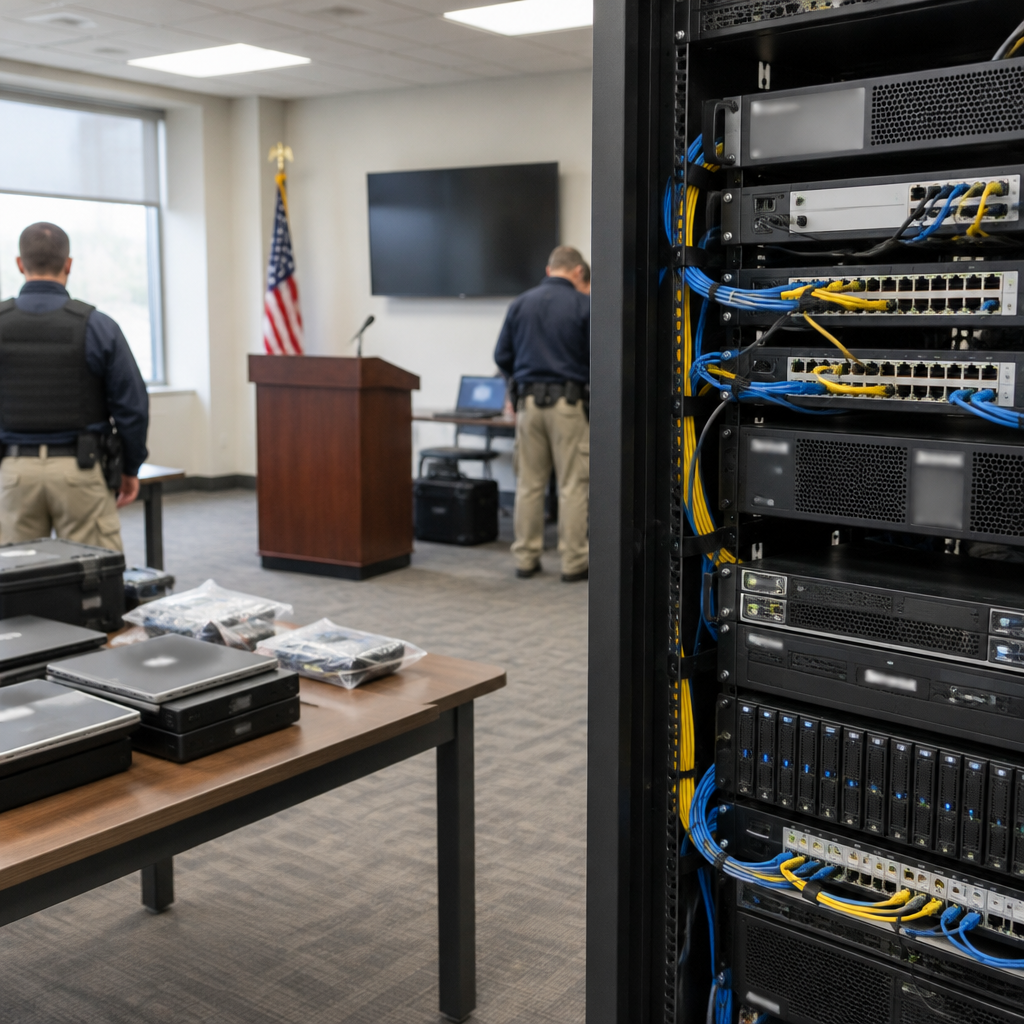
Visitors to virtualine[.]net now see a seizure banner stating the action was taken by the U.S. Federal Bureau of Investigation and was coordinated with international law enforcement agencies and private-sector entities, including the Hessen State Police, the National Police Corps of the Netherlands, the U.K. National Crime Agency, OverRIPE, and Lumen Technologies.
Vendor 1: alleged CSAM, nonconsensual material, and hack‑for‑hire
Court documents identify a site hosted by Virtualine as "Vendor 1" — described by the DoJ as a criminal online forum that allowed users to post and sell access to nude, sexually suggestive, and sexually explicit images and videos of minors and adults. The DoJ said Vendor 1 also promoted a hack‑for‑hire service that paid hackers to access victims’ accounts without consent and illicitly obtain explicit images and videos.
The timeline in filings shows that in January 2026, about one month after Virtualine assigned an IP address to Vendor 1, Virtualine began receiving notifications about sexually explicit images and videos of minors on that server. Despite notices from law enforcement in Germany, Canada, and Australia; the National Center for Missing and Exploited Children (NCMEC) in the United States; and a victim’s attorney, the Justice Department said Virtualine continued to host Vendor 1's services.
The DoJ additionally alleges Virtualine worked closely with Vendor 1 to create a new site where customers could upload illicit content and later download it after purchase — a site the department said "continues to be hosted by Virtualine to this day."

Audit-ready is a season. It shouldn't be.
Evidence in spreadsheets, controls drifting between audits, frameworks multiplying on flat headcount. Nubivance runs continuous compliance on Rapid7 Cyber GRC - SOC 2, HIPAA, ISO 27001, PCI, CMMC.
End the scrambleBitcoin NO‑AML payments and Chainalysis on‑chain tracing
The DoJ said Virtualine accepted payment through "BTC [NO‑AML]," unhosted bitcoin addresses that let customers pay directly without concern that funds would be flagged as illicit. The department stated that funds paid by criminal customers were received by Virtualine and then further laundered to conceal their origin.
Blockchain intelligence firm Chainalysis, in its own analysis, reported that Virtualine accepted direct Bitcoin payments via unhosted wallet addresses, allowing criminal customers to pay without triggering compliance checks at hosted exchanges. Chainalysis added that Virtualine's on‑chain footprint "has direct exposure to a broad cross‑section of the cybercrime ecosystem, including ransomware operators, infostealer infrastructure, Russian‑language cybercrime forums, illicit shops, and scam and phishing addresses."
Marketing, pricing, and the "additional protection plan"
Virtualine operated under multiple brand names — Secury, Massgod, Spamhouse, Lanedo, and Omegatech — and advertised its services on cybercrime forums for uses such as phishing, carding, email spam, and port scanning, while publicly claiming to exclude child content and terrorism activities, according to court records.
Snapshots captured by the Internet Archive cited in filings show standard plans ranging from $19.99 per month for one virtual CPU, 2GB memory, and 30 GB storage to $179.99 per month for 24 vCPUs, 64 GB memory, and 130 GB memory. Other optimized plans were listed from $21.99 per month to $379.99 per month.
The DoJ also highlighted an "additional protection plan" Virtualine began marketing in March (year in source), which promised customers that the provider would move criminal infrastructure to a shell company unaffiliated with Virtualine if they received official requests from law enforcement agencies.
What this means for law enforcement, technologists, and victims
- Law enforcement: The coordinated seizure shows cross‑border cooperation among the FBI, Hessen State Police, the National Police Corps of the Netherlands, and the U.K. National Crime Agency, and it relies on private partners such as OverRIPE and Lumen Technologies to disrupt hosting infrastructure tied to criminal marketplaces.
- Technologists and security teams: Chainalysis' findings underline the role of unhosted bitcoin addresses in enabling payments that evade exchange compliance checks; the filings also document how a BPH advertised resilience and an ability to move infrastructure — a recurring operational problem for takedowns.
- Victims and victim advocates: The DoJ's narrative centers on repeated notices about minors' images and a victim's attorney raising concerns that apparently did not result in removal, illustrating the challenges victims face when content is hosted on services that promote anonymity and deliberate evasion.
The seizure removes a prominent domain and interrupts services the DoJ says facilitated illicit markets and money laundering. But other details in the record point to the problem's persistence: Spamhaus reported Virtualine expanded to AS209800 in September 2025, routed via aurologic GmbH and supported by IP brokers with "poor customer vetting procedures," and security researchers warned that "A lost ASN does not by itself mean the BPH has stopped" — a brisk reminder that takedowns and attribution do not, by themselves, end the underlying economics that enable bulletin‑board abuse and anonymous payments.