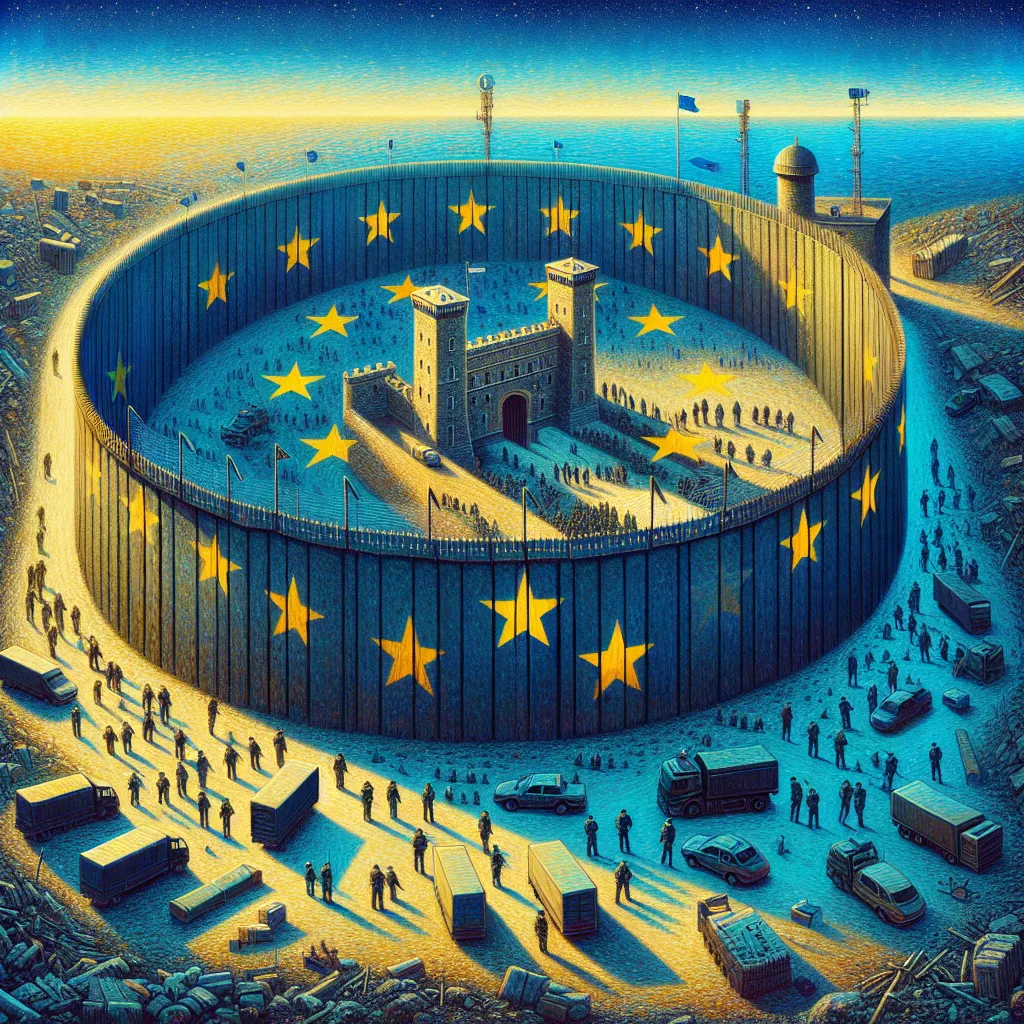
Europe’s Digital Shield Rises as American Tracking Systems Falter
The cybersecurity landscape is experiencing a dramatic shift as the European Union officially launches its own vulnerability tracking system, the European Vulnerability Database (EUVD). In an era marked by escalating cyber threats and complex digital infrastructures, the EU’s new initiative comes at a time when the United States is grappling with budget cuts, delayed disclosures, and strategic confusion within its own vulnerability tracking programs.
The establishment of EUVD is not merely a bureaucratic upgrade—it represents a recalibration of priorities in how vulnerabilities are identified, communicated, and ultimately managed. For policymakers and digital security experts, this development raises pivotal questions about international cooperation, funding, and the processes that safeguard critical infrastructure in an increasingly interconnected world.
Historically, vulnerability tracking systems have served as the bedrock for security assurance. The United States has long been a trailblazer in this domain, maintaining systems like the National Vulnerability Database (NVD) to compile and disseminate information about flaws in software and hardware. However, recent internal reports and analyses have revealed growing strains within the American system. Budget constraints have led to fewer resources for thorough verification, while bureaucratic delays have impeded the swift publication of emerging threats. Simultaneously, debates over the future direction of these systems have led to widespread uncertainty among stakeholders—from government agencies to private sector enterprises.
In contrast, the EU’s venture into this critical arena is characterized by strategic momentum and clarity. The EUVD promises a streamlined platform that is set to actively monitor critical vulnerabilities, particularly those under active exploitation by adversaries. This new database is poised to offer rapid updates and improved data accuracy through collaborative efforts within the European Union and in partnership with global cybersecurity organizations like the European Union Agency for Cybersecurity (ENISA). With a clear mandate and robust funding, the EU appears to be taking proactive measures to enhance its digital resilience.
According to a report in Reuters, the launch of EUVD was met with cautious optimism by cybersecurity professionals who have long awaited a more responsive and transparent mechanism for vulnerability information. Industry insiders note that while the US system has stumbled amidst internal restructuring, the EU’s initiative could serve as a model for more dynamic, interconnected defense strategies. “The fact that the EU is investing in a dedicated, up-to-date vulnerability database is a signal to the world that cybersecurity is not negotiable,” said a cybersecurity analyst from a well-regarded European security firm, reflecting the widespread belief among experts that national resilience in cyberspace is increasingly reliant on rapid and transparent information sharing.
To better understand the significance of EUVD’s launch, it is useful to consider several interlocking factors. First, companies and governments around the world are facing an expanding attack surface, as supply chains and interconnected systems multiply points of vulnerability. Emerging threats such as ransomware, nation-state sponsored cyberattacks, and zero-day exploits are compelling organizations to adopt more agile security postures. Second, the rapid pace of software development has outstripped the traditional methods of vulnerability reporting, turning what was once a linear process into a complex web of discovery, disclosure, and patch management.
In this context, EUVD is designed to act as a linchpin in Europe’s broader digital defense strategy. It offers several salient advantages:
- Rapid Updates: The system aims to deliver near-real-time information on critical vulnerabilities, reducing the lag that has historically hampered protective measures.
- Streamlined Interface: A user-friendly portal ensures that both governmental agencies and private sector players can easily access and interpret vital data.
- Enhanced Collaboration: By facilitating a closer nexus between public and private sectors, EUVD is set to foster a culture of rapid information sharing and joint threat analysis.
- Focused Mandate: With clearly defined priorities targeting actively exploited vulnerabilities, the platform aligns its mission with current threat realities rather than speculative risks.
Meanwhile, the US vulnerability tracking struggles highlight a number of internal challenges. Representations from government documents indicate that budgetary restrictions have curtailed not only the capacity for swift data collection but also the process of validating and correlating information. This has led to cumbersome delays in public disclosures, leaving stakeholders scrambling to protect their systems in the interim. Moreover, conflicting priorities and administrative inertia have sown confusion over the long-term strategy of vulnerability tracking, giving hackers more time to exploit known weaknesses.
For security professionals across the Atlantic, the divergence in approach between Europe and the United States is a matter of both professional concern and strategic interest. While US experts continue to debate the optimal allocation of limited resources, their European counterparts are rallying behind a system that is able to iterate quickly and adapt to the evolving threat landscape. The inherent tension between transparency and control is not new to the cybersecurity ecosystem, yet the contrasting operational models offer a moment of reflection on how best to secure the digital future.
Experts in the field have weighed in on the potential ramifications of this shift. Dr. Mikko Hyppönen, Chief Research Officer at WithSecure (formerly F-Secure), has reiterated in various forums that an agile, transparent approach is essential in countering sophisticated attacks. “When information flows rapidly, the window for successful exploitation by adversaries shrinks considerably,” Dr. Hyppönen has explained in previous interviews. Although his remarks are generally directed at the technical community, they resonate with the strategic imperatives underpinning the EUVD’s launch, highlighting the critical need for timely, accurate vulnerability data.
The operational improvements in the EU model have significant implications beyond plain data collection. For instance, more reliable and timely vulnerability information can drive better-informed policy decisions, spur the development of innovative security solutions, and foster enhanced public trust in digital governance. In the current climate where cyber threats have palpable human and economic costs—from disrupted healthcare networks to compromised financial systems—the ability to preemptively neutralize vulnerabilities is paramount.
Looking toward the future, several trends warrant close observation. For one, there is potential for increased collaboration between transatlantic partners. The success of the EUVD could serve as a catalyst for cooperative frameworks that bridge the gap between European and American systems, encouraging a more unified approach to cybersecurity—a goal that both sides have acknowledged as desirable in various international summits and policy dialogues.
Additionally, the focus on actively exploited vulnerabilities as a core mandate could drive a nuanced understanding of cyber threat prioritization. Governments and enterprises alike are expected to recalibrate their risk management strategies, balancing long-standing vulnerabilities with emerging threats in real time. The EU’s model, with its capacity for rapid updates and heightened collaboration, may well prove to be a blueprint for global best practices in vulnerability management.
However, challenges remain. Funding levels, inter-agency coordination, and international legal frameworks all pose ongoing risks. Questions about the interoperability of databases, data privacy implications, and the potential for politicization of vulnerability disclosures are likely to emerge as the system matures. Stakeholders must remain vigilant, ensuring that the promise of greater security does not come at the expense of the very freedoms that underpin the digital economy.
Looking ahead, the evolution of these systems is set to shape not only national policy but also global digital dynamics. Analysts predict that as the EUVD establishes itself, it will drive more competitive and, possibly, more collaborative approaches in cybersecurity. With nations around the world continuously adapting to new forms of cyber aggression, the race to secure digital infrastructures remains as urgent as ever. What remains to be seen is whether the momentum generated by Europe’s proactive stance can eventually bridge the gaps left by the faltering US systems, or if a new, cooperative model will emerge in this high-stakes arena of digital defense.
In closing, the advent of the European Vulnerability Database is both a strategic recalibration and a timely reminder of the value of transparency and agility in cybersecurity. As global threats evolve, so too must the structures that defend against them. With the eyes of the digital world fixed on these transformative shifts, one is left to ponder: In a landscape defined by rapid technological change and relentless cyber aggression, will innovation and collaboration prevail in securing our most critical assets?



