European Commission recommendation and regulatory context
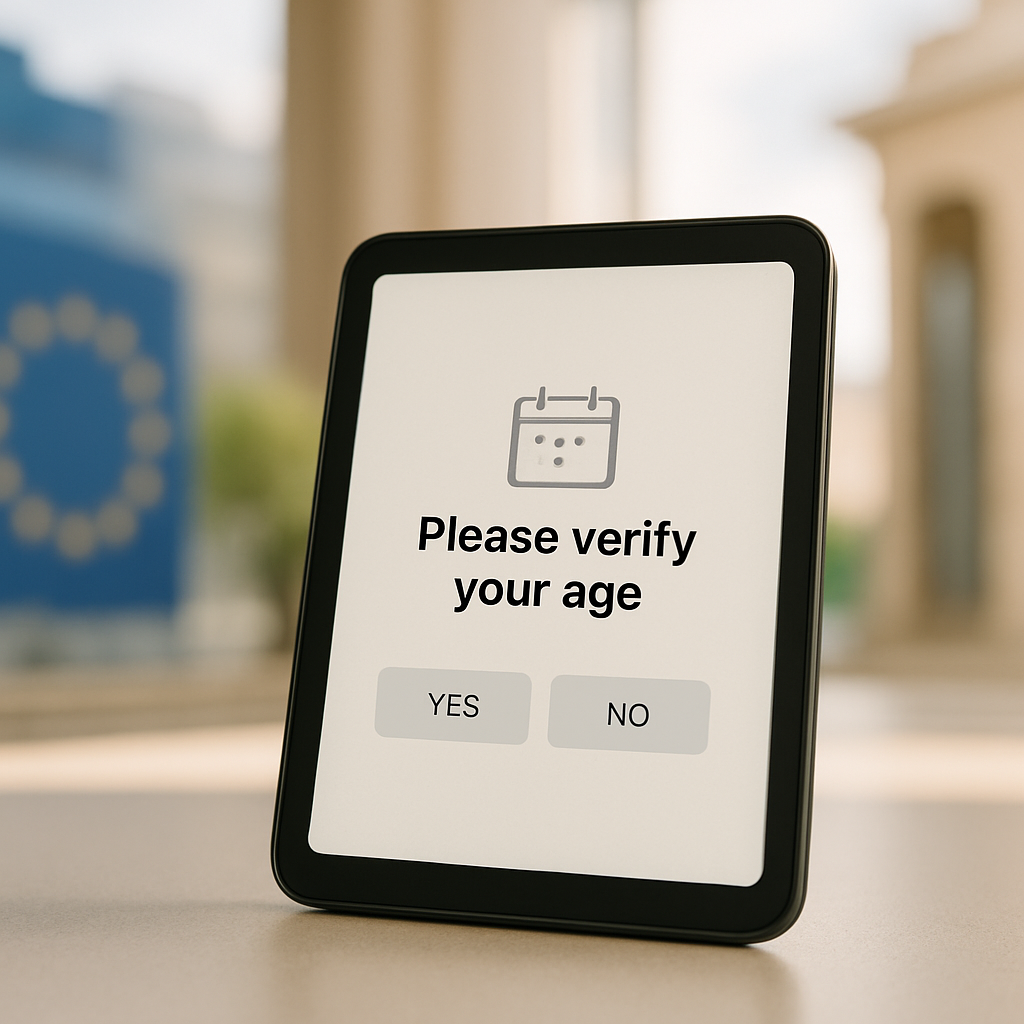
The European Commission has formally recommended that EU member states adopt an open source age verification application designed to keep children from encountering harmful online content. The move builds on regulatory groundwork set by the Digital Markets Act (DMA) and the Digital Services Act (DSA), both passed in 2022 to boost the bloc's power in tackling the dominance of big tech companies in citizens lives. The DSA requires online platforms to ensure a high level of privacy, security and safety for minors — a legal backdrop the Commission cites in urging adoption.
How the age-check app works
The Commission says the app lets users prove they meet age requirements without revealing actual age, identity or any other personal details to online services. Users register using a passport or ID card, but no personal details are disclosed to the services they visit, “meaning users cannot be tracked,” according to the announcement. The app is open source, which the Commission emphasised so developers can view the code and external partners can assess implementation.

This site is the portfolio.
OSINTSights runs on Cloudflare Workers, D1, R2, and Vectorize, with an AI pipeline on Hetzner ARM. Nubivance designed, built, and operates it. We do the same for clients.
See what we buildCross-platform design, open source release, and international reuse
Designed to work across major mobile and PC platforms, the tool is available as an open source project and—per the Commission—partner countries outside the EU are free to use it. The EU executive branch said in April that the app was ready to deploy and has now formally recommended member states adopt it.
Integration with European Digital Identity Wallets and rollout timing
Member states may deploy the app either as a standalone application or integrate it into a European Digital Identity Wallet. The Commission said that member states are due to develop those wallets to agreed specifications by year’s end. The announcement named France, Denmark, Greece, Italy, Spain, Cyprus and Ireland as already planning to integrate the app into their national wallets.
Contrast with the United Kingdom’s approach
The announcement noted a different path taken by the UK: last summer the UK mandated that websites hosting adult content verify users' ages while leaving the method of verification to service providers. Platforms operating under the UK requirement were told to store personal data only where strictly necessary — a policy contrast the Commission’s open source, privacy‑preserving tool is intended to address at scale across the EU.
What this means for online platforms, developers, and national governments
- Online platforms: Platforms will face a clearer EU-backed option that claims to meet DSA privacy and safety standards; the Commission framed the app as a ready-to-use solution and urged platforms there are “no more excuses” for non-compliance.
- Developers and open source communities: Because the app is open source and cross-platform, developers can review and contribute to the codebase, and partner countries outside the EU may adopt it without licensing barriers.
- National governments and wallet operators: Countries building national Digital Identity Wallets have a concrete component to integrate and a deadline tied to wallets being developed "by year’s end," with several member states already planning integration.
Henna Virkkunen, Executive Vice‑President for Tech Sovereignty, Security and Democracy, framed the recommendation as completing a piece of a larger effort: “Effective and privacy-preserving age verification is the next piece of the puzzle that we are getting closer to completing, as we work towards an online space where our children are safe and empowered to use positively and responsibly without restricting the rights of adults.”
The Commission’s policy push replaces ambiguity with a concrete, auditable tool: open source, cross‑platform, and tied explicitly to the DSA’s protections for minors. The near-term questions are procedural and practical — how quickly member states will adopt the recommendation, how national wallets will be built to the agreed specifications by year’s end, and whether platforms will take the Commission at its word that the app eliminates excuses for non‑compliance.