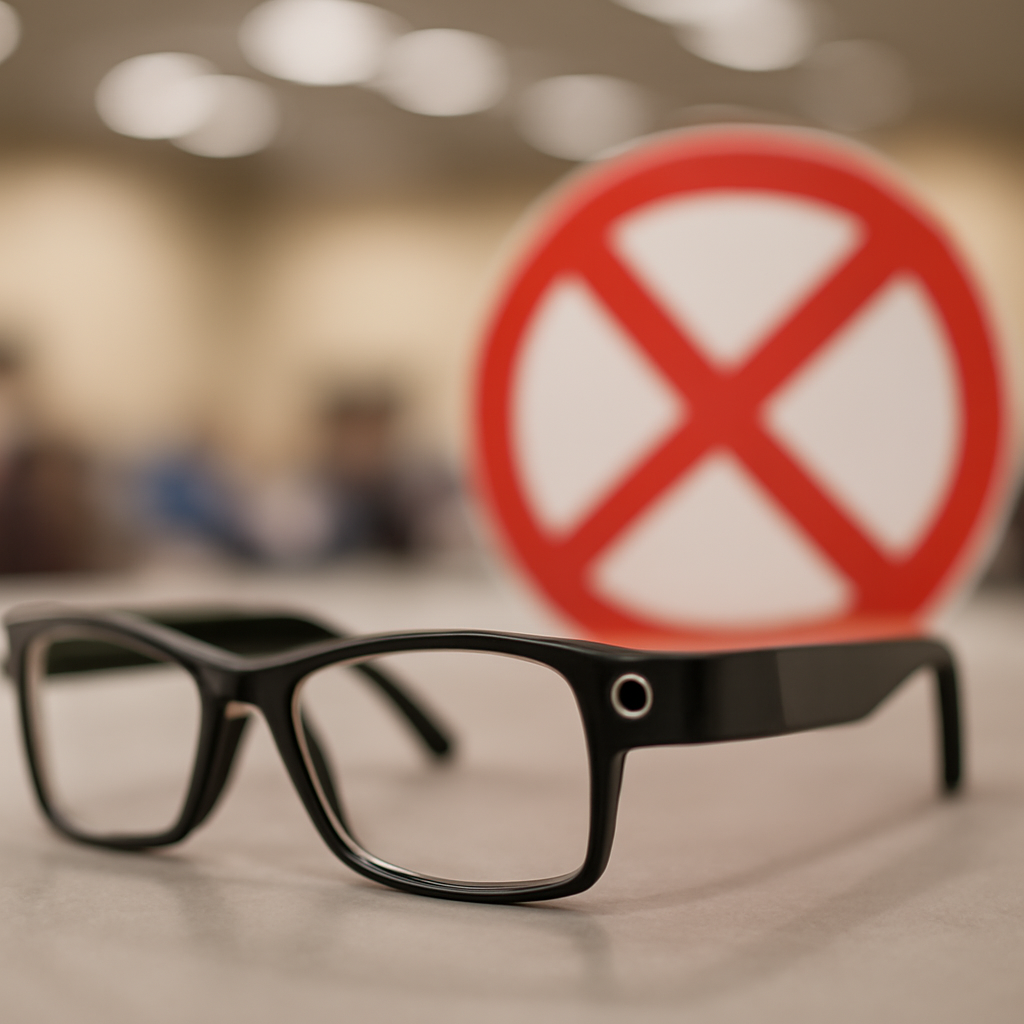
With DEF CON due to open its doors in Las Vegas next week, organizers announced a ban on “Meta-style glasses with recording capabilities,” saying no exceptions will be made for users of prescription lenses. The message, posted via the conference’s social channels, directed delegates to DEF CON’s official photo policy and framed the restriction as a preventative step ahead of the event.
DEF CON’s ban on Meta-style glasses with recording capabilities
Organizers stated the ban applies to “Meta-style glasses with recording capabilities,” and emphasized that attendees should choose “non-violating eyewear” where necessary. The ban is explicit about no exceptions for prescription wearers. DEF CON pointed people toward its photo policy for further rules governing photography and videography at the event.
DEF CON photo policy and its timing
DEF CON’s written photo policy, which the organizers referenced, has not been updated since 2023. That policy allows public photography but includes caveats that, in practice, prohibit capturing the image of anyone — except on-stage speakers — without the subject’s consent. The policy therefore predates the recent proliferation of camera-equipped eyewear developed by Meta in partnership with EssilorLuxottica under Ray-Ban and Oakley brands.

Audit-ready is a season. It shouldn't be.
Evidence in spreadsheets, controls drifting between audits, frameworks multiplying on flat headcount. Nubivance runs continuous compliance on Rapid7 Cyber GRC - SOC 2, HIPAA, ISO 27001, PCI, CMMC.
End the scramblePublic and commercial responses: EFF and Monopoly Events
Eva Galperin, director of cybersecurity at the Electronic Frontier Foundation, welcomed DEF CON’s decision, saying: “Love to see a ‘no pervert glasses’ policy at DEF CON.” The move follows similar decisions from other event organizers. Monopoly Events — which runs UK Comic Cons and related shows — said it has banned the same style of smart glasses. In a statement, Monopoly Events said: “After a consultation period, we can no longer permit the wearing of any recording device at our events.”
Monopoly Events described the rationale in practical terms: talent and agents “felt that these were a violation of their privacy and were damaging and spoiling the interactions at the tables,” and several performers warned they might stop attending in-person events if they could be recorded secretly. Organizers also quoted attendee feedback that many were uncomfortable with the knowledge that other convention-goers might be filming them without consent. The company said anyone caught wearing recording glasses may be asked to leave and forfeit unfulfilled autographs or photographs.
CalMac ferry suspension after a passenger filmed with recording glasses
Beyond conventions, event-like environments have also reacted. Scottish ferry operator CalMac temporarily suspended unplanned visits to ships’ bridges after an incident in June in which a passenger wearing recording glasses made crew and passengers feel uncomfortable while filming during a crossing, the Ayrshire Weekly Press reported. The response illustrates how operators of public services are adjusting access and procedures in real time when encounters with discreet recording devices arise.
Privacy concerns tied to Meta’s glasses and human review
Meta’s smart glasses were initially marketed as hands-free tools for recording moments, but the devices’ discreet appearance — often resembling ordinary eyeglasses unless inspected closely — has stoked criticism. The Register reported accounts tying the devices to “creepy behavior,” with published examples of questionable conduct frequently reported by women and children. The devices’ discretion has been noted as making recording in public less obvious than traditional phone- or camera-based filming.
The Register also reported scrutiny of Meta’s data practices. UK data protection authorities have questioned the company about cross-border data flows after reports from Sweden that contractors in Kenya who review footage were exposed to highly sensitive captures — including footage taken in toilets, changing rooms, and private conversations allegedly revealing wrongdoing. Meta has defended its wearables by noting a recording indicator light on the frame that illuminates when the camera is active, and the company says attempts to tamper with that light prevent the glasses from capturing images.
The Register contacted Meta for comment about the recent bans and said it would update the story if Meta responded.
How conference organizers, talent and attendees are responding
- Conference organizers are updating entry rules and enforcing device bans to preserve consent-based photography norms and to protect guests and performers who object to covert recording.
- Talent, agents and exhibitors are pressing promoters to exclude recording-capable eyewear, warning that continued covert recording could reduce their willingness to attend in-person events.
- Attendees and service operators — from convention-goers to ferry crews — are seeking clearer rules and the ability to demand removal or restriction of people using discreet recording devices when those devices create discomfort or potential privacy violations.
The spread of bans at cultural events, transport services and entertainment venues underscores a basic tension: discreet, wearable cameras change the dynamics of consent in public and semi-public spaces. DEF CON’s explicit, no-exception wording and similar moves by promoters and operators suggest organizers will prioritize consent and perceived safety over the convenience or novelty of hands-free recording at near-term gatherings. Whether those policies lead to wider regulation, technical mitigation, or industry standards remains to be seen, but for now they set practical limits on where Meta-style recording eyewear is welcome.
Original story: The Register — DEF CON bans Meta-style 'pervert glasses'