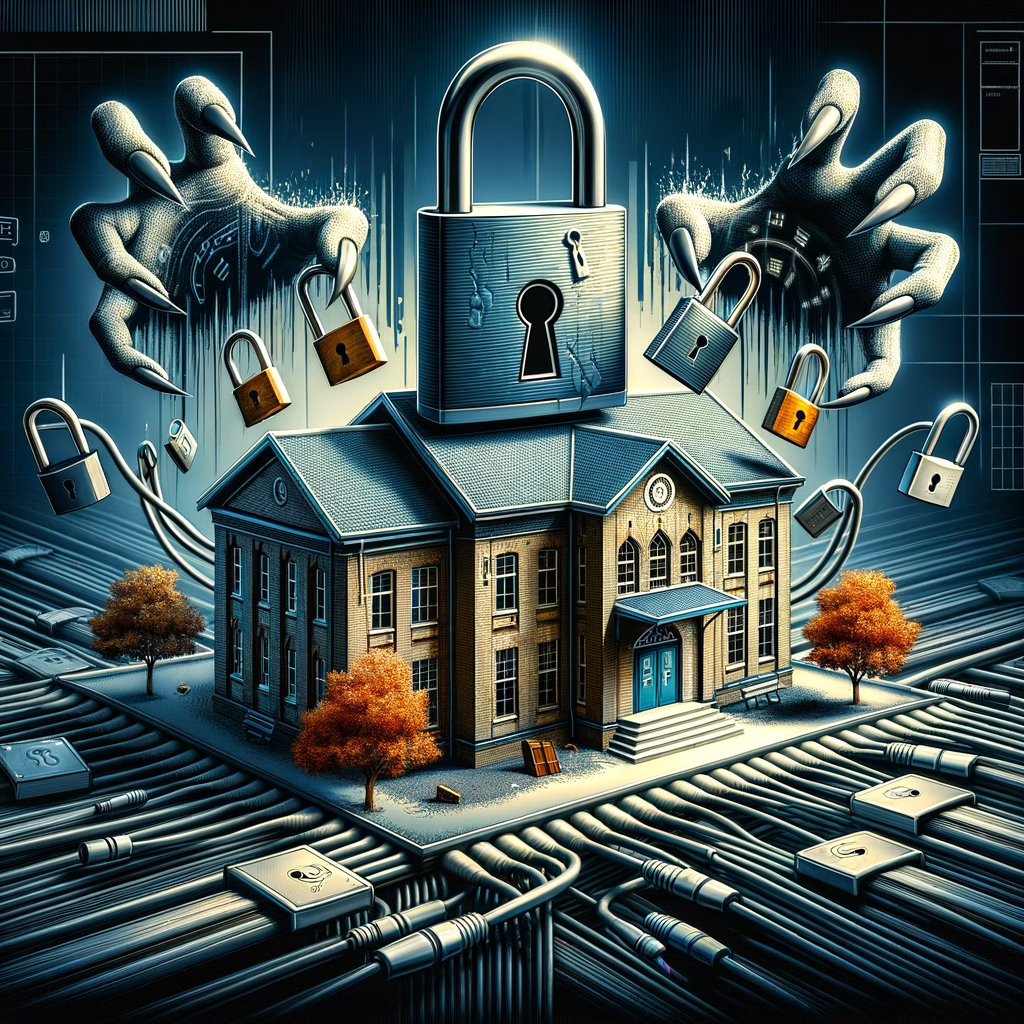
data breach: Stunning, Serious Wake-Up for 31,000
How do you protect the privacy of a community when the keys to its records are suddenly in unknown hands? For roughly 31,000 people connected to a South Carolina school district—students, staff and likely some parents and guardians—that question turned from hypothetical to urgent after an investigation revealed files were stolen in a data breach. The district confirmed the incident, alerted affected individuals and launched an internal review, but the fallout extends far beyond immediate notifications. This event is a stark reminder that school systems can be both rich targets and vulnerable custodians of sensitive information.
Data breach: what happened and why it matters
Officials say personal information for about 31,000 people was exposed. While public reporting so far is limited, the district’s response followed typical post‑incident steps: forensic analysis, engagement with cybersecurity specialists, notification to state authorities, and offers of identity‑protection services in some cases. Law enforcement and state cyber response teams are commonly involved in similar incidents, and many questions remain: how did attackers gain access, how long were records exposed, and which safeguards failed?
The importance of this breach goes beyond administrative inconvenience. First, financial and operational costs escalate quickly: forensic investigations, legal counsel, communications, credit monitoring, and technology upgrades all require funds that are usually pulled from already-tight school budgets. Those diverted resources could otherwise support classrooms and student services. Second, student data is uniquely sensitive because identifiers such as names and birthdates are persistent and cannot be “reissued” like a credit card number; exposure can lead to years of fraud and identity misuse. Third, breaches erode trust in institutions charged with protecting children, which can undermine cooperation between families and schools.
Why schools are attractive targets is straightforward. K–12 systems collect a wide array of sensitive data—names, dates of birth, addresses, health records, guardianship details, disciplinary files and sometimes financial information. Many districts operate on constrained budgets and depend on legacy systems, third‑party vendors and cloud services that expand the attack surface. Known attack vectors in education include ransomware, credential stuffing, misconfigured cloud storage, and phishing campaigns that prey on staff and students.
Practical defenses and what schools must do now
From a technical standpoint, predictable vulnerabilities require predictable countermeasures. Cybersecurity professionals emphasize layered defenses and operational rigor:
– Implement multifactor authentication (MFA) across accounts, especially for administrators and vendor access.
– Enforce least‑privilege access controls and role‑based permissions so users only see what they need.
– Segment networks so breaches in one area don’t automatically provide access to all systems.
– Keep systems and software patched and current; legacy platforms with known flaws should be retired or isolated.
– Encrypt data at rest and in transit; secure, tested backups are essential to recover from ransomware without capitulating to demands.
– Regularly audit vendor security posture and require contractual cybersecurity standards and breach notification clauses.
– Maintain an incident response plan that includes data classification so teams can prioritize critical systems and data sets.
Human training is equally crucial. Phishing remains one of the most effective ways attackers gain initial access. Regular simulation training, clear reporting channels for suspicious messages and a culture that avoids blame for honest mistakes improve resilience.

Audit-ready is a season. It shouldn't be.
Evidence in spreadsheets, controls drifting between audits, frameworks multiplying on flat headcount. Nubivance runs continuous compliance on Rapid7 Cyber GRC - SOC 2, HIPAA, ISO 27001, PCI, CMMC.
End the scramblePolicy, funding and accountability
Policymakers must grapple with the funding-versus-responsibility dilemma. State and federal grants have been proposed to harden school cybersecurity, but implementation varies widely. Districts must comply with federal laws such as FERPA and state breach notification statutes; beyond compliance, there’s an emerging debate about mandatory minimum cybersecurity standards and tighter oversight of third‑party vendors who host or process school data.
Accountability and transparency matter for restoring trust. Key public questions include: how quickly was the breach detected, did outside vendors play a role, and will the district publish a detailed after‑action report outlining root causes and corrective measures? Clear, timely communication about what data was accessed and what remediation steps are being taken helps families protect themselves and provides lessons for other districts.
What families can do now
Affected families should take pragmatic steps immediately:
– Enroll in any identity‑protection or credit‑monitoring services offered.
– Monitor financial statements, tax records, and school accounts for unusual activity.
– Change passwords and enable multifactor authentication wherever available.
– Be alert to phishing attempts that exploit the breach and request additional personal information.
– Ask the school for specifics about what was exposed and how long the breach may have lasted.
Concluding thoughts: a familiar lesson with new urgency
This South Carolina incident is a painful but predictable reminder: safeguarding student and staff records demands sustained investment, clear policy, solid technical defenses and candid communication when failures occur. When personal information for 31,000 people is taken, the immediate priorities are containment and support—but the longer task is a hard reevaluation of practices and resources to prevent a repeat. Rebuilding trust will depend on swift, transparent action and meaningful improvements; without them, the consequences of this data breach will ripple through the community long after the headlines fade.