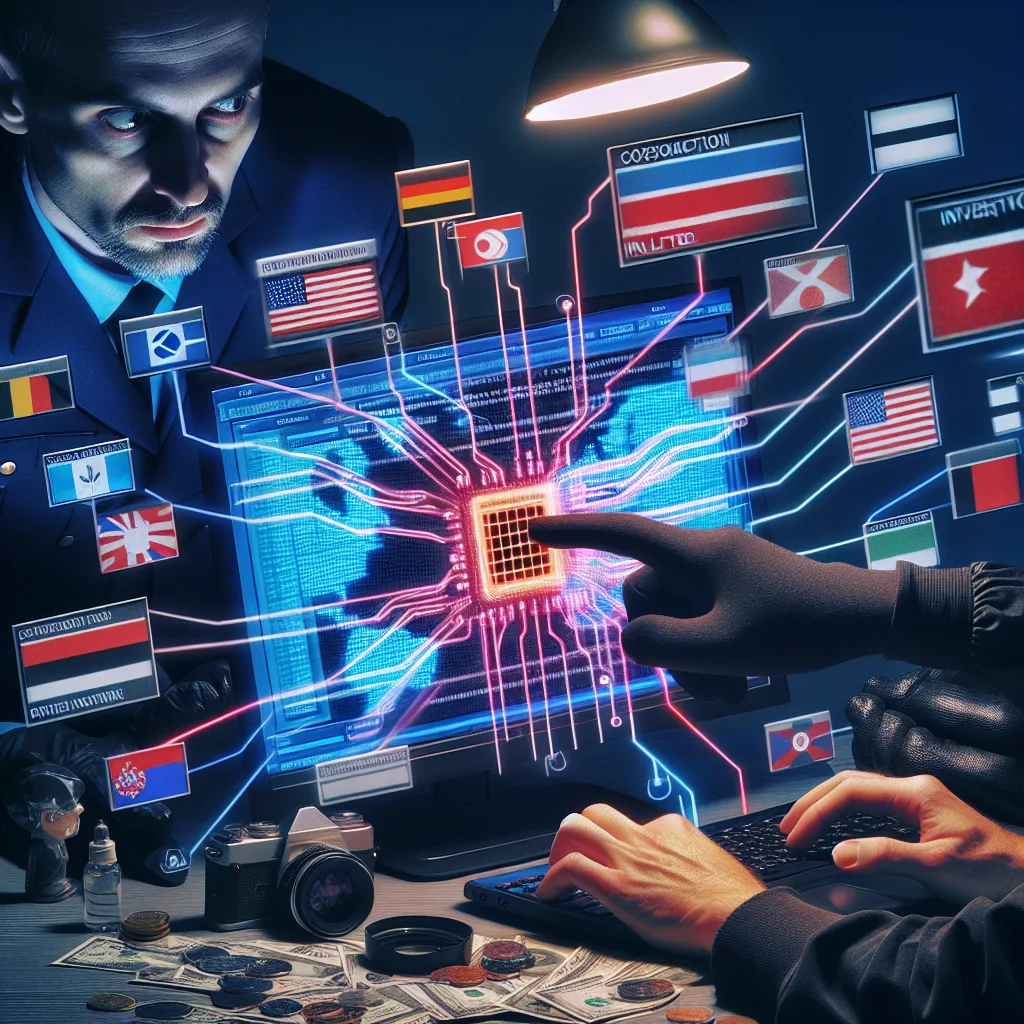
Czech Ministry Targeted in Years-Long Chinese Cyber Espionage Operation
The Czech government has sharply accused Chinese state-sponsored hackers of breaching its Foreign Affairs Ministry, alleging that the incident is part of a prolonged espionage campaign. Officials have identified the group behind the intrusion as APT31, a name that echoes across international security reports for its persistent and sophisticated cyber operations.
In a statement released on Wednesday, Czech authorities confirmed that sensitive declassified data was unlawfully extracted from the ministry’s systems back in 2022. The move, they assert, demonstrates the increasing reach of nation-state cyber activities into the diplomatic core of countries across Europe and beyond. The revelation has stirred concerns not only about the integrity of state communication but also about the broader implications for national security and international relations.
Historical cyber intrusions have repeatedly shown that attacks targeting state institutions are rarely random. Instead, they often reflect long-term strategic ambitions driven by geopolitical, economic, and military interests. Over recent years, several Western governments have reported similar breaches, underscoring the urgent need to address vulnerabilities within public sector digital infrastructure. By drawing attention to this incident, the Czech government has injected fresh urgency into debates over cyber defense funding and international cooperation on cybersecurity norms.
According to statements released by the Czech Ministry of Foreign Affairs, the cyberattack was executed over several years through sophisticated means that enabled the perpetrators to operate undetected. Officials emphasized that declassified documents, though previously public, were selectively exploited to glean insights into diplomatic strategies and negotiations. The agency’s decision to review older documents, while informative, inadvertently provided a vulnerable portal for persistent espionage activities.
Policy experts note that state-sponsored cyber operations are increasingly integrated with larger strategies aimed at undermining trust in governmental institutions. For example, the European Union’s ongoing measures to bolster cybersecurity across its member states provide a backdrop against which this incident is particularly resonant. As reported by cybersecurity firms and international watchdog organizations, the consistent use of advanced penetration tools by groups such as APT31 not only threatens immediate diplomatic security but also sows seeds of distrust in public institutions.
International cybersecurity researcher Brian Krebs, writing for KrebsOnSecurity, has noted that “the sophistication of these attacks indicates a level of resources and planning that goes far beyond what is typically available to non-state actors.” His assessment reinforces the perspective that nation-state groups like APT31 are not only targeting isolated systems but are engaged in campaigns designed to gather both tactical and strategic intelligence.
Central to the public debate is the question of data integrity and the permeable boundary between classified and declassified material. The Czech case illustrates how the traditional separation of public and sensitive government data can become blurred in a digital age where historical documents can be repurposed to compromise current policies and strategies. Officials inside the ministry have underscored the need to re-evaluate record-keeping procedures, urging international partners to adopt stricter protocols regarding document declassification and archival security.
Analysts suggest that the fallout from this revelation may spur a series of reforms, both within the Czech cybersecurity framework and among European allies. They caution, however, that addressing vulnerabilities in cyber defense remains a persistent challenge, one that requires robust public-private partnerships and increased investment in emerging defensive technologies. The incident may further elevate demands for international collaboration in monitoring and deterring cyber espionage, with policy-makers calling for a unified stance against state-sponsored cyber threats.
Looking at the broader implications, there is genuine concern about the impact on diplomatic trust. When sensitive information is compromised—even if the data pertain to historical matters—it can cast a long shadow over current and future interactions with international partners. As countries like the Czech Republic enhance defensive measures, the incident underlines a critical lesson: in the digital arena, the line between past and present security vulnerabilities is ever-blurring.
The response from other key institutions has been measured but resolute. European cybersecurity agencies have acknowledged the sophistication of APT31’s methods and reiterated their commitment to bolstering defenses against similar incursions. Meanwhile, diplomatic sources in other countries remain vigilant, cognizant of the fact that such incidents could signal a trend towards broader, more coordinated cyber campaigns by Chinese operatives.
In expert assessments, cybersecurity policy designer Dr. Mariya Sergeeva has argued that “this incident is a stark reminder that no government is immune to the relentless probing by state-backed adversaries.” Dr. Sergeeva, whose insights have shaped policy recommendations at international forums, stressed that achieving robust cybersecurity requires both technological upgrades and a recalibration of how governments handle and share sensitive information. Her appraisal, published in the Journal of Cyber Policy, highlights systematic challenges that transcend national borders.
Looking forward, the incident is likely to drive a reassessment of digital hygiene practices within government agencies across Europe. Legislators and technology officers alike may push for increased encryption of archival systems and the implementation of real-time threat analytics. At the same time, the geopolitical tensions between China and several Western nations suggest that this cyber breach will not simply be seen as an isolated security failure but as a symptom of broader, strategic contention.
As policy-makers deliberate on measures to thwart future incursions, business leaders and technologists are watching closely. The balance between data accessibility and security remains a critical concern—one that resonates well beyond government databases. The incident serves as a reminder of the continuing evolution of cyber threats, challenging traditional approaches to both legacy systems and modern communication technologies.
In a world where digital boundaries are continuously contested, the Czech case invites a sobering reflection on the nature of modern statecraft. As we observe the unfolding response from international cyber watchdogs and diplomatic bodies alike, one cannot help but ask: will robust international collaboration ultimately turn the tide against such relentless digital espionage? The answer may well define the next chapter of global cybersecurity in an increasingly interconnected world.



