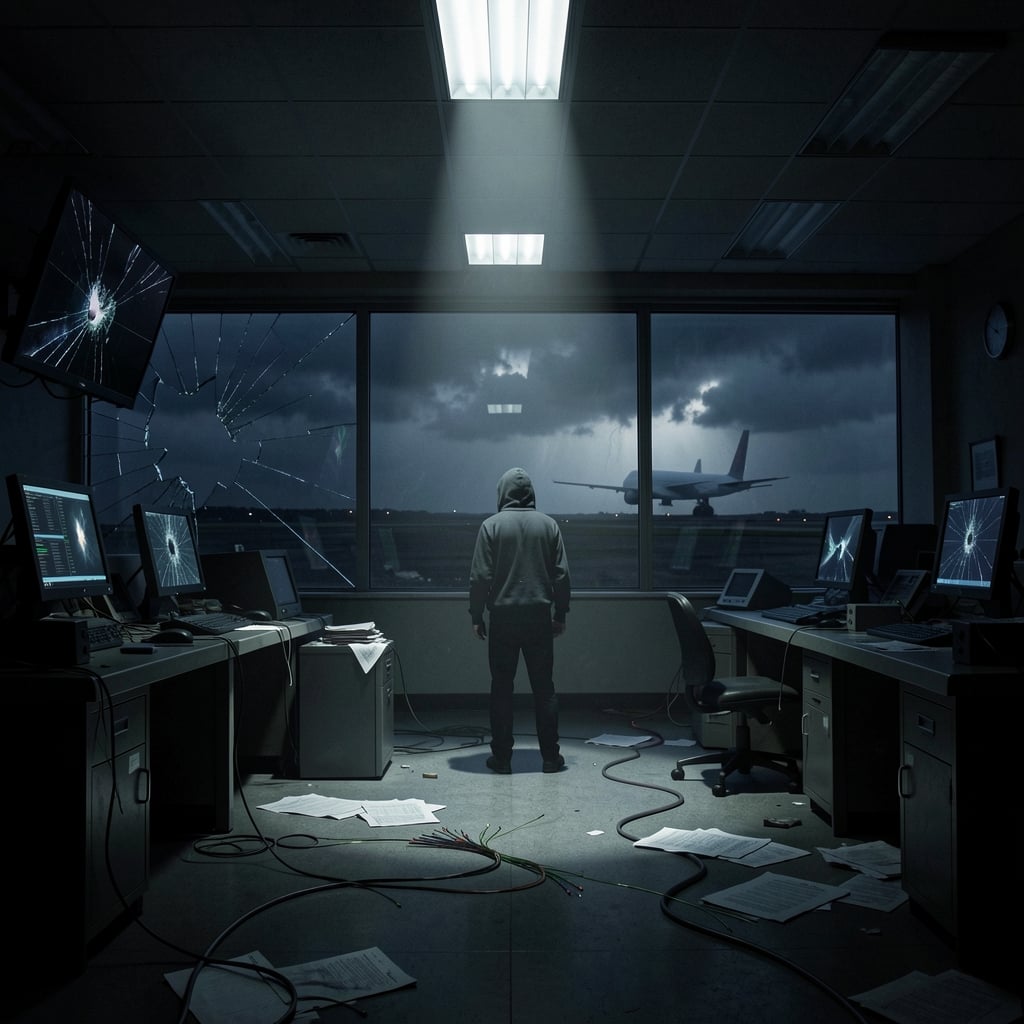
cyberattack disrupts European airports
“How do you board a plane when the screens are black?” That was the dilemma airport staff and travellers faced when a coordinated cyberattack last week knocked out key passenger systems at multiple European hubs. Flight information displays went blank, check‑in kiosks stopped responding and back‑office operations were degraded — forcing a reversion to manual procedures that strained staff and delayed passengers across the continent. Security leaders and cyber experts responded with urgent containment, forensic work and a broader call for systemic reforms.
What happened: an operational reality check
A ransomware campaign — according to public-sector cyberwatchers and sector reporting — was the proximate cause of the outages that compounded into a travel crisis. Affected airports saw:
– Flight information display systems (FIDS) fail or show blank screens.
– Check‑in kiosks and automated bag‑drop machines become unavailable.
– Degraded back‑office functions that forced staff to use manual check‑in, paper bag tags and extra gate staffing to keep aircraft moving.
IT teams isolated impacted systems, reverted to verified backups where possible, and ramped up network monitoring. National CERTs, Europol and industry information‑sharing groups exchanged indicators of compromise and mitigation steps in near real time while law enforcement began malware signature and log analysis to pursue attribution.
Why this matters: ripple effects beyond the screens
Airports are tightly coupled ecosystems — an interlock of passenger‑facing IT, operational technology (OT), airline departure‑control systems and third‑party vendor platforms. That architecture makes them uniquely vulnerable: a single compromised service or stolen supplier credential can cascade, disrupting passenger processing, baggage handling and even regulatory interfaces. The visible consequence for travellers — long queues, missed connections and lost bags — masks deeper financial, reputational and regulatory consequences for operators.
Analysts warn adversaries have broadened tactics beyond simple data theft. Hybrid campaigns now combine ransomware with disruptive operations timed to inflict maximum logistical pain. Both financially motivated criminal groups and state‑sponsored actors exploit the same weak links: legacy systems, poor segmentation and inconsistent supplier security hygiene.
Responses and lessons from technologists
Technologists emphasize that immediate fixes — isolating networks and restoring backups — are necessary but insufficient for long‑term resilience. Practical defensive measures recommended by experts include:
– Strict network segmentation to isolate passenger services from core operational systems.
– Rigorous patch management and strengthened access controls, especially for third‑party vendor credentials.
– Immutable or air‑gapped backups with tested recovery procedures.
– Frequent, realistic incident‑response drills that involve airlines, ground handlers, customs and regulators.
– Treating information‑sharing mechanisms as operational necessities rather than bureaucratic checkboxes.
ENISA and other sector bodies have urged regular tabletop exercises and red‑team assessments to surface brittle dependencies before attackers can exploit them — advice underscored by this incident.
Policy, legal and insurance implications
Policymakers face thorny trade‑offs: raising mandatory security standards under frameworks such as the EU’s NIS2 Directive can lift baseline protections, but implementation varies among member states and smaller airports may struggle with compliance costs. The attack has intensified calls to accelerate reporting timelines and tighten supplier security requirements.
Insurers are also recalibrating exposure: transport hubs are being reassessed as higher‑risk entities, with tighter cyber coverage terms and rising premiums. Regulators and prosecutors will review whether organisations met existing risk‑management obligations and disclosed incidents timely — scrutiny that may drive faster investment in resilience.

Audit-ready is a season. It shouldn't be.
Evidence in spreadsheets, controls drifting between audits, frameworks multiplying on flat headcount. Nubivance runs continuous compliance on Rapid7 Cyber GRC - SOC 2, HIPAA, ISO 27001, PCI, CMMC.
End the scramblePerspectives: technologists, policymakers, travellers and adversaries
– Technologists: View this as a predictable outcome of legacy architectures and lax supplier controls. The remedy is defensive depth — segmentation, IAM, MFA for vendor access and hardened OT practices.
– Policymakers and regulators: See the event as validation for stronger, harmonised rules and faster incident reporting but must balance mandates with operational realities of smaller airports.
– Travellers and frontline staff: Experienced immediate, tangible disruption — long waits and uncertainty — underscoring that digital outages create real‑world consequences.
– Adversaries: Whether criminally motivated or state‑linked, the attackers exploit the sector’s economic incentives — high visibility and urgent need to restore operations — making airports attractive high‑leverage targets.
Practical steps for airport operators (summary)
– Enforce strict segmentation between passenger‑facing and core systems.
– Harden third‑party contract language and require demonstrable cyber hygiene.
– Maintain immutable, offline backups and verify recovery processes regularly.
– Run cross‑sector drills that include airlines, handlers and border agencies.
– Invest in retention and training of cybersecurity personnel.
Conclusion
This episode is more than a technical incident; it is a stress test of how society treats critical travel infrastructure. Airports can recover flights and repair systems, but the deeper question remains: will operators, regulators and insurers convert this crisis into lasting resilience, or will short‑term fixes leave the same weak links for the next attack to exploit? The next disruption will not announce itself — it will merely darken another terminal screen.
Source: https://www.securitymagazine.com/articles/101922-cyberattack-disrupts-european-airports-security-leaders-respond



