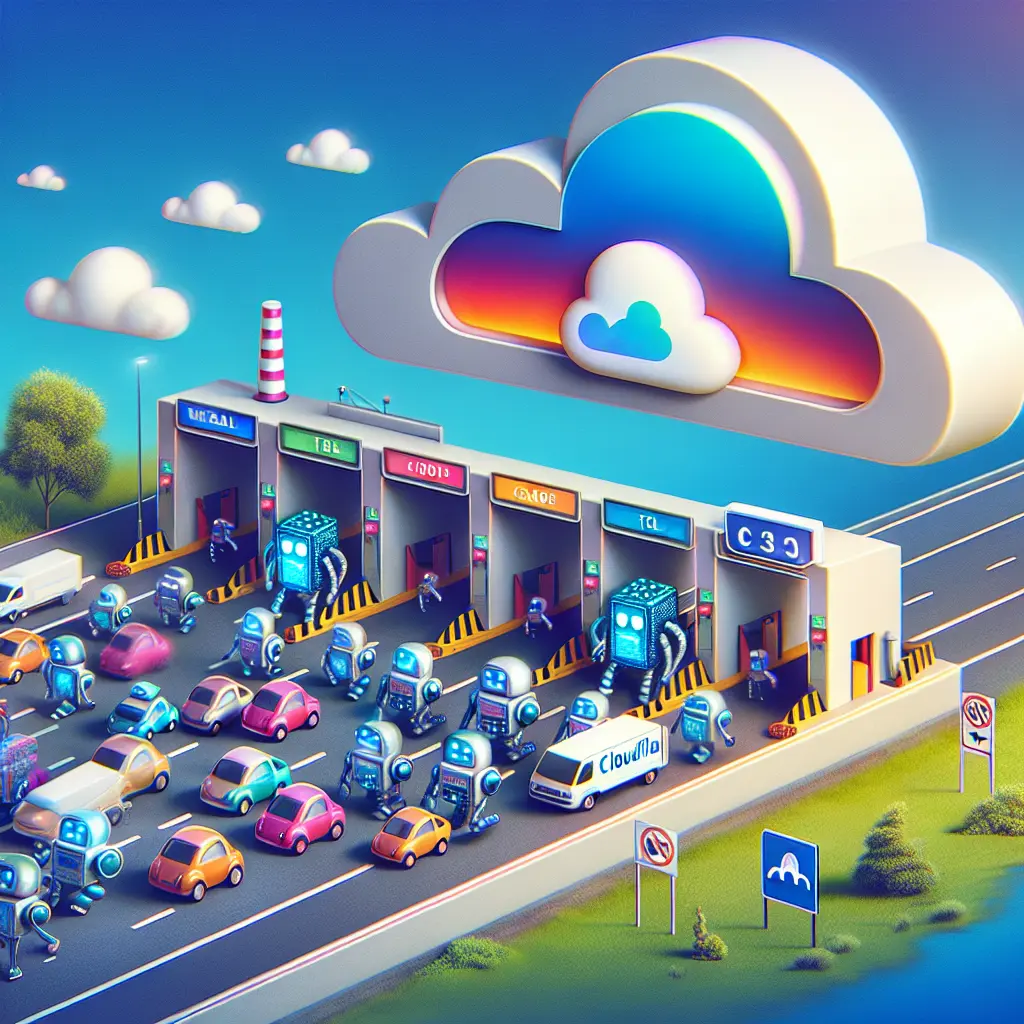
Cloudflare’s Bold Move: Charging AI Bots for Website Access
In an age where artificial intelligence rapidly evolves, the relationship between AI technologies and the internet has entered a new phase of negotiation. On Tuesday, Cloudflare, a significant player in internet infrastructure that manages 16% of global web traffic, unveiled a groundbreaking initiative aimed at redefining how AI bots interact with online content. This initiative raises a provocative question: Is it time to put a price tag on the information these bots consume?
For years, website owners have grappled with the dual-edged sword of web crawlers—those digital entities that scour the internet to collect data for various purposes. While they can boost traffic and visibility through search engines, they can also strain resources and infringe upon intellectual property rights. Now, Cloudflare’s announcement introduces a pay-per-crawl model that allows content creators to monetize their work while asserting control over who accesses their sites.
The proposal comes against a backdrop of evolving perceptions regarding content ownership and usage in the digital landscape. For decades, web crawling has been largely unregulated, leading to discontent among content creators who see their hard work utilized without compensation. The balance of power has increasingly tilted toward tech giants and AI firms that aggregate vast amounts of data without compensating the original publishers.
Cloudflare’s new policy stipulates that its network will default to blocking AI bots from accessing newly hosted domains unless explicit permission is granted by the site owner. This paradigm shift represents a significant escalation in the battle for ownership over digital information and could reshape how content creators navigate their relationship with technology companies.
As this policy rolls out, AI crawlers will now have an opportunity to access content on sites willing to participate in this new economic model. Publishers will be able to set fees that AI developers must pay each time their bots crawl a site. In theory, this could create a revenue stream for websites while providing transparency in how their information is used.
The implications of this move are far-reaching. For publishers, especially smaller ones who struggle to monetize their content effectively, this could represent a much-needed lifeline. It aligns with broader trends advocating for fair compensation within the creator economy—a movement that has gained momentum as more people recognize the value of original content in an increasingly automated world.
However, the proposal isn’t without its critics. Some technologists argue that imposing fees might stifle innovation by making it harder for startups to harness freely available data or develop new AI applications. They warn that restricting access could lead to reduced competition and limit advancements in machine learning capabilities reliant on diverse datasets. Moreover, some industry experts have voiced concerns about potential compliance issues—how would publishers enforce payment structures? What happens if crawlers refuse to pay?
A key aspect of this initiative is the balance it seeks between protecting intellectual property rights and fostering technological growth. Cloudflare’s proposal invites stakeholders from multiple perspectives—content creators, policymakers, technologists—to engage in discussions about sustainable practices governing web use. The company asserts its commitment to creating an equitable landscape where both web publishers and AI developers can thrive while respecting each other’s interests.
The timing of Cloudflare’s announcement cannot be overstated; it coincides with growing public discourse surrounding data privacy, ownership rights in digital spaces, and ethical considerations related to AI technologies. As governments worldwide consider regulations impacting tech giants and data usage practices—such as Europe’s General Data Protection Regulation (GDPR)—Cloudflare’s proactive stance could inspire similar frameworks elsewhere.
Looking ahead, it remains crucial for stakeholders involved in this evolving narrative to monitor its repercussions closely. Will other major internet service providers follow suit and adopt similar measures? If so, what will that mean for current business models dependent on free access to data? More importantly, how will users perceive this shift? The potential backlash from users accustomed to unrestricted access cannot be underestimated.
The stakes are high as we tread into uncharted waters concerning intellectual property rights and technological advancement. Can we find a pathway where innovative technologies coexist with creators’ rights? As Cloudflare embarks on this venture, it serves as both a harbinger of change and an invitation for dialogue within an ever-complex digital ecosystem.



