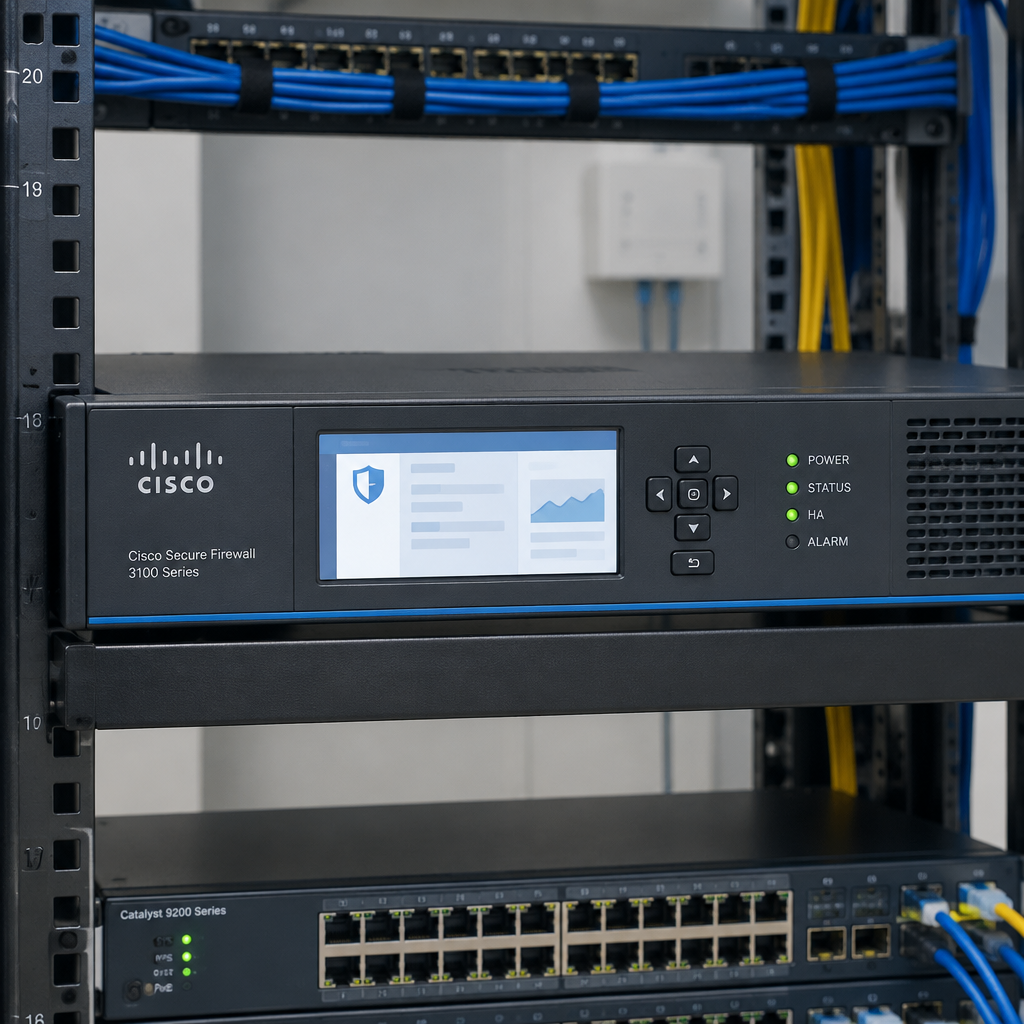
"This vulnerability is due to logic errors when secondary authentication is configured on a tunnel group. An attacker could exploit this vulnerability by sending a crafted request when connecting to the SSL remote access VPN. A successful exploit could allow the attacker to cause the affected device to reload, resulting in a DoS condition," Cisco said.
What CVE-2026-76418 does to ASA and FTD firewalls
CVE-2026-76418 is a high-severity denial-of-service flaw that affects Cisco Adaptive Security Appliance (ASA) and Threat Defense (FTD) software when configurations include the 'webvpn' keyword and SSL VPN is enabled on at least one interface. According to Cisco, the root cause is logic errors that occur when secondary authentication is configured on a tunnel group. An unauthenticated, remote attacker can send a crafted request while connecting to the SSL remote access VPN and trigger an unexpected device reload, producing a DoS condition for the affected firewall.
Cisco PSIRT discovery and patch guidance
Cisco's Product Security Incident Response Team (PSIRT) said it found evidence of active exploitation of CVE-2026-76418 in October 2026 and has issued security updates to remediate the flaw. Cisco "strongly recommends that customers upgrade to a fixed software release" to address the vulnerability. The company released the advisory and patches but did not publish indicators of compromise or further technical details about the attacks, including which organizations were targeted or who is exploiting the flaw.

This site is the portfolio.
OSINTSights runs on Cloudflare Workers, D1, R2, and Vectorize, with an AI pipeline on Hetzner ARM. Nubivance designed, built, and operates it. We do the same for clients.
See what we buildMitigation options for administrators
Cisco offered no official workaround that fully eliminates the vulnerability, but it identified a practical mitigation for administrators who cannot immediately apply the fixed software: disable secondary authentication on the default DefaultWEBVPNGroup tunnel group or on any user-configured tunnel group list. Beyond that mitigation, Cisco's guidance is to install the fixed release as soon as possible.
Internet exposure and recent Cisco zero-day history
Internet scanning by Shadowserver currently tracks more than 51,000 Cisco ASA SSL VPN devices exposed online, though Shadowserver does not indicate how many of those are already patched or are honeypots. The advisory arrives against a recent string of actively exploited Cisco flaws: in September 2025 Cisco patched CVE-2025-20362 and CVE-2025-20333 after zero-day exploitation targeting 5500-X Series devices with VPN web services enabled; in August 2026 Cisco fixed another DoS zero-day, CVE-2026-20349, that was being used to crash ASA and FTD devices with SSL listen sockets; and earlier this month Cisco warned of an actively exploited Secure Email Gateway zero-day, CVE-2026-76519, that lets unauthenticated attackers execute commands with root privileges. Cisco has also connected prior exploitation activity to the ArcaneDoor campaign, which exploited CVE-2024-20353 and CVE-2024-20359 to breach government networks beginning in November 2023. Since November 2021, the U.S. Cybersecurity and Infrastructure Security Agency (CISA) has flagged 101 Cisco security flaws as exploited in the wild, seven of which were also abused by ransomware gangs.
What this means for technologists, federal agencies, and affected enterprises
- Technologists and security teams: inventory ASA/FTD devices for any configuration containing the 'webvpn' keyword and SSL VPN enabled; if patching cannot be done immediately, disable secondary authentication on the DefaultWEBVPNGroup or any user-configured tunnel groups as Cisco recommends.
- Federal agencies and regulators: past action matters — CISA previously issued Emergency Directive 25-03 after exploited ASA/FTD zero-days — and the PSIRT's finding of exploitation in October 2026 will most likely inform any agency risk assessments and incident response priorities.
- Affected enterprises and procurement leaders: the Shadowserver figure of more than 51,000 exposed ASA SSL VPN devices is a reminder to prioritize remote-access VPN inventory, patch testing, and timeline-driven upgrades for devices with SSL VPN enabled.
Two facts stand out: Cisco released a fix and advised immediate upgrades, and the company did not publish indicators or attribution tied to the exploitation it observed in October 2026. The combination — an actively exploited high-severity zero-day and limited disclosure of how it was used — leaves defenders with a single clear, unavoidable tool: patch quickly or apply Cisco's recommended temporary mitigation and treat exposed SSL VPN endpoints as urgent items for incident response.
Source: BleepingComputer — New Cisco firewall zero-day exploited to crash SSL VPN devices