"That said, the point of this post is not the possible sale of 100 rifles."
China Defense Blog on a strategic shift in arms exports
The China Defense Blog frames a change in how Chinese defense suppliers sell abroad: where once Beijing and state-owned firms like NORINCO were purveyors of stand-alone platforms, the blog argues they increasingly supply multiple, interlocking categories. The post points to purchases across small arms, armor, artillery, air defense, and army aviation in countries including Pakistan, Thailand, Bangladesh, Myanmar, Cambodia and several African states. The effect, the author writes, is not isolated acquisitions but the gradual adoption of “pieces of an ecosystem.”
Bangladesh Army: a checklist of Chinese-origin systems
The blog lists specific Chinese-origin equipment already in Bangladesh Army service, illustrating the ecosystem point. The catalog includes:
- Small arms: BD-08 assault rifle (licensed Type 81 derivative produced by Bangladesh Ordnance Factories), Type 56 rifles in inventory and reserve stocks, BD-15 light machine gun (Type 81 family), and various Chinese sniper rifles, machine guns, and grenade launchers.
- Armor and tracked vehicles: Type 59G Durjoy modernization program and VT-5 light tanks.
- Armored vehicles: WZ551 family APCs and various Chinese reconnaissance and support vehicles.
- Artillery: Chinese 122mm systems, PLL-05 120mm gun-mortar systems, and multiple Chinese-origin towed artillery systems.
- Air defense: FM-90 short-range SAM systems, Chinese anti-aircraft artillery and radar systems.
- Anti-tank weapons: HJ-8 ATGMs, Chinese recoilless rifles and RPG systems.
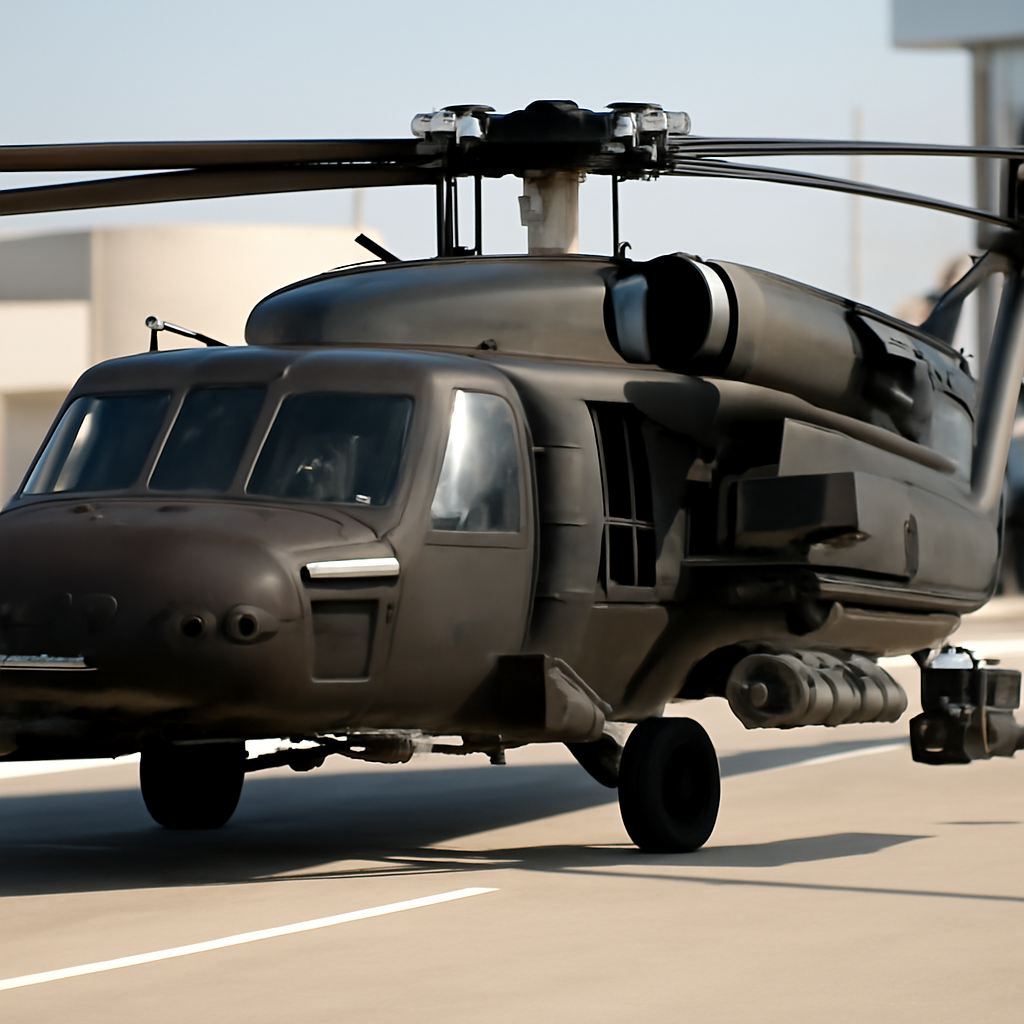
- Army aviation: Harbin Z-9 helicopters for utility and reconnaissance roles.
The post emphasizes that NORINCO appears willing to meet existing local logistics and caliber preferences—explicitly noting that if Bangladesh wants to retain a 7.62×39mm ecosystem, China is prepared to offer modern solutions that fit that framework rather than replace it.

Audit-ready is a season. It shouldn't be.
Evidence in spreadsheets, controls drifting between audits, frameworks multiplying on flat headcount. Nubivance runs continuous compliance on Rapid7 Cyber GRC - SOC 2, HIPAA, ISO 27001, PCI, CMMC.
End the scrambleRoyal Thai Army purchases and modularity in practice
The blog details recent Royal Thai Army acquisitions showing the modular, cross-category model at work. Reports cited include:
- An order for 1,000-round batches of 122mm rockets from China, including the SHE-30 (30 km) and SHE-40 (40 km), to be used with the SR-4 modular 122mm rocket launcher (export version of the Type 11 MRL). The post notes Thailand’s National Defense Technology Institute has developed a domestic SHE-family rocket but that its version has not reached mass production.
- Export of the SM-4A rapid-fire 120mm mortar system mounted on a VN-1 (ZBD-09 8x8 amphibious APC) chassis. The SM-4A’s shorter barrel—derived from the W99—allows it to fit into a broader range of APC/IFV chassis, enhancing indirect-fire support for prospective export clients. The blog states the SM-4A is in service with the Royal Thai Army.
- Photos and reporting that 38 VN-1C vehicles ordered in 2017 have been commissioned to a cavalry regiment.
VT4 main battle tank: customization and exports
The post reproduces reporting that China’s VT4 (also marketed as MBT3000) has continued export success. Citing a Weihutang column affiliated with China Central Television and a Global Times piece edited by Wang Xinjuan, the blog notes two customized VT4 tanks were transported to an undisclosed foreign buyer and that the exported vehicles in that shipment featured a non-standard turret boost design and new explosive reactive armor. The VT4 specifications in the report include a 125mm smoothbore gun able to fire APFSDS and high-explosive anti-tank rounds and missiles with a 5 km range; a China-made 1,200-horsepower diesel engine with hydromechanical drive; a maximum road speed of 70 kph and a maximum cross-country speed of 50 kph. The VT4 has been sold previously to Thailand and Nigeria, the post adds.
What this means for Bangladesh Army, Royal Thai Army, and NORINCO
- Bangladesh Army: procurement choices that preserve existing calibers and logistics—such as 7.62×39mm—can be met with modern Chinese variants, allowing upgrades without wholesale supply-chain disruption.
- Royal Thai Army: purchases of rockets (SHE-30/40), SR-4 launchers, SM-4A mortars on VN-1 chassis, and VN-1C vehicles demonstrate a pattern of integrating firepower, mobility, and indirect-fire systems from a common supplier portfolio.
- NORINCO / Chinese defense exporters: the company and affiliated state industry appear to be operating in the ecosystem space historically occupied by the United States and Russia—offering complementary categories of weapons, platforms, and fit-to-customer solutions rather than single, standalone sales.
Viewed singly, many of these transactions are discrete procurement decisions. Viewed together, and as the China Defense Blog notes, they “look increasingly like components of a Chinese-built military ecosystem adapted to local requirements.” A rumored rifle purchase, the blog argues, would be less a one-off than another small piece in an accumulating supply-and-support footprint that spans small arms to tanks, rockets, air defense, and training.
https://china-defense.blogspot.com/2026/09/capitalism-with-chinese-characteristics.html