
Know a small business winging it on security?
No IT department, no security budget, real exposure. Nubivance builds right-sized security foundations for small companies. Send them this.
Send it along
This week’s ThreatsDay unpacks a staggering $15B crypto fraud, chilling satellite-enabled surveillance, and a rise in smishing — showing how everyday tech is being turned against us and what simple steps you can take to protect your money, data, and trust.

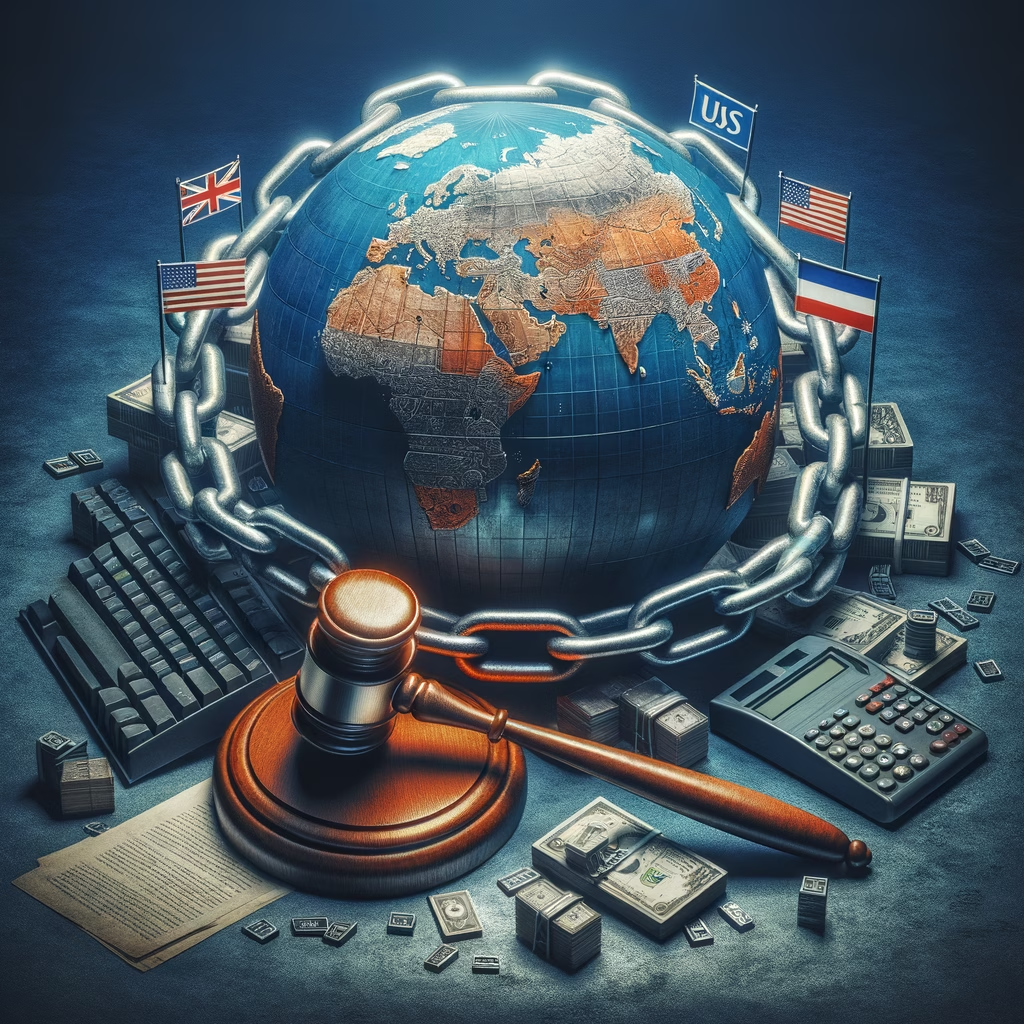
The UK and US have hit a sprawling Southeast Asian scam network with coordinated sanctions to freeze assets and choke off the financial lifelines behind investment and romance frauds. The move targets call centres in Cambodia and Myanmar that allegedly use script-driven deception, coerced workers and complex laundering to prey on victims worldwide.

Nearly one in every thirteen dollars disappears to digital fraud—TransUnion says it costs companies 7.7% of revenue (about $534 billion globally). That’s a hidden tax on growth, trust and margins that demands smarter defenses.

Worried that the bank details in that email really belong to your solicitor? The NCA warns house buyers are being hit by payment diversion fraud—sometimes losing over £80,000—so always independently verify payment instructions and use secure channels to protect your sale.

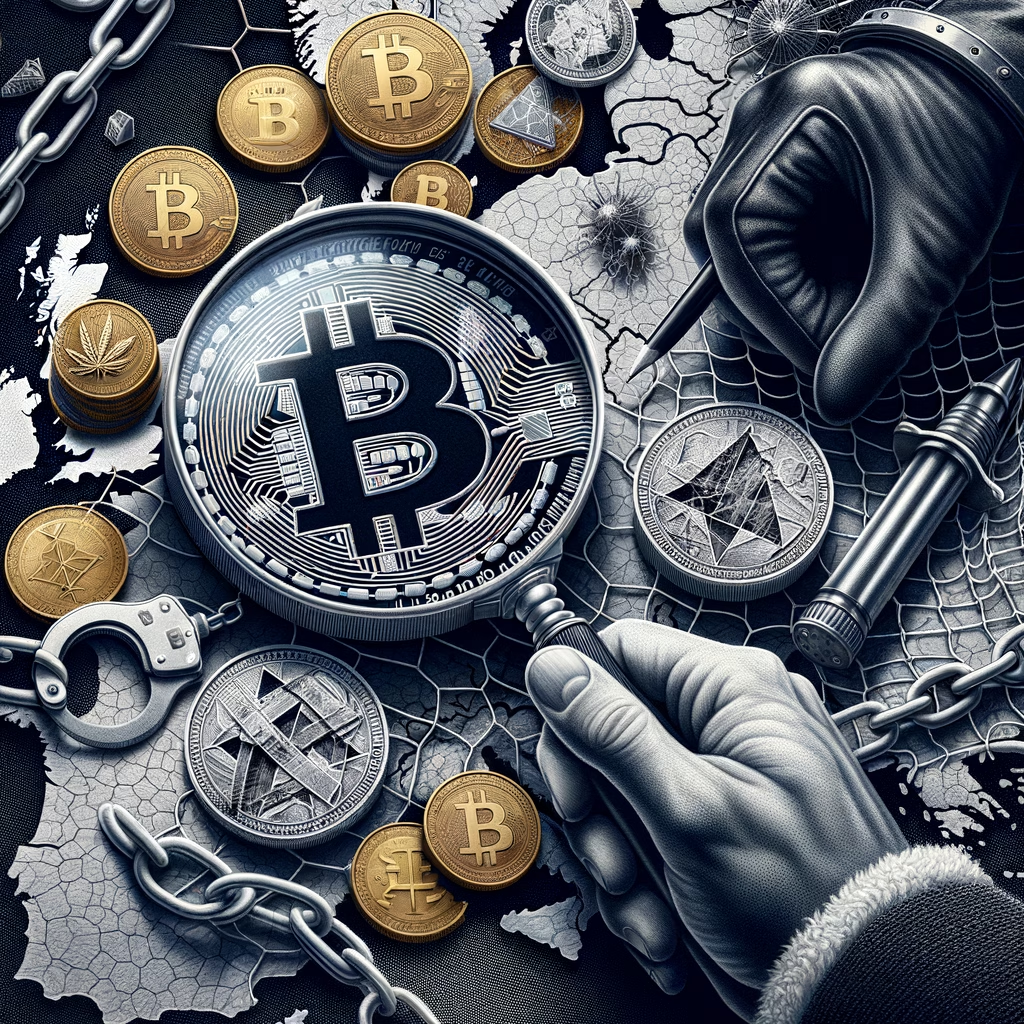
How did billions in Bitcoin slip through the cracks for seven years? The UK’s landmark seizure and Zhimin Qian’s guilty plea show how blockchain forensics plus old‑school detective work can upend crypto money‑laundering and reshape global enforcement and regulation.

Interpol’s Operation Contender 3.0 led to 260 arrests across Africa, disrupting the networks behind romance, investment and business-email scams. It’s a powerful coordinated strike — but experts warn arrests must be paired with better tech, policy and victim support to truly curb these adaptable, cross-border fraud rings.

European police dismantled an alleged €100 million crypto fraud ring this week, arresting five suspects and shutting down fake platforms, token launches and wallets that duped investors. The case shows how cross-border forensics can stop big scams — and why you should always verify platforms and be wary of returns that sound too good to be true.

Think they’d really retired? Scattered Spider quietly retooled and hit a U.S. bank, proving public retirements can be misdirection and that banks must move beyond checklist security to stay ahead.

No IT department, no security budget, real exposure. Nubivance builds right-sized security foundations for small companies. Send them this.
Send it along
As international crackdowns shutter traditional fraud hubs, organized scam camps are quietly relocating to countries with weak governance and porous oversight — making detection harder, amplifying harm to victims, and turning fragile communities into unwitting havens.

Sinqia, one of Brazil’s largest fintech providers, says it stopped an attempt to steal about $130 million from two B2B partners. The near‑heist shows how vulnerable software‑based vaults can be and why hardening third‑party financial systems is urgent.

Chainalysis, OKX, Binance and Tether froze nearly $47 million destined for romance-baiting scammers, stopping a major fraud before the money disappeared. The move shows how analytics and cooperation can help victims — while sparking fresh debate over privacy and centralized control.

Interpol’s Serengeti 2.0 swept across Africa, leading to 1,209 arrests and roughly $97 million in seized assets. The operation dealt a major blow to transnational cybercrime and shows why sustained, cross-border cooperation is essential to stop these lucrative fraud networks.

TRM Labs’ Beacon Network unites exchanges and law enforcement in a shared platform to speed detection and disruption of crypto-enabled crime. It promises faster action and less duplication—but also raises important questions about privacy, governance and false positives.

A new report reveals mule operators in the Middle East and Africa have evolved from simple VPN tricks into layered, business-like fraud networks that mimic legitimate commerce and dodge traditional defenses. Stopping them will take smarter behavioral analytics, cross-border cooperation, and solutions that protect users without choking genuine businesses.

Security rarely breaks in a single blast — it seeps away. This week’s roundup shows how NFC fraud, N‑able exploits, and malicious Docker images quietly erode trust and widen blast radii when small oversights go unpatched.

New York’s attorney general says Zelle’s bank owners and operator turned a handy, instant-pay system into a playground for scammers by prioritizing speed over safety, and now a lawsuit could force big banks to clean up their act. The case could redraw who’s liable for losses on real-time payment rails and push a rethink of convenience versus consumer protection.

Evidence in spreadsheets, controls drifting between audits, frameworks multiplying on flat headcount. Nubivance runs continuous compliance on Rapid7 Cyber GRC - SOC 2, HIPAA, ISO 27001, PCI, CMMC.
End the scramble

Think your bank’s “payment authorized” message guarantees safety? RUSI warns that APP fraud—exploiting gaps at smaller payment firms and mule networks—has evolved from a consumer nuisance into a national security risk, quietly funding organised crime, cyberattacks and covert influence operations.

When your bank calls about a transaction you didn’t make, it’s a stark reminder that the ShinyHunters cybercrime group is now homing in on banks, fintechs and their vendors to harvest credentials and personal data for large-scale fraud. Institutions must act fast—tightening credential defenses, shoring up vendor security, and boosting detection—to protect customers, reputation and regulatory standing.

When online romance turns into a $100 million criminal scheme, four Ghana-based suspects have been extradited to the U.S., spotlighting how emotional manipulation fuels sprawling scams and why stronger international cooperation is urgently needed.

Imagine thinking you’ve found love—only to learn it’s a $100M scam; the indictment of four Ghanaian nationals exposes how online romance can be weaponized, devastating lives and forcing urgent action on cross‑border fraud and digital trust.

In a world where our financial lives are increasingly digital, a shocking truth emerges: one in every 20 online identity verifications is fraudulent! This alarming statistic not only threatens our personal security but raises urgent questions about the future of trust in financial systems.

Just imagine trusting a financial firm with your sensitive information, only to discover their cybersecurity fell woefully short—affecting nearly 10,000 clients! The Australian Securities and Investments Commission is sounding the alarm, highlighting critical vulnerabilities that not only jeopardize individual trust but also signal a growing threat to the entire financial sector.

A cloud operator tied to crypto scams remains active across major platforms, revealing alarming gaps in how Big Tech enforces U.S. sanctions and putting users, payments, and national security at risk. We need clearer rules, better detection tools, and stronger public‑private coordination to stop bad actors from slipping through the cracks.

Fake receipt generators are fueling a worrying surge in online fraud by letting anyone create convincing proofs of purchase in minutes, putting buyers, sellers, and marketplaces at risk. Stay vigilant—verify sellers, use protected payments, and push for stronger platform safeguards to keep online commerce trustworthy.