"our scientific capability is critical to Australia’s economic security, resilience and productivity," Minister for Industry Senator Tim Ayres told the launch of National Science Week at Questacon, a line Senator Raff Ciccone quoted in the Senate on 17 August 2026 to frame a wider argument about AI and sovereign capability.
Data centres, power and the Albanese government's AI framework
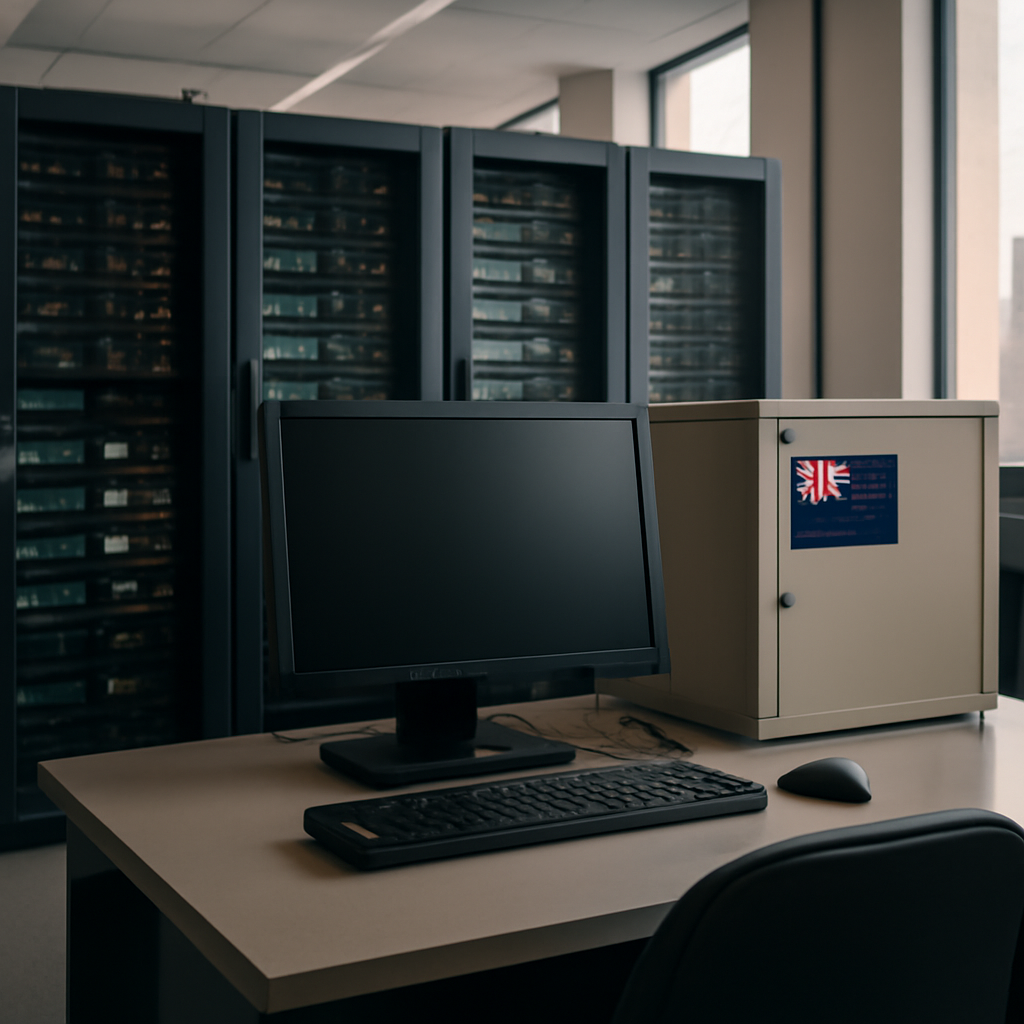
Ciccone said the national conversation about artificial intelligence has "largely focused on data centres, the power they’ll draw and the water they’ll need." He noted the Albanese government's new AI framework — which includes mandatory standards and a new Office of AI — as a response to those infrastructure concerns. But he warned that data centres are "the foundation, not the finish line": the issue is not only where computation sits, but whether the nation can build, govern, audit and adapt the systems running in those centres.
John Curtin Research Centre report: sovereign capability defined
Ciccone cited the John Curtin Research Centre’s report, Defending Australia: A National Artificial Intelligence Sovereign Capability and Security Agenda for the 21st Century, to make a technical and strategic distinction: Australia "doesn’t need to compete on frontier, general-purpose models," the report says. Instead, the emphasis should be on sovereign capability "where dependence carries the most risk," and on systems "suited to our own environment." The report’s succinct test for sovereignty, as Ciccone relayed it, is that "a system is only sovereign if Australians can govern it, not simply operate it."

This site is the portfolio.
OSINTSights runs on Cloudflare Workers, D1, R2, and Vectorize, with an AI pipeline on Hetzner ARM. Nubivance designed, built, and operates it. We do the same for clients.
See what we buildDefence, critical infrastructure and the information environment
Ciccone laid out three concrete domains where sovereign AI capability matters. First, defence and intelligence: he said surveillance, logistics and cyber are "increasingly powered by AI," and that Australians must be able to "trust these systems when it counts." Second, critical infrastructure: AI is "becoming embedded in our energy grid, hospitals, ports and financial sector," and the expertise to audit, update and secure those systems should "sit here with Australians, not offshore." Third, the national information environment: Ciccone warned that AI systems "don’t always operate in the interests of Australian citizens," implying that governance and oversight will be essential to protect information integrity.
Universities, TAFEs, unions and the workforce pipeline
Ciccone pressed the point that AI capability begins with people. He called for investment "in our universities and research institutions, and in the scientists and engineers who’ll design and run these systems." He quoted Assistant Minister Andrew Charlton that engaging Australians with science is how the country invests in "home‑grown innovation, breakthroughs and advancement." Ciccone also welcomed decisions from the ALP National Conference backing "real protections for workers, including a fair share of productivity gains, further upskilling and safeguards against surveillance." He cast government, industry and unions as joint participants in building an AI skills pipeline that leverages universities and TAFEs.
What this means for researchers, firms and Indo‑Pacific partners
- Researchers and engineers: the speech frames sustained training and institutional investment as the starting point — building expertise in‑country so Australians can both operate and govern AI systems.
- Firms and governments: Ciccone emphasised "data sovereignty" and the need for local expertise to audit, update and secure AI systems, arguing that data centres are only sovereign "if we run them."
- Indo‑Pacific partners and allies: citing the John Curtin Research Centre report, Ciccone said Australia could become "a trusted AI governance partner in the Indo‑Pacific," exporting the standards and systems developed here; greater AI sovereignty, he added, will "enhance our relationship with our allies."
National Science Week provided the occasion for a speech that tied practical infrastructure questions to a broader argument about national purpose. Ciccone framed AI as "an inevitable part of our strategic future" and urged that Australia must "build the capability to compete on our own terms, or we get left behind." The private and public investments he detailed — in sovereign models, computation capacity, data sovereignty and a skilled workforce — are presented not as optional extras but as the means by which the Albanese government says it will ensure "Australia leads, not follows, in the technologies that will shape our future."
Original transcript: https://www.aspistrategist.org.au/australias-ai-future-relies-on-our-scientific-capability/