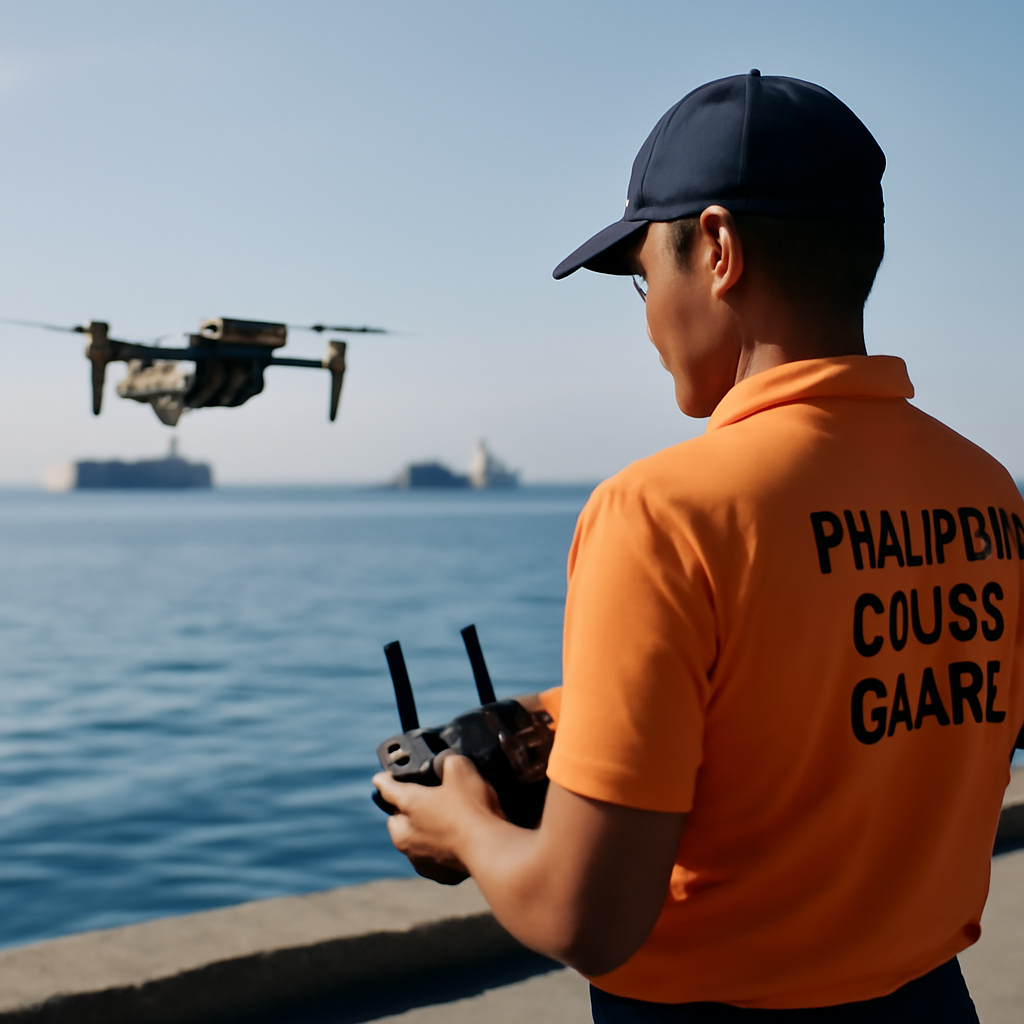
"This will provide an additional 10 million Australian dollars, 413 million pesos, of cutting‑edge drone technology and operator training," Australian Foreign Minister Penny Wong said in Manila.
Penny Wong’s announcement in Manila and the scale of Australian support
In a public statement in Manila, Foreign Minister Penny Wong announced that Canberra will provide an additional A$10 million (413 million pesos) of drone technology and operator training to the Philippine Coast Guard. According to the announcement, that increment brings Australian drone support to the Philippines since April 2025 to just under 600 million pesos. Australian ambassador to the Philippines Marc Innes‑Brown framed the assistance in humanitarian and economic terms, saying the support “benefits not just the Philippines’ maritime security agencies, but the millions of everyday Filipinos who rely on an open and accessible maritime domain for their livelihoods and commerce.”
Hardware named: Skydio X10, Sypaq Corvo, and Oceanbotics craft
The equipment package includes the US‑built Skydio X10, the Australian Sypaq Corvo, and US Oceanbotics underwater craft. The announcement highlighted a procurement rationale beyond capability: buying from these suppliers, rather than from Chinese sources, was described as a step toward reducing dependency on China. The drones are already in operational use by the Philippine Coast Guard for maritime patrols, search and rescue missions, and—per Canberra’s statement—enhancing situational awareness around offshore territories and within Manila’s exclusive economic zone (EEZ) and territorial waters.

Audit-ready is a season. It shouldn't be.
Evidence in spreadsheets, controls drifting between audits, frameworks multiplying on flat headcount. Nubivance runs continuous compliance on Rapid7 Cyber GRC - SOC 2, HIPAA, ISO 27001, PCI, CMMC.
End the scrambleInfrastructure, exercises, and a deeper bilateral defence relationship
Canberra’s support is not limited to sensors and unmanned systems. The story places the drone pledge inside a broader pattern of stepped‑up defence cooperation: an Australian decision this year to augment support for infrastructure projects at five military bases on Luzon; a January statement from an Australian Defence spokesperson noting Canberra’s commitment to “strengthening our defence relationship with the Philippines and supporting the Armed Forces of the Philippines, including defence infrastructure, in areas such as logistics, training and fire safety”; and growing traction for joint exercises such as Exercise Alon.
Second Thomas Shoal incident and the regional security logic
The timing of Australia’s announcement came amid heightened tensions between Manila and Beijing. The article reports a recent clash in which Chinese Coast Guard forces “beat a Philippine sailor on Monday at Second Thomas Shoal, using a baton.” Minister Wong said Canberra was “concerned about destabilising and dangerous conduct in the South China Sea, some of which the Philippines Coast Guard knows too well, including the actions by Chinese vessels towards Philippines vessels we witnessed yesterday morning.”
Commentary in the piece connects the Australian measures to a wider strategy of regional deterrence: greater burden sharing and mutual support among US allies and partners can “further reinforce US‑led deterrence by denial aligned along the first island chain,” a posture the article says was highlighted in the 2026 US National Defense Strategy.
How the Philippine Coast Guard, Australian Defence, and the United States are responding
- The Philippine Coast Guard: The drones and underwater craft are intended to bolster maritime patrol, search and rescue, and situational awareness across the EEZ and territorial waters—capabilities the Coast Guard already uses and will expand with additional platforms and operator training.
- Australian Defence and Canberra: Beyond buying and gifting sensors, Canberra has augmented infrastructure support on Luzon and emphasized logistics, training and fire safety as areas of cooperation; officials are framing this as complementary to US support and as part of a deeper bilateral security relationship.
- The United States and regional deterrence architecture: The article emphasizes that Australia cannot match US scale or the depth of US‑Philippine ties—the US “will remain the most critical partner for the Philippines,” and the 2014 Enhanced Defense Cooperation Agreement remains key—while casting Australian contributions as useful reinforcement that signals allies can share more of the operational and political burden.
Analysts cited in the reporting argue that the relationship between Canberra and Manila has tightened: ASPI senior fellow Euan Graham was quoted in 2025 saying the Philippines is “now more strategically entwined with Australia than any other Southeast Asian country.” The piece urges that these material steps—drones, infrastructure, training and exercises—should be seen as elements of a broader approach to deterrence, and that the informal minilateral “Squad” could be elevated into a more formal defence partnership to solidify those gains.
Australia’s latest package is at once practical and political: it bolsters Philippine maritime capabilities immediately while sending a signal that Washington need not carry the full burden of regional security. Whether Canberra’s contributions will lead to formalised host‑nation support for Australian forward deployments, or to wider mutual security arrangements, is a question the reporting leaves open—but the facts on the table show a concrete deepening of Canberra–Manila defence ties and an expanding toolkit of non‑Chinese suppliers for critical maritime technologies.