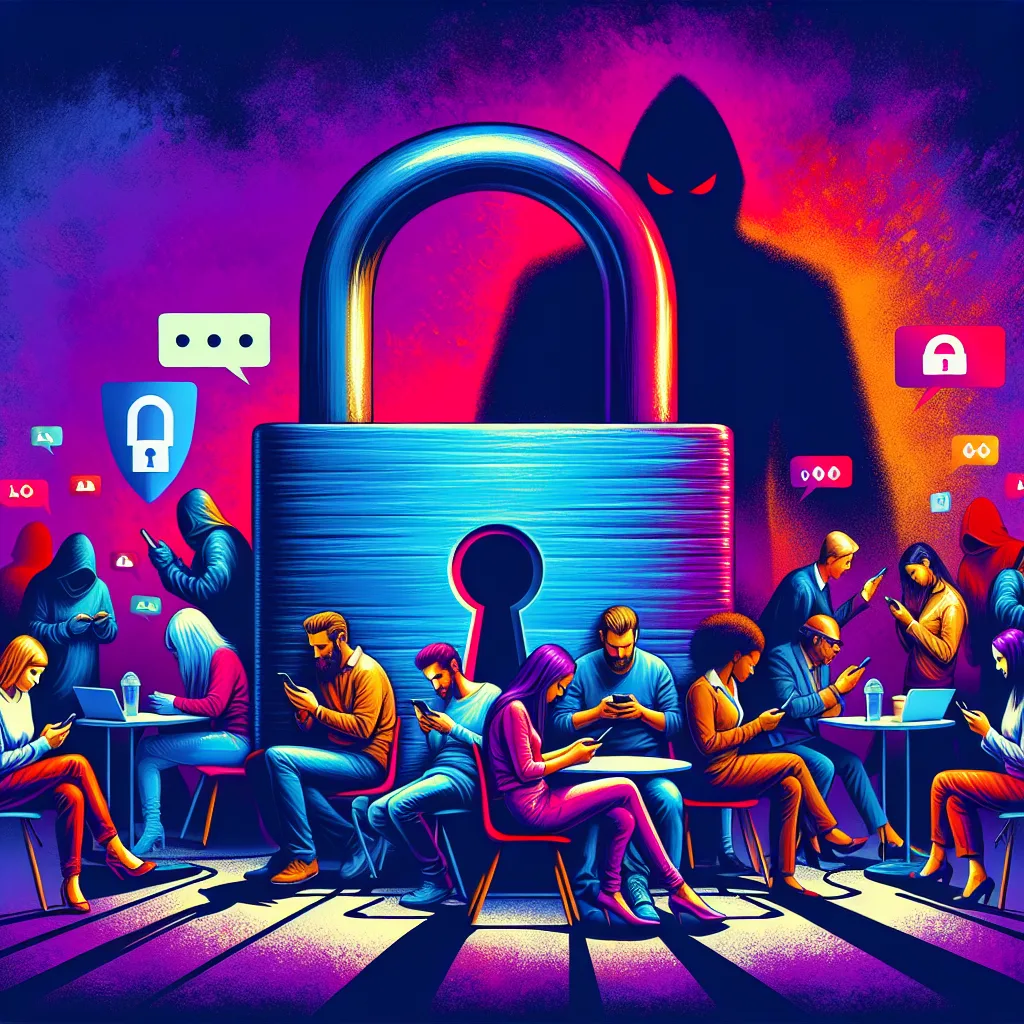
Insecure by Choice: How Convenience Wins Over Cybersecurity in America’s Digital Life
Across the bustling digital landscape, convenience has taken the reins in guiding American online behavior, particularly when it comes to setting passwords. A growing body of evidence suggests that users are increasingly opting for ease-of-use over robust security protocols, a trend that experts warn could have far-reaching implications for both personal and corporate cybersecurity.
In an era where almost every facet of daily life—from financial transactions and healthcare to social interactions—depends on digital interfaces, the simplicity of password creation plays a critical role. Yet, as data breaches become more frequent and sophisticated, the prioritization of convenience over security presents a conundrum: why would individuals knowingly compromise their digital safety for a few extra seconds saved in the login process?
A recent study by the cybersecurity firm Keeper Security, corroborated by findings from the 2022 Verizon Data Breach Investigations Report, confirms that a significant proportion of Americans rely on easy-to-remember, yet inherently weak, passwords. In many instances, these choices are not due to a lack of awareness but rather reflect a calculated trade-off between security and usability. This trend, skeptically viewed by some within the cybersecurity community, underscores a broader narrative about the evolving nature of risk in the digital age.
The history of password usage is marked by a series of trade-offs. In the early days of the internet, the concept of password security was straightforward: choose something memorable yet unique. However, as hackers honed more sophisticated methods like brute force attacks, dictionary attacks, and phishing schemes, security experts like Troy Hunt began advocating for the use of longer, complex passwords and multi-factor authentication. Despite these well-publicized warnings and the increasing availability of password managers, the average user’s response has been to gravitate towards convenience, often at the expense of enhanced security.
This shift can be partially explained by the rapid pace of technological change and the inherent complexity of modern digital life. With countless accounts and devices to manage, individuals find themselves overwhelmed with the burden of creating and remembering highly complex strings of characters. The convenience of using simple, common passwords—even if they are susceptible to attack—has become a rational response to an increasingly digitized lifestyle where time is at a premium.
Current data underscores the prevailing sentiment. A 2023 survey conducted by the Pew Research Center noted that over 60% of American internet users admitted to reusing passwords across multiple services, while almost 45% confessed to using passwords that were less complex than recommended by cybersecurity experts. Official statements from organizations such as the National Institute of Standards and Technology (NIST) further emphasize that strong password hygiene is essential to counter modern cyber threats.
The issue extends beyond merely choosing a character string. It highlights a broader cultural acceptance of risk in the digital domain. Cybersecurity analyst Sarah Landrum of the Cybersecurity and Infrastructure Security Agency (CISA) recently stated, “The challenge is not just about password strength—it’s about changing user behavior in the face of convenience-driven digital engagements.” Her remarks reflect a growing understanding among public officials that the human factor remains the weakest link in cybersecurity defenses.
Several factors contribute to this trend. First, the usability of digital interfaces is a paramount concern for users, especially in an era where mobile devices and instant connectivity dominate. Simplicity in authentication methodologies directly correlates with user satisfaction and can foster higher engagement rates on commercial and social platforms. As a result, companies often prioritize user convenience over rigorous security measures—a calculus that, in the long term, might expose both companies and users to increased cyber risks.
Moreover, the economic incentives for companies to enhance rather than complicate the user experience cannot be understated. Financial performance, customer retention, and the competitive need to provide seamless user experiences often eclipse the less tangible benefits of robust security measures. An internal report by Forrester Research noted that friction in the user journey, such as having to create or input a complex password, could result in decreased conversion rates, particularly in the fast-growing e-commerce sector.
Critically, this trade-off is not without its consequences. Cases of identity theft, unauthorized account takeovers, and large-scale data breaches have increased substantially over the past decade. Every incident serves as a stark reminder of the vulnerabilities that pervasive password reuse and weak credential creation can create. When digital security is compromised, the impacts resonate well beyond the immediate breach. They erode public trust in digital services, strain law enforcement and regulatory frameworks, and can impose heavy financial burdens on affected individuals.
Yet, amidst these warnings, there is a glimmer of hope. The cybersecurity community continues to push for systemic change. Experts advocate for the adoption of multi-factor authentication (MFA) regimes and biometrics as more secure alternatives that do not force users to choose between convenience and safety. For instance, institutions like the Federal Bureau of Investigation (FBI) have publicly recommended such measures as part of a broader strategy to mitigate cyber threats, citing a combination of technological innovation and better user education as essential components in this endeavor.
There is also an ongoing dialogue about rethinking the design of authentication systems entirely. Many technologists argue that the reliance on static passwords is inherently outdated in the face of modern cyber threats. New paradigms, such as passwordless authentication systems that leverage encrypted tokens and one-time codes, are slowly gaining traction. These approaches promise to reconcile the need for both security and user-friendliness, potentially altering the way Americans secure their digital identities.
So why does this matter? The balance between convenience and security is more than a technical issue: it is a societal challenge. From the perspective of national security, weak password practices can create entry points for cyber adversaries, potentially disrupting critical infrastructure and compromising sensitive governmental or military data. From an economic viewpoint, data breaches can lead to substantial financial losses, both for individual consumers and large corporations. Meanwhile, the erosion of public trust in digital platforms calls into question the very foundations of progress in an increasingly online world.
Moving forward, stakeholders—from individual users and corporate leaders to policymakers and technologists—will need to navigate this delicate balancing act. The trend of prioritizing convenience underscores a need for a comprehensive, multi-pronged strategy that enhances user experience while simultaneously elevating security standards.
Key factors that will likely drive future developments include:
- Government Regulation: Legislative and regulatory frameworks may tighten, compelling companies to adopt stronger security protocols as evidenced by evolving standards from bodies like the NIST.
- Technological Innovation: Advances in biometrics and behavioral analytics offer promising alternatives to traditional password systems, potentially revolutionizing user authentication.
- User Education: Increasing efforts to educate the public about cybersecurity risks could gradually shift behavior, making security an intrinsic part of the user experience rather than a burdensome additional step.
- Corporate Accountability: With rising scrutiny from shareholders and regulatory bodies, businesses might be incentivized to invest more heavily in cybersecurity infrastructure, thereby reducing reliance on weak user-generated passwords.
For now, all eyes remain on the evolving interplay between digital convenience and security. Analysts at the cybersecurity firm McAfee have observed that as the threat landscape evolves, so too must our understanding of risk and the corresponding measures we take to mitigate it. While the current trend reflects a pragmatic—and sometimes shortsighted—prioritization of ease-of-use, there is an emerging consensus that the future lies in developing systems that do not force a compromise between user convenience and robust security.
One cannot help but ponder the broader implications of this shift. If Americans continue to favor simplicity over security, will the digital infrastructure that underpins modern life become increasingly precarious? Alternatively, could this widespread behavior serve as a catalyst for a new wave of innovation that fundamentally redefines how we authenticate and secure our online identities?
As we look toward a future where every click leaves a digital footprint, the dialogue among technologists, policymakers, and everyday users will play a critical role in shaping a safer digital environment. It brings to mind a timeless challenge: how do we balance the alluring ease of modern conveniences with the imperatives of security and trust? The answer may well lie in the ingenuity of future authentication technologies—and in our collective willingness to embrace change for the sake of cyber resilience.
Ultimately, the tension between convenience and security encapsulates a central paradox of the digital age. In prioritizing ease-of-use, Americans may reap immediate benefits but must also reckon with the latent risks lurking in the shadow of a weak password. As the digital landscape continues to evolve, the choices we make every day will determine not just how we interact online, but how secure our increasingly interconnected world truly is.



