"It’s not just a new category of security; it’s the beginning of a future where proactive, autonomous protection is something every home and every business can have,” Ring founder Jamie Siminoff said after Amazon announced Ring Robotics and two moving camera products on Tuesday.
Ring Robotics launch and the pitch
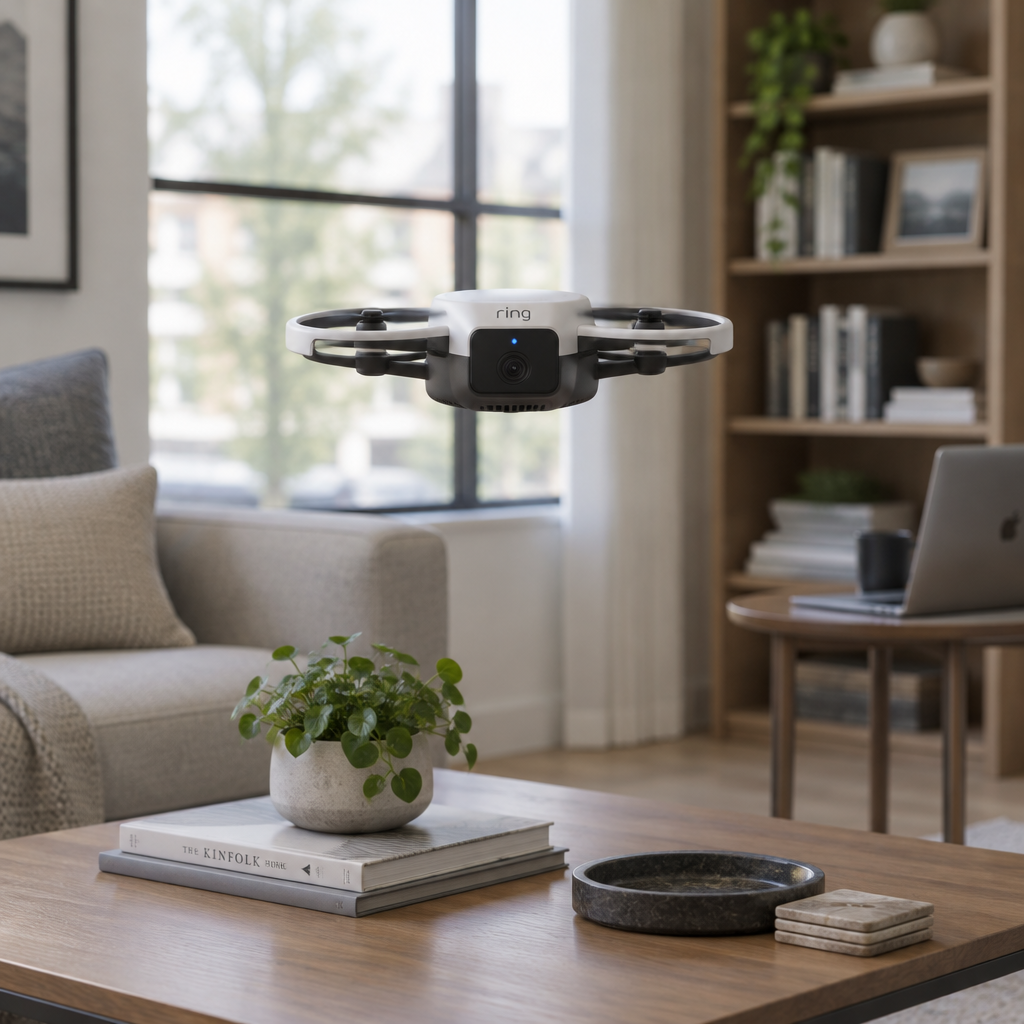
Amazon’s newly unveiled Ring Robotics line includes two mobile camera systems built to patrol interiors: the consumer-focused Ring Drone Cam and the business-oriented Ring Rover Cam. Both devices are designed to patrol autonomously on pre‑programmed routes and to respond to alerts from cameras, sensors, and alarm systems connected through the Ring ecosystem, according to Amazon and company statements cited by The Register.
Ring Drone Cam — flying indoors, but pending FCC approval
The Ring Drone Cam is a small indoor drone that launches from a private charging dock Amazon says keeps the device “out of sight” when not in use. Amazon describes the Drone Cam as carrying a 2K camera with a 148‑degree field of view and LED illumination for night patrols. It can fly preprogrammed routes to capture views stationary cameras might miss and can respond to alerts from connected Ring devices and alarm systems.
There is an important regulatory caveat: Amazon’s announcement gives a release date of January 27, 2027, but adds that “Ring Drone Cam has not been authorized as required by the rules of the FCC. This device is not, and may not be, offered for sale or lease, or sold or leased, until authorization is obtained.” Amazon also told The Register that the Drone Cam would still start shipping in January, leaving availability dependent on the FCC’s blessing.

This site is the portfolio.
OSINTSights runs on Cloudflare Workers, D1, R2, and Vectorize, with an AI pipeline on Hetzner ARM. Nubivance designed, built, and operates it. We do the same for clients.
See what we buildRing Rover Cam — a patrol Roomba for businesses
The Ring Rover Cam is a wheeled patrol robot aimed at businesses. It carries a telescoping mast with a camera that Amazon says can be programmed to set heights to see over counters, shelves and similar obstacles. The Rover performs 360‑degree scans, streams and records up to 4K video while moving, and includes a siren, lights and two‑way audio to communicate with people on site.
Amazon positions the Rover for off‑hours business patrols; the company says it can detect people and react to alerts from connected Ring devices. The Register reports the Rover Cam will start shipping on December 16 at a price of about $1,000.
AI Pilot, floor plans, and Ring’s “Throw Away the Key” (TAKE) encryption
Amazon says both robots are powered by “AI Pilot,” a custom system that uses device cameras, specialized vision models, on‑device sensors and cloud processing to see, think and navigate autonomously. To operate, the devices generate floor plans of interior spaces: “Carry Ring Drone through your space or let Ring Rover autonomously explore, and it turns what it sees into a floor plan,” Amazon explains.
On cloud security and access, Ring announced an encryption scheme called Throw Away the Key Encryption (TAKE). In company marketing quoted by The Register, Amazon states: “With TAKE, your Ring videos are protected with unique, rotating encryption keys. A copy of the keys is temporarily held inside a secure enclave within the cloud; think of it as a sealed vault that can only provide Ring access to the key under strict, limited conditions.” The system is described as deleting keys later so that “only users and those they allow access to can see videos,” while Ring retains data “to power the intelligent features that you have active on your account.”
The Register sought clarification about the security of generated floor plans, but The Register reports it “didn’t get an answer” on that specific point.
Privacy record, regulatory context, and lingering questions
The announcement arrives against a history of privacy complaints and regulatory scrutiny for Ring. The company agreed to pay $5.8 million in a 2023 settlement with the Federal Trade Commission over allegations that employees and contractors improperly accessed customers’ private videos and that Ring failed to adequately protect accounts against unauthorized access, The Register notes.
Ring has also faced criticism for a partnership with surveillance firm Flock Safety that the company later canceled, and for a Super Bowl advertisement promoting a Search Party feature that would remotely activate Ring cameras to search for lost pets. The Register reports a proposed class‑action lawsuit filed in June alleges the Familiar Faces feature collected biometric information from visitors and passersby without consent.
Amazon’s move also echoes the company’s abandoned bid to buy Roomba maker iRobot in 2024; The Register recounts that Amazon blamed regulatory scrutiny for the pullback and that the FTC, under then‑chair Lina Khan, examined competition and privacy implications while European regulators raised concerns about marketplace impacts. The Ring robots’ ability to map interiors revives some of the mapping and privacy questions that surfaced during the iRobot review.
Ring offered a corporate defense: “We take privacy concerns seriously, and we believe privacy and customer control are fundamental to building products people trust,” a Ring spokesperson told The Register. Whether TAKE, on‑device processing or other controls will satisfy regulators, courts or wary customers remains to be seen as the Rover ships on December 16 and the Drone awaits FCC authorization.
Source: The Register — “Ring robots ready to patrol paranoids’ pads”