"Based on the approved enterprise definition, Whiteman Air Force Base, Missouri, has been identified as the sole candidate location for the F-15E Strike Eagle mission," a press release from Representative Mark Alford's office said.
What the Department of the Air Force approved and the basing plan
Late yesterday Representative Mark Alford announced that the Department of the Air Force has approved "the enterprise definition, site survey criteria, and candidate location for the Air Force Reserve Command (AFRC) F-15E Strike Eagle basing action," per Alford's office. The approved plan identifies Whiteman Air Force Base as the single candidate to receive a 24-aircraft F-15E Strike Eagle mission, a move described in the release as preserving "a critical Air Force Reserve combat-coded fighter unit" and the 442nd Fighter Wing's future. The release sets the arrival of the first F-15Es at Whiteman in Fiscal Year 2031.
Why the choice of F-15E matters for the 442nd and Whiteman AFB
The announced transition follows the 442nd Fighter Wing's recent retirement of its A-10 Warthog aircraft and years of uncertainty about whether the wing would retain any tactical flying mission. Whiteman, more widely known as the home of the Air Force's B-2 bomber fleet, also hosts the Missouri Army National Guard’s 1st Battalion, 135th Aviation Regiment with UH-60 Black Hawks; the F-15E decision would secure a future fighter mission at the base. Representative Alford framed the move as the culmination of multi-year efforts: "This is the first in several steps," he said at a press conference, adding that he had been waiting three and a half years for a detailed plan.

Audit-ready is a season. It shouldn't be.
Evidence in spreadsheets, controls drifting between audits, frameworks multiplying on flat headcount. Nubivance runs continuous compliance on Rapid7 Cyber GRC - SOC 2, HIPAA, ISO 27001, PCI, CMMC.
End the scrambleF-15E fleet realities: inventory, engines, and redistribution
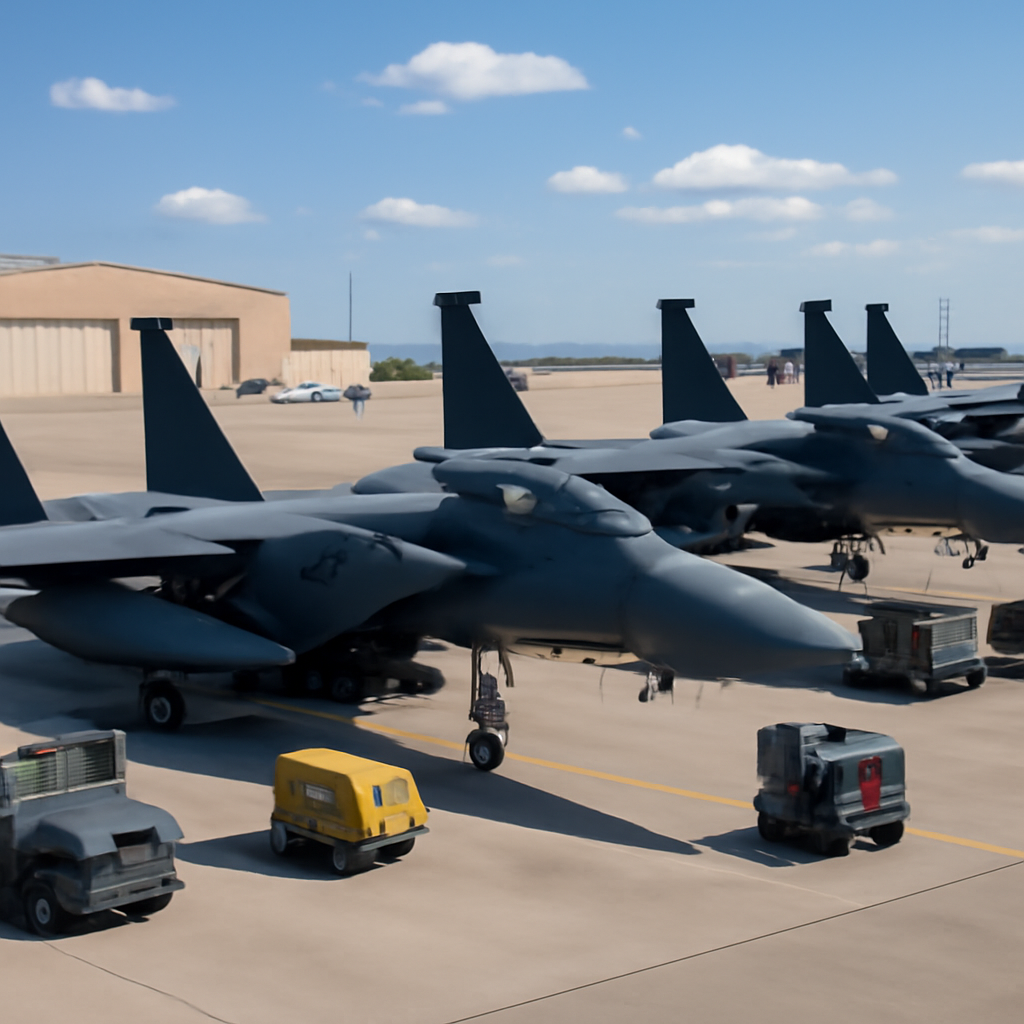
The plan to send 24 legacy F-15Es to a Reserve wing raises immediate sourcing questions. The Air Force currently has roughly 212 F-15E Strike Eagles in inventory, split roughly between older aircraft powered by Pratt & Whitney F100-PW-220 engines and newer -229-powered jets; the latter include a final batch of 10 delivered in the early 2000s. Active-duty F-15E squadrons are concentrated at Seymour-Johnson AFB, Mountain Home AFB, and RAF Lakenheath, with six active-duty Strike Eagle squadrons total and a smaller number held by test and evaluation units. Seymour-Johnson also houses the F-15E schoolhouse and has become a hub for F-15EX training.
The practical challenge is that the original F-15E is no longer in production, so aircraft destined for Whiteman would have to be reassigned from elsewhere in the force. That logic underpins a broader recapitalization plan: the Air Force has announced an increase in the F-15EX fleet from 129 to 267 aircraft to "begin to recapitalize the aging F-15E fleet." Nearly 120 EXs are already expected to be assigned to named active-duty and Guard squadrons and to test units, leaving the allocation of roughly 150 additional EXs — and the disposition of older F-15Es — an open planning question. The Strike Eagle fleet itself has also been strained by operations: the source notes the loss of four jets during operations against Iran this year.
Congress, the A-10 timeline, and competing legislative actions
The F-15E basing decision sits alongside shifting timelines for the A-10 Warthog. The Air Force moved earlier this year to extend A-10 operations through 2030, a change tied to industrial-base constraints and bolstered by strikes in operations against Iran; that extension was announced publicly in an April 20, 2026, post from the Office of the Secretary of the Air Force. Congress has already blocked the Air Force from retiring any Strike Eagles through at least September 2027 and could act again. Separately, a bipartisan group of House members introduced the BRRRRT Act this month, a bill that would require the Air Force to continue flying A-10s through Fiscal Year 2033. Draft language in the Fiscal Year 2027 National Defense Authorization Act also contains provisions that could further extend A-10 service for some units.
What this means for the 442nd Fighter Wing, active-duty F-15 units, and Congress
- For the 442nd Fighter Wing and Whiteman AFB: The announced basing decision secures a future tactical flying mission and promises continuity for personnel and the local community, but implementation remains years away and will require aircraft transfers, infrastructure and regulatory steps, and a multi-year transition to arrive in FY2031.
- For active-duty F-15E units and the F-15EX program: Moving F-15Es into Reserve hands depends on redistribution of an aging, operationally stressed Strike Eagle fleet and on where newly procured F-15EXs are assigned; recapitalizing active squadrons with EXs would free older F-15Es for reassignment.
- For Congress and state officials: Lawmakers have already influenced retirement timelines and may continue to shape basing and retention decisions; local officials — including Governor Mike Kehoe and Senators Eric Schmitt and Josh Hawley — publicly hailed the outcome as securing jobs and opportunity for Missouri.
The Whiteman announcement is positioned as a first, carefully signaled step in a larger rebalancing of the Air Force's fighter inventory. It preserves a Reserve flying mission in the near term while pushing a knotty logistical question — where the 24 F-15Es will come from — farther into the future. With aircraft deliveries, legislative actions, and operational demands all in play, the practical redistribution of Strike Eagles and the final shape of both the E and EX fleets will take years to resolve.