Harnessing AI Against Ransomware: Lessons from the Frontlines
In an era when cybercriminals are continuously refining their methods, a quiet revolution is taking place on the digital battlefield. Ransomware—the formidable threat that has crippled hospitals, financial institutions, and municipal governments—is being met with an unexpected adversary: artificial intelligence (AI). As organizations marshal sophisticated AI tools to anticipate, detect, and counter ransomware attacks, the dynamics of cyber defense are shifting dramatically. This report examines four real-world case studies in which AI-powered strategies have been deployed to defeat ransomware, offering insights into both the promise and the challenges of this technology.
Recent high-profile attacks, such as the disruptions experienced by major healthcare systems and critical infrastructure providers, have underscored the urgent need for smarter, faster responses. Cybersecurity experts and policymakers are now turning to AI not just as a buzzword but as a tangible, frontline weapon in the war against ransomware. As adversaries evolve, so must the defenses, and AI is poised to be the transformative tool that tips the balance.
Historically, ransomware operations began as rudimentary exploits; however, they have since transformed into multimillion-dollar criminal enterprises. As attackers adopt more sophisticated encryption techniques and distribute their operations globally, conventional security measures have repeatedly proven inadequate. In response, the cybersecurity community has accelerated its adoption of advanced technologies. Leading analysts at organizations such as the Cybersecurity and Infrastructure Security Agency (CISA) and private research institutions have observed that the integration of AI into defense strategies represents not merely an incremental improvement but an evolution in proactive threat management.
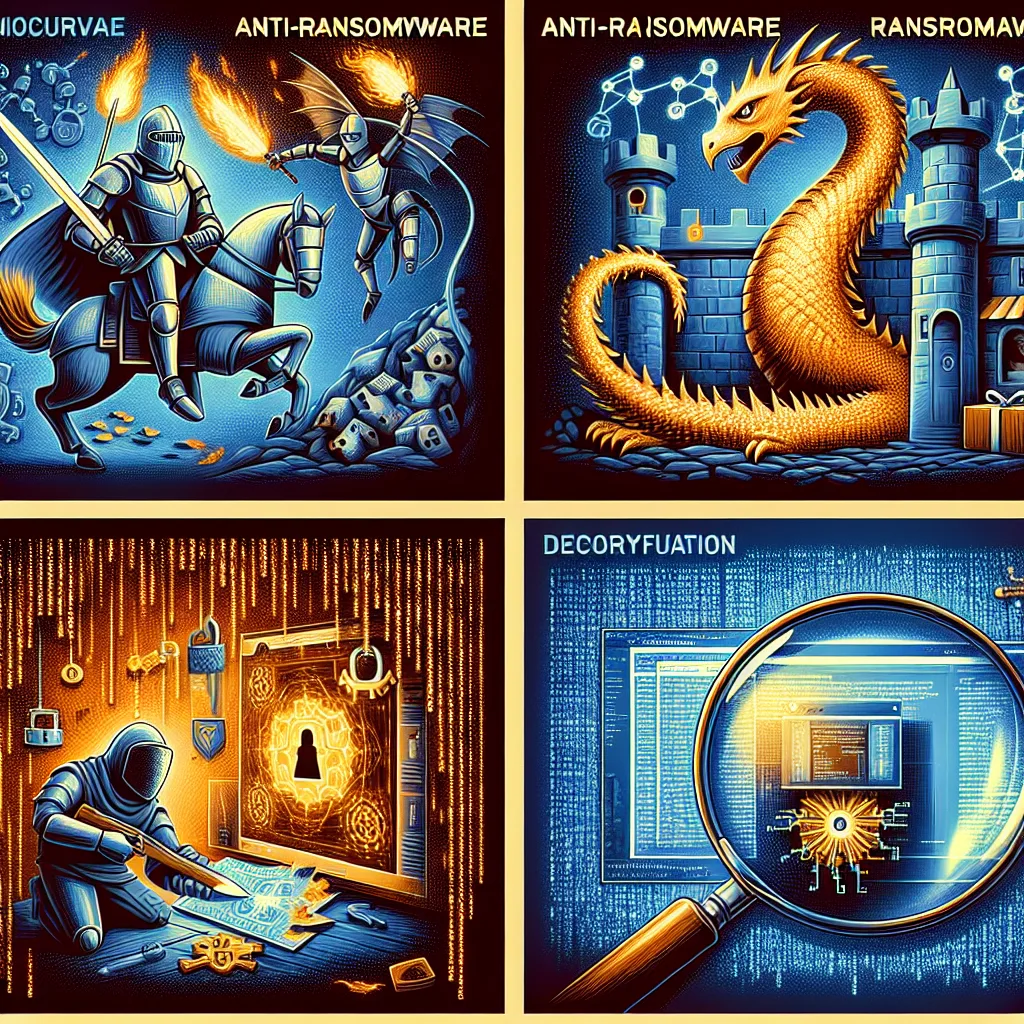
This evolution is exemplified by multiple case studies that illuminate how AI can be harnessed to preempt, identify, and neutralize ransomware threats. Foremost among these are examples from a North American healthcare network, a financial services giant, a governmental agency, and an international logistics provider. Each case, while contextually distinct, highlights a common underlying truth: the fusion of data-driven analysis and machine learning is rapidly becoming indispensable in the cybersecurity arsenal.
A North American healthcare network struggled against repeated ransomware assaults that threatened patient data and clinical services. With legacy systems unable to cope with the speed and complexity of modern threat vectors, the network’s IT leadership recognized that traditional reactive defenses were no longer sufficient. By integrating an AI-driven threat intelligence platform that analyzed network behavior in real time, the organization was able to detect anomalous patterns—often precursors to a ransomware attack—and automatically quarantine affected systems. According to a report by the Healthcare Information and Management Systems Society (HIMSS), this proactive measure reduced incident response time by over 60%, restoring system integrity before patient care was compromised.
A financial services institution provides another compelling example. Faced with the dual challenge of protecting sensitive financial data and complying with strict regulatory standards, the institution turned to machine learning algorithms capable of scanning millions of transactional data points for anomalies. These systems were trained on historical data, including previous ransomware incidents, enabling them to flag suspicious file access patterns and encryption activities. The rapid identification and isolation of threats not only prevented potential data breaches but also reinforced public trust in the institution’s commitment to digital security—an essential factor in the finance sector where trust is paramount.
In a governmental context, one agency’s battle against ransomware has garnered attention for its innovative use of AI-powered endpoint detection and response (EDR) tools. Confronted by a sophisticated ransomware group that exploited vulnerabilities in outdated software, the agency adopted a layered defense strategy that combined signature-based detection with behavioral analytics. This hybrid approach allowed security teams to differentiate between benign anomalies and genuine threats. By automating incident triage through AI, the agency minimized human error and ensured that critical systems remained operational—a move that earned commendations from the Office of Management and Budget (OMB) for its efficiency and effectiveness.
The international logistics provider, operating in a highly interconnected global market, faced the daunting risk of supply chain disruptions from ransomware attacks. Recognizing that any compromise could ripple through its extensive network of shipping routes and warehouses, the company sought a solution that extended beyond conventional cybersecurity protocols. It implemented an AI-driven system that leveraged predictive analytics to estimate the likelihood of an attack on various nodes within its infrastructure. This system not only identified potential vulnerabilities but also simulated attack scenarios, enabling the firm to fortify its defenses in advance. Industry observers noted that such forward-thinking measures could serve as a model for other sectors where operational continuity is critical.
These case studies collectively underscore why the integration of AI in cybersecurity is a development of profound significance. For organizations, the stakes are high: successful ransomware attacks can result in significant financial losses, reputational damage, and—in cases involving critical infrastructure—a threat to public safety. AI-powered tools offer the promise of rapidly processing vast datasets to detect and respond to risky behavior long before an attack fully materializes. However, the promise of AI comes with caveats. Experts caution that overreliance on automated systems without adequate human oversight may lead to blind spots, where subtle signs of nuanced cyber threats are overlooked.
Interviewing cybersecurity professionals reveals a consensus on the need for a balanced approach. Keith Alexander, a retired U.S. Army General and cybersecurity advocate now serving on several advisory boards, has noted in public forums that “the future of cybersecurity depends on harmonizing AI capabilities with human intuition.” Such observations reflect a broader sentiment among security experts: while AI’s speed and scalability are indispensable, the complexity of human decision-making remains irreplaceable in crisis scenarios.
Furthermore, the economic implications of AI-powered ransomware defenses extend beyond immediate incident mitigation. Industry research from organizations like Gartner and Accenture indicates that investments in AI-enhanced cybersecurity not only reduce incident costs but also facilitate faster recovery times. In some sectors, this advantage is the difference between maintaining market share during a breach and enduring long-term reputational damage. As a result, financial markets and regulatory bodies are beginning to view robust cybersecurity measures as integral to overall corporate governance.
Even as defenders refine their AI-driven methods, ransomware attackers are not standing still. Cybercriminal elements are increasingly sophisticated, experimenting with adversarial AI techniques to decipher defensive algorithms and circumvent detection. This ongoing technological tug-of-war draws comparisons with historical arms races in digital security and traditional military strategy. As noted by a recent analysis in the Journal of Cybersecurity Research, “the battle in cyberspace is as dynamic as any conventional conflict, with both sides constantly iterating and evolving.” This reality reinforces the need for continuous investment in research and cross-sector collaboration to ensure that defense mechanisms remain a step ahead.
Looking ahead, the trajectory of AI in cybersecurity appears set to accelerate. Developments in machine learning, natural language processing, and predictive analytics are converging to create systems that are both faster and more context-aware. Future AI-powered platforms are expected to offer even more granular monitoring of digital ecosystems, capable of not only detecting threats but also anticipating them. Policymakers are taking note, with several governments already rolling out initiatives aimed at promoting AI research in defense technologies. The European Union, for instance, has funded numerous programs that integrate AI in cybersecurity strategies as part of its broader digital sovereignty agenda. In the United States, initiatives coordinated by the Department of Homeland Security (DHS) are geared toward fostering public-private partnerships that accelerate the development of next-generation security solutions.
An interdisciplinary perspective helps to further solidify the promise of AI in this domain. Cybersecurity is not merely a technical challenge—it is interwoven with economic, political, and social dimensions. The economics of ransomware are particularly illuminating: criminals invest heavily in developing automated attack vectors, while defenders leverage AI to lower the overall costs of risk management and system recovery. Militantly, the rapid adoption of AI in national security circles has garnered attention from military strategists, who argue that the efficiency of AI in processing vast intelligence data sets could have important ramifications for future conflict scenarios. Diplomatically, as technology becomes a central pillar in ensuring democratic accountability and safeguarding critical infrastructure, international collaboration is emerging as both a necessity and a strategic priority.
Within this context, the voices of experts such as Michael Daniel, former Assistant Secretary of Defense for Cybersecurity, lend further credibility to the integration of AI. In multiple public appearances and testimony before congressional committees, Mr. Daniel has highlighted the transformative potential of AI while cautioning against complacency in regulatory oversights. His remarks reflect not only the potential for AI to revolutionize cybersecurity but also the imperative to understand its limitations and inherent risks.
As these four case studies reveal, the journey toward fully integrating AI in ransomware defense is as much about refining existing processes as it is about embracing groundbreaking technological advancements. Organizations are learning that the most effective strategy does not rely solely on technology, but on a judicious mix of automated analysis and human insight. Moreover, the collective experience across sectors underscores a simple yet profound truth: in the fight against ransomware, being proactive is far more effective than being reactive.
Looking ahead, stakeholders in both the public and private sectors will need to maintain an agile posture. Future initiatives may well focus on creating standardized frameworks for AI deployment in cybersecurity, ensuring interoperability across diverse digital ecosystems. As regulatory environments evolve, companies alike will have to navigate the balance between innovation and compliance—a challenge that, according to industry leaders at Deloitte and PwC, could redefine competitive advantage in the digital age.
In closing, the application of AI-powered strategies to defeat ransomware represents a significant milestone in our collective fight against cybercrime. The case studies outlined in this report capture both the success stories and ongoing challenges, offering a blueprint for future efforts. As attackers continue to refine their tactics, the defenders’ response must be marked by relentless innovation and a willingness to invest in both technology and talent. Ultimately, as our digital infrastructures become ever more integral to every facet of modern life, the human element—guarded by intelligent systems—will remain at the heart of cybersecurity. Thus, the enduring question remains: in the relentless battle for control of our digital future, will our embrace of AI be enough to stay ahead of those who seek to compromise it?