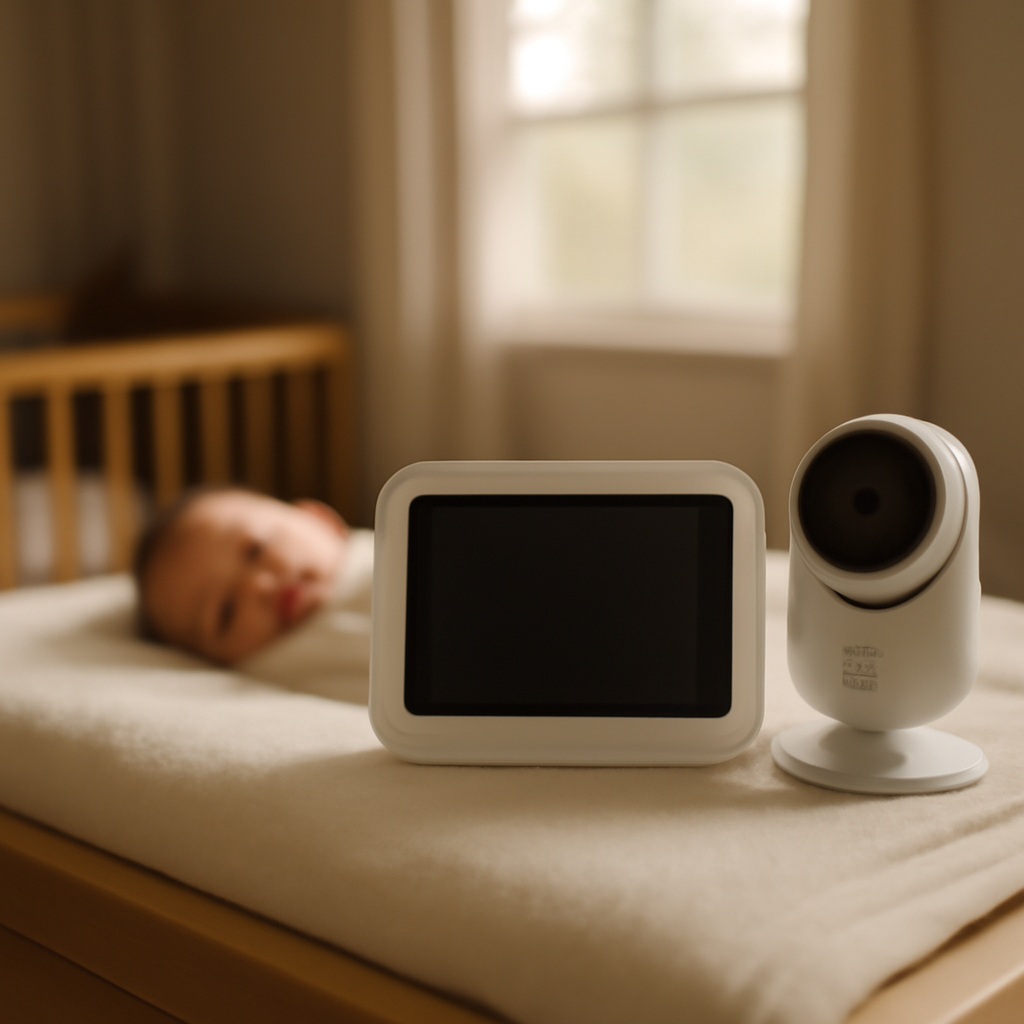
Nanit recently raised $50 million from investors to expand its use of A.I. and use its camera to track speech and language development, motor skills and more, while extending its presence in children’s bedrooms into early adolescence.
Nanit's $50 million bet on A.I.
The New York Times reports that Nanit has secured $50 million in new investment to accelerate its deployment of artificial intelligence inside baby-monitoring systems. The company plans to use A.I. capabilities to broaden what its cameras claim to observe — adding explicit tracking of speech and language development and motor skills — and to extend the devices’ role beyond infancy and into early adolescence. That infusion of capital, the Times story says, is intended to scale algorithms and product features that turn continuous camera feeds into structured developmental data.
24/7 health tracking for the sub-four-foot set
According to the Times, Nanit and its rivals are positioning themselves to "own 24/7 health tracking for the sub-four-foot set." The phrase captures the market aim: systems that remain present around the clock, converting activity in bedrooms and play areas into longitudinal health and development records for very young children. The reporting frames the competition as an attempt to provide continuous, device-mediated monitoring for children who are under four feet tall.

Audit-ready is a season. It shouldn't be.
Evidence in spreadsheets, controls drifting between audits, frameworks multiplying on flat headcount. Nubivance runs continuous compliance on Rapid7 Cyber GRC - SOC 2, HIPAA, ISO 27001, PCI, CMMC.
End the scrambleWhat the cameras are being trained to measure: speech, language, motor skills — and more
The Times piece describes a shift in sensor and software priorities. Nanit, specifically, is moving from basic video monitoring into analytics that interpret behavior and developmental milestones. The company plans to use its camera to track speech and language development and to capture motor-skill indicators, among other measurements named in the reporting. That shift converts raw visual and audio input into labeled developmental data points that can be recorded over time.
Children’s bedrooms as data sources — and the scale of what is collected
The reporting underscores that these devices already produce "astonishing levels of baby data collection" and suggests that the volume and types of data are expanding as A.I. features are added. The Times frames children’s bedrooms — and, by Nanit’s stated plan, early-adolescent spaces — as environments where continuous capture and analysis occur. The combination of constant camera presence and more sophisticated A.I. analytics is the element the article highlights as driving a new class of personal and developmental records for young people.
What this means for parents, technologists, and policymakers
- Parents and caregivers: The Times reporting suggests they will face devices that offer continuous developmental tracking — from sleep and movement to speech and language markers — and that those devices are being designed to remain in a child’s private spaces into early adolescence.
- Technologists and product teams: The article notes a clear industry direction toward applying A.I. to convert camera and audio streams into structured developmental metrics, which will require scaling algorithms and data pipelines in consumer devices aimed at young children.
- Policymakers and regulators: The Times frames an expanding footprint of A.I.-driven monitoring in bedrooms and adolescent spaces, a factual development that places new kinds of personal data and long-term developmental records into the hands of vendors and their investors.
The New York Times account places a succinct fact at the center of this story: with $50 million in fresh capital, Nanit aims to broaden how cameras see and label children’s behavior — and to remain present in domestic spaces for far longer than traditional baby monitors. Whether that commercial and technical expansion results in new kinds of benefit, new categories of data risk, or both is left for readers and decision-makers to judge; the reporting itself closes on the simple, concrete observation that already-robust data collection is, according to the Times, "just the beginning."
https://www.schneier.com/blog/archives/2026/08/spyware-for-babies.html